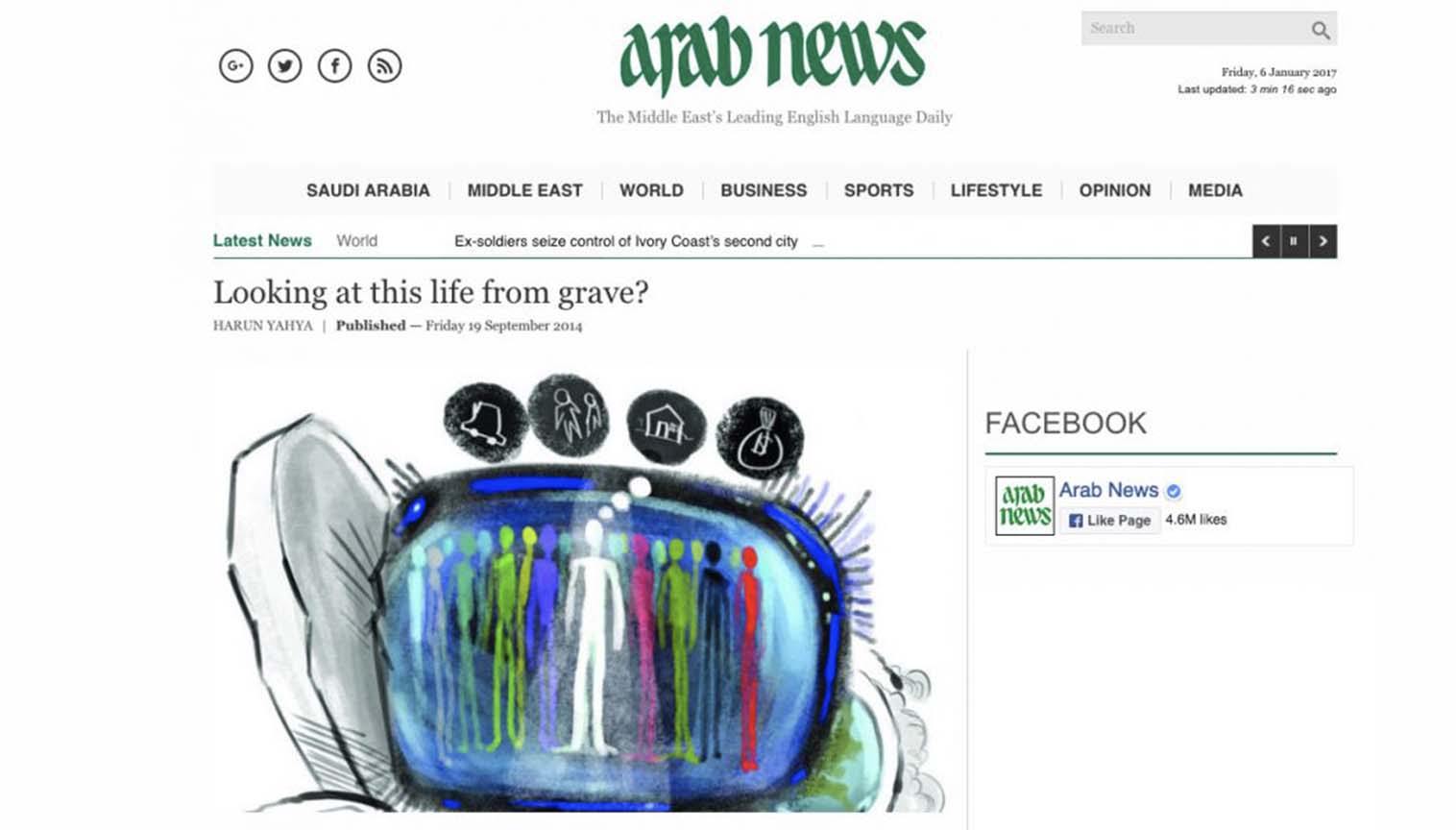
Death is one of the realities that occupies the human mind the most, and at the same time one of the deepest and most fundamental truths. Our Lord informs of this clear and definite truth in the Qur’an:
“Every soul shall taste death. In the end you shall return to Us."
(Surat Al-Ankabut, 57)
Time, without our realizing it, carries us toward the end of life. Death is a reality awaiting us; as we move closer to death, death likewise moves closer to us. There is a final point of meeting, and everyone will inevitably reach that point. This truth is expressed in the Qur’an as follows:

“Wherever you are, death will catch up with you, even if you are in impregnable fortresses.” (Surat An-Nisa, 78)
Questions such as what is felt at the moment of death, whether it is painful, how the soul departs from the body, whether death occurs suddenly or gradually, and what happens after death occupy the thoughts of almost everyone.
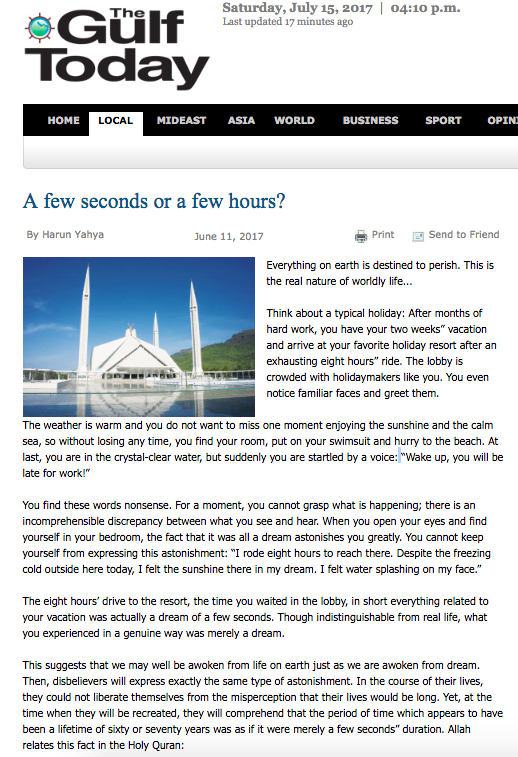
The Qur’an informs that death is not annihilation; on the contrary, it is an awakening. The verse, “They will say, 'Alas for us! Who has raised us from our resting-place? This is what the All-Merciful promised us. The Messengers were telling the truth.'” (Surah Ya Sin, 52) strikingly reveals this reality. The word ‘marqad’ used in the verse is especially noteworthy; it does not mean a grave, but rather a sleeping place / bed. When people are resurrected after death, they will realize, as emphasized in the verse, that they had been asleep while living in the world, and they will say, “We were asleep; who woke us up?” The meaning pointed out in this verse is very profound. For true clarity, true life, and uninterrupted consciousness begin with death. The veil of the worldly life, which consists only of shadows, is lifted with death. Therefore, death is not annihilation; on the contrary, it is the beginning of a brand-new, uninterrupted, real life.
Why Did Our Lord Create Death?
Thinking about death has an effect that refines a person’s morality and matures their soul. It is observed that at the root of many psychological difficulties experienced by people today lies the fact that they have forgotten death. Thoughts such as “I could not get married, I could not enter the school I wanted, I could not own the car I dreamed of, I made wrong decisions, I could not reach the life I desired” wear a person down and lead them into unhappiness. Whereas a person should never forget that the life they maintain as a shadow being will come to an end when the veil is lifted. The Qur’an explains the life of this world as follows:
“Every self will taste death. You will be paid your wages in full on the Day of Resurrection. Anyone who is distanced from the Fire and admitted to the Garden has triumphed. The life of this world is just the enjoyment of delusion.”
(Surah Al ‘Imran, 185)

God created death in order to break the human being’s excessive attachment to the world and to remind them of the truth. A person who contemplates death becomes more balanced, consistent, attentive, and conscious. For people who exhaust themselves by being carried away by temporary worldly pleasures or who enter into ruthless competitions, thinking about death is a cure. Because the thought of death distances a person from selfishness, develops compassion, and grants a deeper perspective.
Death is like awakening from a dream. Dreams provide clues about how different dimensions of life may exist and thus help one reflect on death and resurrection after death. With death, reality becomes so clear that a person definitively realizes that worldly life was actually a very short dream. When people are asked how long they lived in the world, they express that this duration was surprisingly short:
“He will ask, ‘How many years did you tarry on the Earth?’ They will say, ‘We tarried there for a day or part of a day. Ask those able to count!’”
(Surat Al-Mu’minun, 112–113)
The moment of death is the turning point at which a person transitions to a new dimension. Death means transforming from the dream-like worldly life into a much sharper and uninterrupted reality. The verse, “You were heedless of this so We have stripped you of your covering and today your sight is sharp.” (Surah Qaf, 22) explains this truth. For the believer, this transition occurs with peace. For those who deny, a process filled with pain and fear begins. For believers, death occurs as easily as getting out of bed. The verse, “And those who draw out gently”(Surat An-Nazi‘at, 2) is a great glad tidings specifically for believers. At the moment of death, believers do not suffer pain. Even if they encountered various trials, illnesses, and hardships in their lives, the moment of death itself is completely peaceful. Likewise, children do not suffer pain at the moment of death. With death, believers attain deep tranquility; they feel no fear, anxiety, or distress. Even if they encounter extraordinary situations such as earthquakes, floods, or accidents, they do not fall into fear, because the sakinah (state of tranquility) granted by God prevents this.
At the moment of death and afterward, nothing occurs that will disturb or grieve believers. Just as the feeling of relief when awakening from a dream, death likewise brings relief and peace for believers. At the moment they die, they are met with a beautiful and loving reception; their questioning is completed quickly and effortlessly. This reality is given as glad tidings as follows:
“Those the angels take in a virtuous state. They say, ‘Peace be upon you! Enter the Garden for what you did.’”
(Surat An-Nahl, 32)
In contrast, for those who are in denial, the process that begins with the moment of death turns into something frightening and tormenting. This situation is reported in the verse as follows:
“How will it be when the angels take them in death, beating their faces and their backs?”
(Surah Muhammad, 27)
Conclusion: Death Is Meeting God
The believer is always prepared for the reality of death, because for them death is the moment of meeting God. A person comes from God and returns to Him. The Qur’an expresses this truth with these words:
“...‘We belong to Allah and to Him we will return’.” (Surat Al-Baqarah, 156)
The place where real life begins is the Hereafter; our Lord created the world in order to reveal, among His servants, who will perform better and more righteous deeds through their behavior and actions. This truth is conveyed as follows:
“He Who created death and life to test which of you is best in action. He is the Almighty, the Ever-Forgiving.”
(Surat Al-Mulk, 2)
The verse,
“The life of this world is nothing but a game and a diversion. The abode of the Hereafter—that is truly Life if they only knew.”
(Surat Al-Ankabut, 64)
and the following verses give the glad tidings that while death is an event full of fear and terror for the wrongdoers, it is the first step into Heaven for believers:
“But the truth is that if he is one of Those Brought Near, there is solace and sweetness and a Garden of Delight.”
(Surat Al-Waqi‘ah, 88–89)
It should not be forgotten that death is not something to be grieved over, but a mercy and a cure to be welcomed with joy; for the believer, it is the moment of meeting God.















i_gordugunu_soylemesi_Hz_Mehdi_(as)i.jpg)