On June 14, 2024, a headline published in Forbes openly announced a quietly growing crisis in modern biology. Moreover, this announcement was made in language not commonly seen in scientific articles: “Evolution May Be Purposeful — and It’s Freaking Scientists Out.”

This headline is not an ordinary popular science expression. On the contrary, it is a banner demonstrating that the assumption of “randomness,” which lies at the very center of evolutionary theory, is now being seriously questioned (and that evolutionists are relatively coming somewhat closer to the truth). For Darwinism has, from the very beginning, defended a purposeless model; it has claimed that life is the product of accidental, directionless, and unconscious processes.
According to the claim of Darwinism, which has no scientific foundation: “Natural selection and mutation are two complementary mechanisms. The source of evolutionary changes is random mutations occurring in the genetic structure of living beings. The traits caused by mutations are selected through the mechanism of natural selection, and thus living beings evolve.”
Yet today, a new discourse voiced by evolutionary biologists themselves is rising: “Purposeful Evolution.” In this article, we will address whether this discourse is a maneuver intended to rescue Darwinism, or the final act announcing the collapse of the theory, through statements by evolutionary scientists that amount to confessions.
What Does Purposeful Evolution Defend – and What Can It Not Save?
Advocates of Purposeful Evolution begin by acknowledging that classical Neo-Darwinian mechanisms cannot explain biological realities. According to them, “evolutionary changes” are not merely the product of random mutations and natural selection, but living systems are supposedly able to produce goal-directed solutions to environmental problems, and cells and genetic networks make arrangements as though they “know what will be useful.”
In order to save evolutionary theory, these scientists have put forward the “Extended Evolutionary Synthesis.” As stated by Austrian biologist Gerd B. Müller, one of the pioneers of this movement, Modern Synthesis (Neo-Darwinism) is successful in explaining how those who survive are filtered out; however, it is insufficient in explaining how new organs and structures emerge. In the evolutionary process, the main work is not done by mutations, but by the organism’s internal developmental dynamics.[1]
This discourse, as can be recognized at first glance, is a significant criticism directed at Darwinism. Indeed, studies over the last 10–15 years on gene regulatory networks, cellular signaling systems, claims of adaptive mutation, and epigenetic mechanisms have delivered devastating new blows to the Darwinian understanding of randomness.
The “internal developmental dynamics” indicated by Prof. Müller represent, contrary to the random processes claimed by the evolutionary deception, the order upon which life is constructed. The boundaries that modern biology calls “constraints” are, in reality, special design rules placed into the nature of every living being by God. These rules are like biological safety locks; they are divine protocols that ensure the process proceeds within a specific purpose and order. Therefore, constraints are not deficiencies, but among the most concrete evidences of flawless measure and balance in creation. The internal dynamics mentioned by Müller are clear evidence that life did not arise through accidental accumulation, but was brought into existence through a program whose every stage is kept under control, directed toward a specific purpose, and designed with superior intellect.
In short, the claims of the Extended Evolutionary Synthesis do not strengthen Darwinism; on the contrary, they openly invalidate its fundamental assumptions. Purposeful Evolution acknowledges the problems that Neo-Darwinism cannot explain, yet it does not truly solve these problems. It merely abandons the word “random” and replaces it with an undefined expression: “purpose.”
As the Pillar of Darwinism — Randomness — Collapses

For many years, Darwinists have relied upon blind, unconscious, and purposeless mutations in order to justify so-called evolution. However, one of the leading figures of Purposeful Evolution, the well-known evolutionary biologist James A. Shapiro, explicitly rejects this assumption and states that the idea that the genome (DNA) is an unchanging, read-only memory subject only to errors (mutations) is no longer valid. Cells can reorganize their own DNA in response to biological challenges. This is not ‘randomness,’ but ‘natural genetic engineering. [2]
Yet even Shapiro himself cannot provide a clear answer to the question of how natural genetic engineering systems originated in the first place. His words are highly destructive in terms of their emphasizing Darwinism’s helplessness. For in stating that cells repair and reorganize their own DNA, he is in fact speaking of software.
Here a critical question arises: If genetic changes are defined as “engineering,” who is the engineer? If there is engineering, there is an engineer. If there is an extraordinary software and information-processing capacity within the cell — and today we know beyond any doubt that there is — then there is a programmer who possesses superior intellect.
Genes and the Death of Neo-Darwinism

Neo-Darwinism rests not only upon the assumption of random mutations but also upon the acceptance that genes are the masters of biology. According to this approach, the organism is a passive vehicle implementing the instructions of genes. The renowned Professor of Biology Denis Noble of Oxford University is among those who delivered the harshest blow to the school of Richard Dawkins, who stated that “the gene is a selfish program.” Noble clearly and explicitly states that this assumption does not accord with reality, saying, Modern Synthesis (Neo-Darwinism) assumed that genes are the ‘masters’ and the organism the ‘slave.’ Biological reality is exactly the opposite. Genes determine nothing; they are merely databases to which the cell refers when needed. The ‘Music of Life’ is not dependent on a scorebook (DNA); the orchestra (the cell) reinterprets the music according to the situation at that moment. Darwinism’s ‘central dogma’ (the idea that information flows only outward from genes) has scientifically collapsed.[3]
According to Noble, a blind evolutionary mechanism operating through genes cannot exist. Biological systems do not behave randomly; they strive to preserve balance, maintain functionality, and give directed responses to environmental changes. Therefore, genes are passive materials in this process.
The above statement openly declares that the assumptions of Neo-Darwinism are incompatible with scientific data. Rather than explaining the traces of purpose in biology, Neo-Darwinism preferred to exclude them by definition. However, with the collapse of the gene-centered framework, purposiveness is returning not as a philosophical escape route, but as a biological necessity.
Prof. Denis Noble, the well-known British scientist, is not a figure criticizing evolutionary theory from outside; he is one of the leading names in modern biology. For this reason, the expression “Neo-Darwinism is dead” has become a historic confession. [4] These words of a world-renowned biologist are the last throes of a 150-year-old deception.
Darwinism’s New Impasse: Epigenetics
Developments in the field of epigenetics in recent years — namely, studies showing that interaction with the environment can leave permanent biological marks — have further strengthened the idea that the organism is not a passive element. Evolutionary theorist and geneticist Eva Jablonka criticizes Neo-Darwinism with her words that not only genetic but also epigenetic, behavioral, and symbolic systems are part of heredity.
Organisms can transmit to the next generation things they have learned or experienced from their environment. This shows that evolution is far more directed and rapid than Darwin imagined. Randomness is a very weak explanation in the face of these complex transmission systems. [5]
As modern biology discovers the sudden and programmed adaptation ability (epigenetics) exhibited by living beings in response to environmental changes, evolutionists have panicked out of fear of being left without a mechanism. Indeed, the findings show that the concerns of evolutionists are not unfounded:
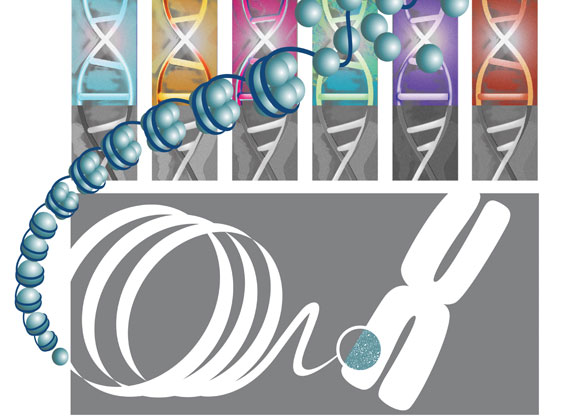
• Program Instead of Chance: Research on epigenetics demonstrates that a living being responds to external effects not through random mutations, but by activating “emergency scenarios” already present within its genetic structure. Certain genes switch on and off depending on age and timing (such as the sex hormones that begin to be secreted during puberty) as well as in response to external factors, becoming active under specific conditions. Although evolutionists present such changes as “adaptation,” it is now understood that the genetics do not change; rather, intelligent switches are activated and deactivated, and there are special DNA sequence regions controlling this system. The previous labeling of these DNA regions as “junk DNA” is regrettable.
• Insurmountable Boundaries: This situation refutes the evolutionary theory’s claim of “random change.” For the cell possesses the ability to perceive external changes — even age or seasons — and activate the appropriate gene. This is a conscious process occurring within special design rules and insurmountable limits placed into the genetics of living beings by God.
The Source of Information in the Cell and Divine Software
The essential question of epigenetics and complex biological systems is this: How does the cell know when and how to respond? At this point, our focus must shift away from “matter” and toward the “source of information.”
• Biological Data Management: A computer’s hardware (the cell) has no meaning without the operating system (DNA and epigenetic codes) installed within it. The very source of the panic that epigenetic discussions have caused in evolutionary circles lies precisely here: Information cannot be derived from matter. Matter is merely a vehicle for carrying information. The paper and ink of a book are not the author of the novel within it. Likewise, the atoms of the cell also cannot be the source of the tremendous software within it.
• A Metaphysical Intellect: The libraries of data within the cell and the control mechanisms processing this data in milliseconds cannot be the product of blind processes or winds of chance. The existence of information necessarily requires a Programmer. The existence of information absolutely necessitates a Programmer. This extraordinary data management in the cell proves that life is not merely a heap of molecules, but a miracle of creation whose every stage is controlled.
The astonishingly complex, sensitive, flawless, orderly, and harmonious structure of the cell and DNA cannot be conceived without a Creator. Information can only be the product of an Intellect that designs, plans, and programs it. Regrettably, evolutionary scientists, due to their materialist prejudice, cannot express this glaring truth.
To Say “Purpose” Is Not Providing an Explanation
Advocates of Purposeful Evolution replace Darwinian randomness with a concept that is not scientifically defined: Purpose! However, “purpose” is not a mechanism; it is not a cause; it is not a process explanation. It is merely a description.
That is, the intended end product, the entire body plan, systems, organs, cells, organelles are known, and all production steps are planned accordingly. This is already a clear confession of the existence of a supreme intellect that intervenes in every detail.
Note that here the existence of such a sublime power is imperative that knows all proteins, their three-dimensional tertiary structures, the amino acids that compose them, the molecular sequences that form them, the permanent and temporary chemical bonds that will form between these molecules, the atoms that make up these molecules, the subatomic particles that hold these atoms together or separate them, and their electric charges… all at once—an infinite knowledge-bearing creative power that dominates every dimension from micro to macro, that is, the existence of the One Supreme God is certain.
Saying that an event “appears purposeful” does not explain how that purpose came about, by whom, or with what knowledge. What evolutionists do is state only why a building was constructed (its purpose), but insistently refuse to admit who built it and according to which plan (the Creator). Purposeful Evolution is not a solution, only a renaming; it is not an alternative to Neo-Darwinism; it is its confessed inadequacy. As American biochemist Prof. Michael J. Behe expressed, the claim of “Purposeful Evolution,” while trying to save Darwinism, actually deals it the greatest blow: because purpose can only be determined by a will.
Conclusion: Two Theories, One Dead End
The picture that emerges is clear: Neo-Darwinism defends randomness but contradicts biological data. Purposeful Evolution rejects randomness but cannot explain purpose. One relies on blindness and purposelessness, the other accepts direction and purpose; yet neither can explain the source of information. Thus, Purposeful Evolution is not a theory that saves Darwinism; it is the final link demonstrating that Darwinism can never be saved.
As seen, the existence of God — Who possesses knowledge of all things, Who is beyond time, Who knows both the initial and final state of what He creates, and Who has absolute dominion at every moment even at the quantum level — is to be acknowledged imperatively.
The cell, with all its organelles, has a perfect system. The order in the cell is so flawless, so extraordinary, that by itself it is enough to prove the absurdity of life having arisen by chance. Today, in the countless details we observe in living beings with the contribution of science, there is evidence not of “purposeful” or “purposeless evolution,” but only of the truth of creation. This supreme creation belongs solely and entirely to God, the Lord of the Worlds.
[1]Müller, G. B. (2017). "Why an extended evolutionary synthesis is necessary". Proceedings of the Royal Society B.
[2]Shapiro, J. A. (2011). Evolution: A View from the 21st Century. FT Press.
[3]Noble, D. (2017). Dance to the Tune of Life: Biological Relativity. Cambridge Univ. Press.
[4]https://www.youtube.com/watch?v=NAPhBt8VJCM
[5]Jablonka, E., & Lamb, M. J. (2005). Evolution in Four Dimensions. MIT Press. [6]Behe, M. J. (2019). "Darwin Devolves". HarperOne.