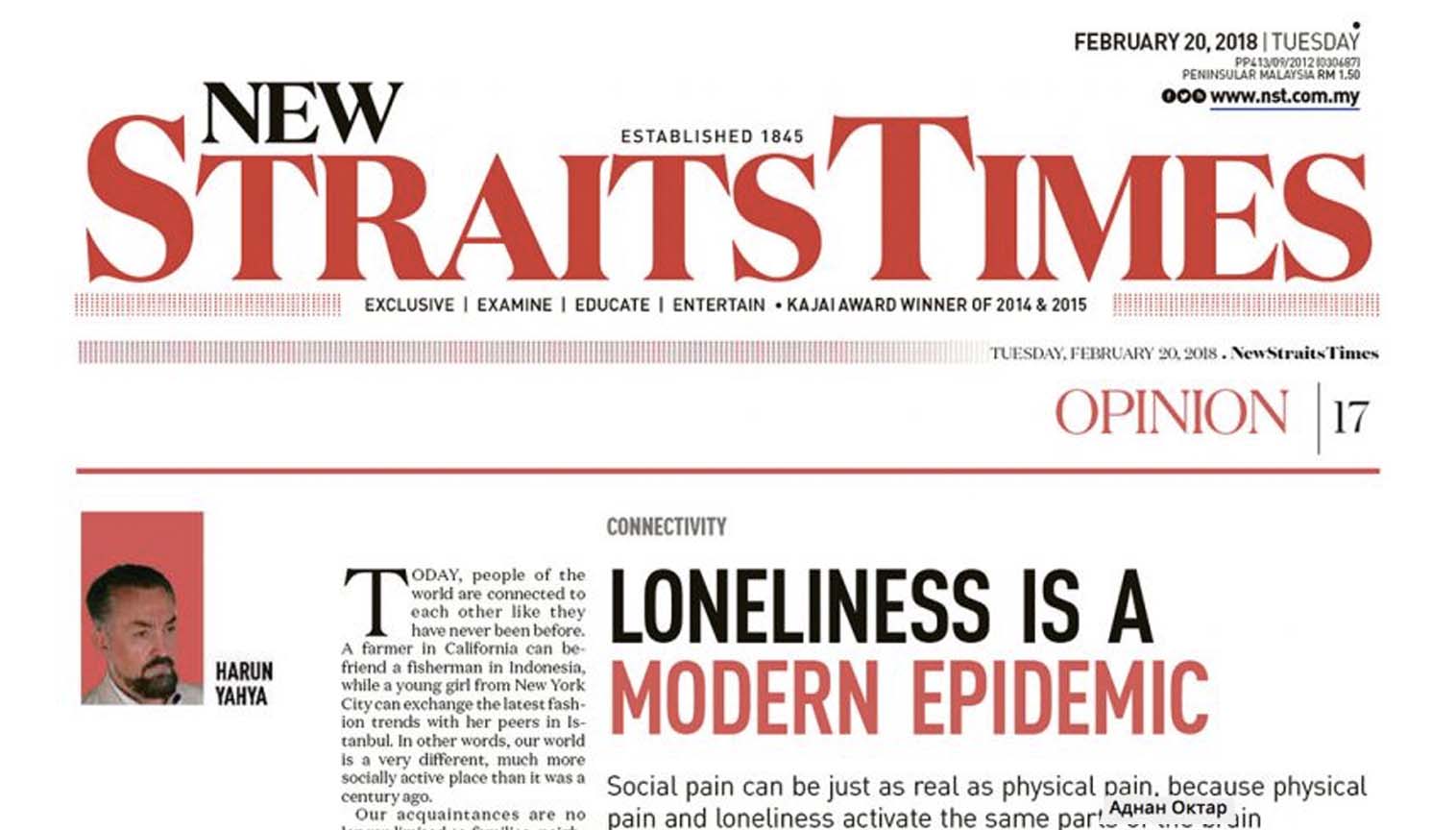
In recent years, a dangerous mindset has become increasingly widespread in society. People are being led to believe that living alone, going through life without needing anyone, keeping their distance from others, and remaining constantly detached are normal, or even ideal, ways of living. Particularly in large cities, living alone is presented as a sign of modernity, freedom, and strength of character, and is at times even encouraged.
Under the banner of modernity, people are taught that independence, needing no one, and living alone are marks of superiority. In television series, advertisements, social media content, and digital platforms, individuals who live alone are often portrayed as "free," "strong," and "self-sufficient." Through these messages, people are subtly encouraged to adopt the following perspective:
"Trust no one. Do not become attached to anyone. Do not get too close to people. Protect your personal space and keep your distance. Do not need anyone. You can stand on your own."
Women, in particular, are strongly encouraged to believe that living alone, sustaining their lives without needing anyone, and acting independently under all circumstances are defining characteristics of being a "strong woman."
Of course, women, just like men, can live independently, work, travel, manage their own lives, and succeed in every area of life. The notion that women are in any way inferior to men in terms of intelligence, willpower, ability, or the capacity to manage their lives is not correct. However, the real issue that deserves attention is the normalization of complete social isolation and the portrayal of living apart from others as an ideal way of life. Human beings were not created to live in perpetual solitude or to exist without needing anyone. Over time, this way of thinking can weaken people both spiritually and psychologically, while gradually undermining human relationships, friendship, solidarity, and social bonds.
Being cautious, acting wisely to ensure one's safety, and being in the company of trustworthy people when necessary are not signs of weakness. Rather, they are expressions of wisdom and a sense of responsibility. Security, solidarity, and the willingness to protect one another occupy an important place in human life. For this reason, encouraging oneself to embrace complete solitude and to live life entirely alone is not a sound approach.
Human Nature Is Suited to Living Together with Those We Love
Human nature is not suited to a life of complete solitude, isolation from others, or living without needing anyone. God created human beings with a soul capable of living through love, affection, the bonds they form with others, and a sense of trust. For this reason, human beings are created with a need to love and be loved, to experience affection, to share, to form friendships, to practice solidarity, and to enjoy close relationships.
Human beings possess a nature that enables them to find peace as members of a society in which people support one another, care about each other's difficulties, encourage what is good, discourage what is wrong, and live in brotherhood, friendship, and solidarity.
Indeed, God reveals in the Holy Qur'an:
“The men and women of the believers are protectors of one another. They command what is right and forbid what is wrong...” (Surat at-Tawba, 71)
This verse indicates that human beings are not meant to live as isolated individuals concerned only with their own lives. Rather, they are meant to live as people who bear responsibility for one another, protect one another, and offer mutual support. The term "protector" (wali) used in the verse does not simply mean an acquaintance or someone one knows. In this context, it conveys the meanings of being a friend, offering support, taking care of one another, providing protection, and not abandoning one another.
Through the bonds they establish with their loved ones, family members, friends, and the people around them, human beings are able to maintain both spiritual and psychological well-being. However, when a person completely withdraws from others, they gradually become detached from brotherhood, sharing, solidarity, spiritual support, and the healthy relationships that help sustain them. This not only weakens the bonds between people, but also increases feelings of loneliness, insecurity, social disconnection, and spiritual emptiness within the individual. As people distance themselves from those around them, they also begin to drift away from love, compassion, and many of the noble qualities that keep them spiritually alive. Over time, this can lead a person to become increasingly withdrawn, pessimistic, and lonely.
The Psychological, Social, and Physical Consequences of Loneliness
Loneliness is not merely a matter of living alone. Over time, it can develop into a serious condition that affects a person's inner world, psychological well-being, and outlook on life. As individuals become increasingly isolated from those around them, they may begin to withdraw into themselves, find it difficult to form meaningful relationships, and gradually come to regard loneliness as normal. This is a serious process that can create the conditions for the development of numerous psychological problems.

Many contemporary studies have reported that prolonged loneliness is associated with depression, anxiety disorders, stress, hopelessness, impaired social communication, and a sense of disconnection from life. Some studies also indicate that individuals who experience intense feelings of loneliness may be at greater risk of suicidal thoughts and self-harming behavior.
As people distance themselves from those around them, they also become separated from those with whom they could share their difficulties and receive spiritual support. Over time, this may allow pessimistic thoughts to grow and can lead individuals into an even deeper state of psychological loneliness.
The World Health Organization also recognizes loneliness as a global public health concern. Research indicates that loneliness has significant effects not only on psychological well-being but also on physical health, with prolonged loneliness being associated with heart disease, a weakened immune system, and an increased risk of premature death. However, the most important issue is faith. A believer who is mentally sound, reasonable, and balanced seeks the company of sincere and trustworthy Muslims rather than completely isolating themselves from others. A Muslim does not regard a life separated from brotherhood, friendship, consultation, and spiritual support as a reasonable or desirable way of living. When whispers of doubt from satan (waswasah) or pessimistic thoughts arise, they can respond to them through the moral guidance of the Qur'an and the strength of their faith. Furthermore, the sincere Muslims around them—their family, relatives, and friends—can provide spiritual support, helping to prevent them from becoming isolated and withdrawn.
For this reason, rather than becoming accustomed to complete solitude, it is of great importance for people to cultivate sincere human relationships and strengthen a way of life characterized by love, friendship, brotherhood, and spiritual solidarity.
Loneliness Also Carries Serious Risks to Life
Loneliness not only gives rise to spiritual and psychological problems, but also leaves people more vulnerable to many life-threatening risks. Particularly in recent years, as the number of people living alone has increased, the absence of anyone to call upon for help during moments of crisis has become a growing and serious social problem.

Today, the media frequently reports cases of people living alone who are found only days—or even weeks—after they have died. Some people are unable to call for help when they become ill, while others collapse or fall with no one nearby to hear them. There have been numerous cases, especially among elderly individuals living alone, in which deaths have gone unnoticed for days.
This clearly demonstrates how severe and dangerous the consequences of isolation can become. As people lose their connections with those around them, they become more vulnerable not only spiritually but also in the practical realities of daily life. At times, by God's will, a person's life may be saved simply because someone else is present. In situations such as illness, accidents, fainting, falls, or sudden medical emergencies, it is of vital importance for someone to be nearby who can notice the situation, call for assistance, or provide immediate help.
In addition, it is observed that people who live alone may gradually become more detached from social life, experience a decline in interpersonal communication, and become increasingly withdrawn. As individuals distance themselves from those around them, they become more psychologically vulnerable and are left to face life's challenges with less support. For this reason, loneliness should not be regarded merely as a personal lifestyle choice; rather, it should be recognized as a serious issue that affects human relationships, mental well-being, and the safety and security of individuals.
Modern Living Opportunities Can Make People More Lonely
Today, although it is thought that communication between people has increased with the development of technology, in reality people may be becoming increasingly distant from one another. People spend their days with telephones, social media platforms, and digital screens; yet despite this, genuine friendships, sincere relationships, and strong human bonds are gradually weakening.
Even though people live in the same cities, in the same apartment buildings, and within the same crowds, they are increasingly becoming strangers to one another’s lives. People speak with each other less, share less, and progressively establish more distant relationships. Especially in large cities, while people live amidst crowds, they may nevertheless experience a profound sense of loneliness.
This situation demonstrates that the apparent comfort offered by modern life cannot replace the human soul’s need for love, closeness, friendship, and trust. From both a scientific and spiritual perspective, the human being is not an entity that can attain true peace merely through digital communication, short messages, social media interactions, or superficial relationships. The human soul requires sincere attention, genuine friendship, beautiful and meaningful speech, love, and human relationships that provide trust and emotional security.

Living Away from Love and Loved Ones Weakens the Human Soul
One of the most fundamental needs of the human soul is love, human connection, and a sense of belonging. The human being is not a creature that can become happy and peaceful solely by having its material needs met. Being loved, being valued, hearing kind and beautiful words, forming friendships, and living within sincere spiritual bonds with other people are of great importance for a person to remain strong both spiritually and psychologically.
A human being is not structured in a way that can maintain a healthy existence in complete indifference and lack of love. For this reason, a person becoming accustomed to constant loneliness, living away from loved ones, and continuously keeping distance from others may, over time, lead to increased withdrawal, a deeper sense of loneliness, and spiritual deterioration.
Although many people today perceive living alone and not needing anyone as a form of “strength,” in reality a person’s complete withdrawal into themselves does not make them stronger; rather, it often renders them more fragile and weaker. When a person feels that they are not alone, and when they receive love, attention, and support from those around them, they gain significant spiritual strength and are able to stand much more resilient in the face of difficulties.
For this reason, in the Qur’an, in many verses, attention is drawn to the importance of love, mercy, and closeness in human relationships. God advises that people live with one another in love, compassion, and solidarity. In one verse it is stated as follows:
“The believers are brothers, so make peace between your brothers and fear God so that hopefully you will gain mercy.” (Surat al-Hujurat, 10)
This verse shows that people are not meant to live in a distant, indifferent, or disconnected manner toward one another; rather, the correct form of social existence is one of brotherhood, closeness, and mutual solidarity. This is because brotherhood is not merely a nominal concept; it is a bond that can only be lived through love, attentiveness, support, and standing beside one another. As human beings move away from love and sincere human relationships, they may gradually begin to normalize loneliness. However, the human soul is not structured in a way that can maintain a healthy existence in a complete absence of love and care. Living away from love, over time, creates significant inner emptiness within a person’s inner world.
For this reason, instead of accustoming oneself to loneliness, it is of great importance—both spiritually and psychologically—to strive to preserve a life in which love, friendship, sharing, and brotherhood are present. When a person feels the presence of people around them who love, support, and genuinely care for them, they are able to remain stronger both spiritually and psychologically. This is because one of the factors that enables a person to endure even the most difficult times is the feeling that they are not alone. Therefore, love, care, friendship, and solidarity, in addition to their spiritual value, are fundamental needs that preserve a person’s mental well-being and attachment to life.
A Muslim Should Not Act According to Suggestions That Encourage Loneliness
A Muslim should not act by accepting every lifestyle that becomes widespread around them as correct. Today, many people may perceive living alone, keeping distance from others, and conducting life without needing anyone as a sign of modernity or strong character. However, the fact that something becomes widespread in society or is presented as appealing does not mean that it is correct.
A Muslim must evaluate their life not according to human directions and social influences, but according to the principles that God has conveyed in the Qur’an. For this reason, directing oneself completely toward isolation, considering a life distant from people as an ideal form of living, and gradually adopting the idea of “I do not need anyone” is not a correct approach. The human soul was not created in a way that is suited to this condition. Even if a person does not initially realize it, as they distance themselves from people over time, they may also begin to move away from love, sharing, friendship, brotherhood, and spiritual support.
In the Qur’an, God does not advise a life that is separate and disconnected from other Muslims; rather, He recommends a way of life in which love, solidarity, brotherhood, unity, and togetherness are present.
Indeed, in the Qur’an, attention is drawn to the fact that those who act in unity and solidarity will be much stronger, and the importance of a cohesive, tightly bound community has been made clear:
“God loves those who fight in His Way in ranks like well-built walls.” (Surat as-Saff, 4)
This verse encourages Muslims not to lead a disorganized, disconnected, and isolated life, but rather to act in unity, togetherness, and mutual solidarity.
Likewise, our Prophet (peace be upon him) also stated in a hadith that people should not live in a fragmented and detached manner, but should instead form a community that supports one another, lives in solidarity, and is bound together through ties of brotherhood:
“A believer to another believer is like a building whose different parts enforce each other.”
(Sahih al-Bukhari, Book 46, Hadith 7)
For this reason, a Muslim should not admire or imitate perspectives that promote loneliness. Rather, one must not forget that true beauty lies in a life where love, friendship, brotherhood, sharing, and solidarity are lived. For what truly makes a human being strong is not living alone. What makes a person strong is their ability to establish good relationships with righteous and valuable people who live by the moral values that are pleasing to God, to develop friendships, to love, to share, and to have trustworthy people by their side.

Conclusion
Although loneliness may sometimes appear as a lifestyle presented by the modern world as freedom and strength, the essential way of life that corresponds to human nature (fitrah) is one in which love, friendship, brotherhood, sharing, and solidarity are lived. The human being has not been created in a way that allows for a healthy, peaceful, and balanced life through complete withdrawal into oneself, isolation from one’s environment, and the belief that one does not need anyone.
A human being is strengthened through love. They endure through friendship. They find peace through brotherhood. They are protected through solidarity. When a person is together with trustworthy individuals, they attain a more balanced state of being both spiritually and psychologically.
For this reason, in the face of a modern culture that normalizes loneliness, glorifies distance, and promotes a life detached from love and closeness, the value of love, mercy, friendship, brotherhood, and solidarity must be strongly reaffirmed. The true beauty for the human being is not an isolated and disconnected life, but rather a life lived with good moral character that is pleasing to God, grounded in love, trust, and sincere human relationships.
References
· World Health Organization (WHO), “Social connection linked to improved health and reduced risk of early death”, 30 June 2025.
https://www.who.int/news/item/30-06-2025-social-connection-linked-to-improved-heath-and-reduced-risk-of-early-death
· London School of Hygiene & Tropical Medicine, “Expert comment: Loneliness impacting 1 in 6 people, WHO report finds”, 2025.
https://www.lshtm.ac.uk/newsevents/news/2025/expert-comment-loneliness-impacting-1-6-people-who-report-finds
· The Qur’an, Surat at-Tawbah, 71
· The Qur’an, Surat al-Hujurat, 10
· The Qur’an, Surat as-Saff, 4
· Sahih al-Bukhari; Sahih Muslim: “A believer to another believer is like a building whose different parts enforce each other."