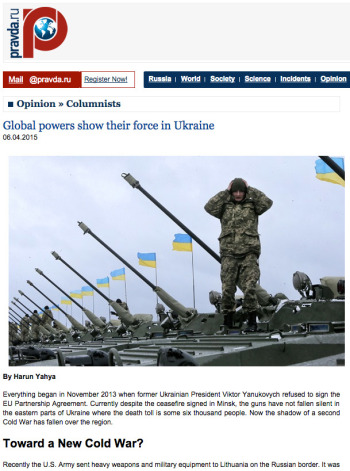
 To understand how important the Crimean Autonomous Region is for the region and for world peace, let’s take a walk down the memory lane. Throughout history, Crimea has been the target of much controversy, occupation and competition due to its strategic location and indeed saw many painful wars as a result. During the reign of the Ottoman Empire, the region came to be called the Crimean Khanate. As the Ottoman Empire started its decline, Russia became more interested in the region and following the defeat of the Ottomans in the Russo-Turkish War (1877–78), both countries accepted the autonomy of the Crimean Khanate. Yet difficult days were ahead for the Muslim Tatars that lived so close to Russia.
First, Muslim locals that were wary of the rule of Russia that was eager to fill in the place of Ottoman Empire were forced to immigrate to Anatolia. Yet, the worst wasn't over and in 1944, Stalin ordered the removal of Crimean Tatars and their resettlement in Central Asia. Half of the people forcibly exiled died during the journey due to disease and hunger. Then the Communist Russian administration brought Ukrainian and Russian nationals to the region after Muslims were brutally driven out of their homes. Khrushchev, who was also Ukrainian, made the move to transfer Crimea to Ukraine in 1954, and by then the demography had already dramatically changed. The Russian population reached 60%, with Ukrainians at 24% and Tatars declining to 14%.
After the dissolution of the USSR, Crimea officially became a part of Ukraine as an autonomous republic. The region has been the topic of much discussion recently due to the latest incidents taking place in Ukraine. After the pro-Russian President Victor Yanukovych fled the country, the balance was tipped in favor of Europe, and tensions promptly broke out amongst the Russians living in the eastern part of the country and especially in Crimea. The Russian government is encouraging the Russian population of Crimea to annex themselves to Russia.
However, this is a very significant decision, especially for the Crimean Turks; they were already a minority before, are now rightfully concerned that if they join Russia, their already crippled democracy and human rights situations will suffer even more. Nowadays Muslims are especially concerned about the possibility of Crimea's ethnic Russians passing a resolution that would allow Crimea to break away from Ukraine. (Russians consider the region strategically important due to their fleet in the Black Sea. The base at Sevastopol, was leased for 49 years during the pro-Russian government era, is the most strategic naval facility in the Black Sea region).
The problems in Russia stem from the clear distinction between East and West Ukraine: West Ukraine is Catholic and close to the EU, while East Ukraine is Orthodox and closer to Russia. Crimea is almost completely populated by a Russian majority, due to its changed demography after the forced resettlement of the Muslim Tatars in Central Asia. It is clear that this undesired division would benefit only Russia, but the Crimean Tatars will be the ones to lose the most, having lost their population and influence on their own soil. Pro-Western opposition elements ignoring the requests of East Ukraine, and pro-government supporters ignoring the requests of West Ukraine, will serve no purpose other than hurting the country even more. Things would improve much faster if Ukraine adopted a model that saw differences as a source of strength rather than a reason for division and sought economic and cultural alliances both with the EU-USA and Russia.
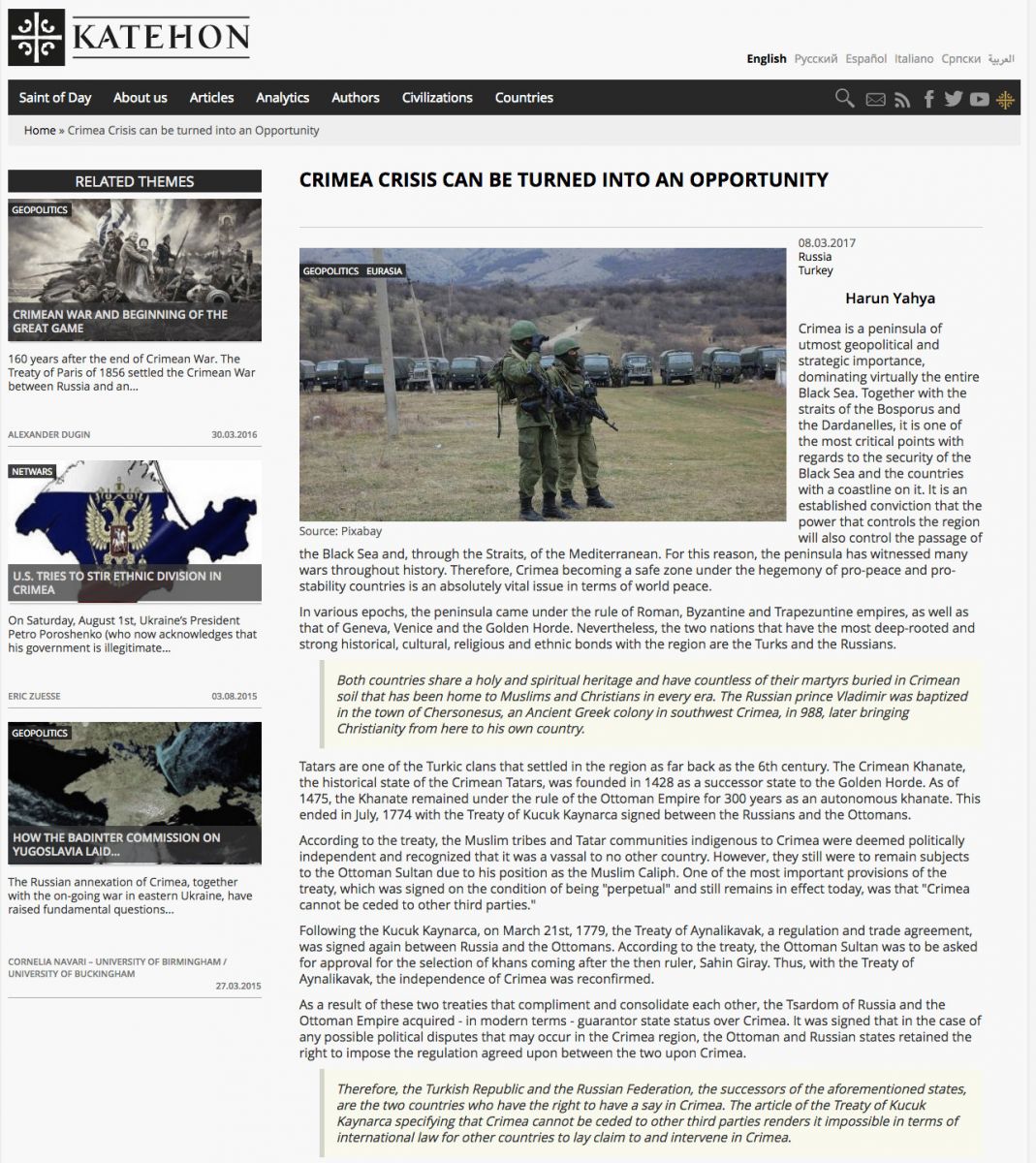
This has been the strategy and policy of Turkey towards the region, which it feels historically responsible for and associated with. The Turkish government argues that the Crimean region should stay a part of Ukraine and the territorial integrity of the country should be preserved and is encouraging a dialogue-based approach between Ukraine and other countries. Russia and Turkey, the two most important countries in the Black Sea area, have developed and enjoy very good relations in recent years; therefore, any solution adopted should include Russia. And most definitely, Ukraine should not be made a victim of the competition between Europe and Russia. The same thing goes for Crimea, and if the Crimean Parliament hastily passes a resolution to break away from Ukraine, things will simply take a turn for the worst and a military intervention by Russia would only push the country over the edge. Indeed, the most recent moves by Russian military personnel into Crimea have only inflamed matters.
The solution must be one of peace and love that excludes neither Russia nor the EU. The Middle East, the Caucasus, and Eastern Europe have seen a good many wars in their recent history. To establish peace for all, a union should be founded immediately, which is at the heart of the region, and Ukraine and Russia in their current undivided form, should be incorporated in this union. The Russian Federation should assume an active role and act in coordination with Turkey, and lead the countries that were previously a part of the USSR forward in this path of peace. It is important because this union will see all the people, regardless of their ideas, as their own, and will show them compassion and provide peace and wellbeing for all.
Only this union that will embrace all the countries in the region can bring a true atmosphere of peace and love. Such a union is the only solution to the current problems and the bloodshed in the region.
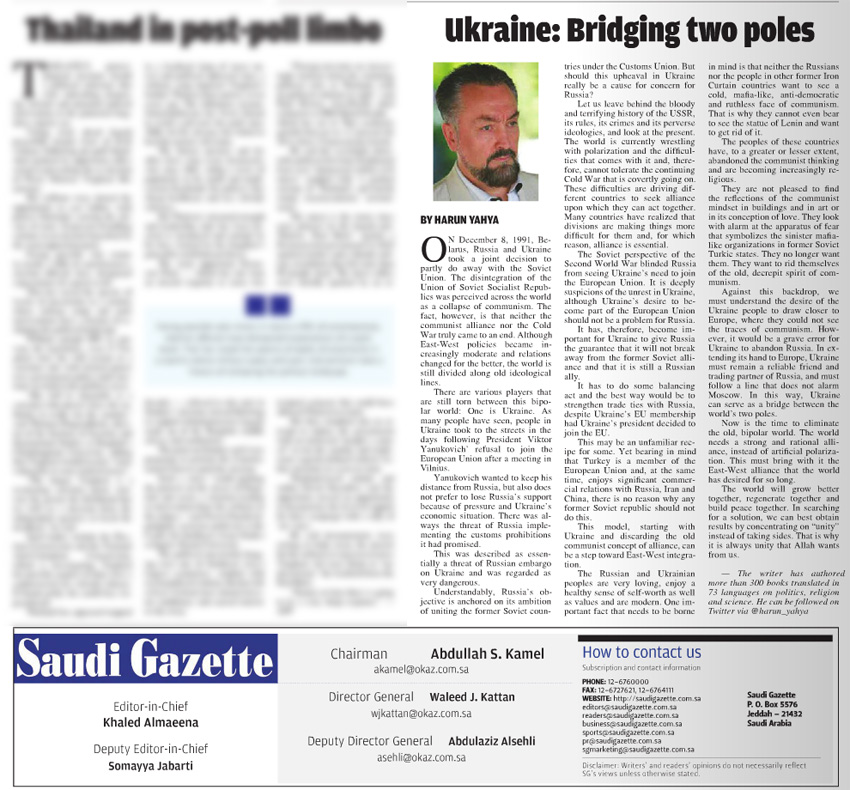
Mr. Adnan Oktar's article on Harakah Daily:






.jpg)