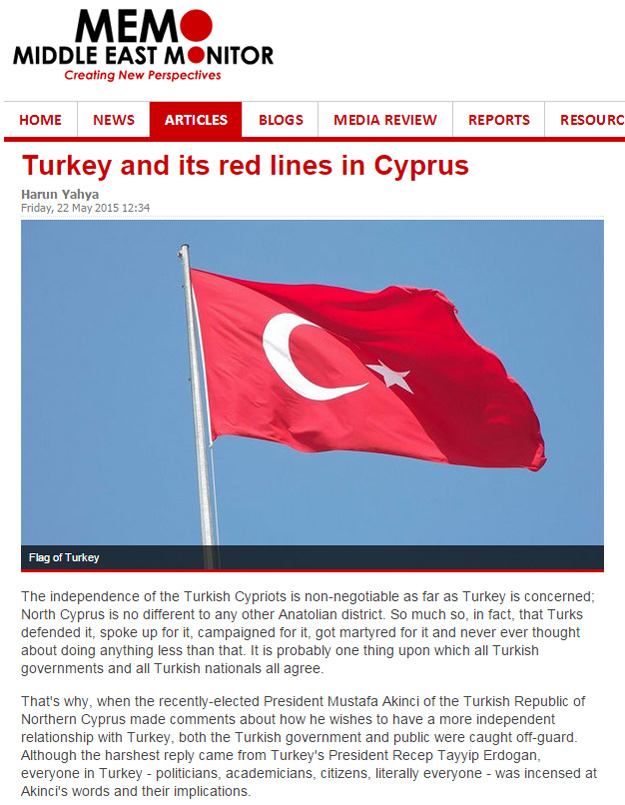
The independence of the Turkish Cypriots is non-negotiable as far as Turkey is concerned; North Cyprus is no different to any other Anatolian district. So much so, in fact, that Turks defended it, spoke up for it, campaigned for it, got martyred for it and never ever thought about doing anything less than that. It is probably one thing upon which all Turkish governments and all Turkish nationals all agree.
That's why, when the recently-elected President Mustafa Akinci of the Turkish Republic of Northern Cyprus made comments about how he wishes to have a more independent relationship with Turkey, both the Turkish government and public were caught off-guard. Although the harshest reply came from Turkey's President Recep Tayyip Erdogan, everyone in Turkey - politicians, academicians, citizens, literally everyone - was incensed at Akinci's words and their implications.
However, at this point, it would be more expedient to try to see both sides of the story rather than getting carried away in the heat of the moment.
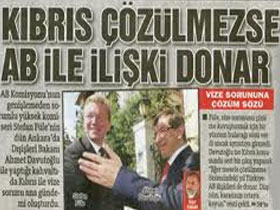
Turkey sees Cyprus as a national cause: it has never considered giving it up, as to Turkey that would amount to conceding defeat and surrendering its own lands. Even threats to its EU bid didn't deter the government in Ankara from taking such a strong stance over Cyprus. As explained in the words of Turkish opposition leader Devlet Bahçeli, it was about sacrifices and appreciating the prices paid.
Nevertheless, there is obviously another side of the story. Akinci is an elected politician and although he could have worded his intentions in another way, it is clear that he never implied that he intends to cut ties with Turkey. He is aware of the strong links between these two countries and has no intention of damaging them. But he also made promises to his people for an independent, strong country and works to fulfil what he said. He stated his intentions of reopening Maras, which has been closed since 1974, under UN supervision and using the port of Magusa and Ercan airport for direct commercial and non-commercial flights; and showed enthusiasm in starting trade with the Greek side, which is currently suffering from a financial crisis. Also, last week as part of a UN-brokered peace process, the Turkish Republic of Northern Cyprus announced that the visa restrictions between the Turkish and Greek sides have been removed. Travellers from the Greek side can now move about freely across to the Turkish side of Cyprus. These are all clear signs of Akinci's willingness to contribute to peace.
This is all good news, as it is the wish of Turkish and Greek Cypriots to achieve a solution in the island as soon as possible. Having a solution-oriented approach will help greatly with that goal. It is also understandable that a change is seen to be necessary, as the previous methods didn't seem to work. However, rejecting the status quo doesn't equate to distancing Northern Cyprus from Turkey. It also doesn't amount to denying the guarantor status of Turkey. The president is aware of the fact that it is possible to develop a solution by working with Ankara. He also knows that it wasn't Turkey or the Turkish Cypriots who have prevented peace so far; it was the Greeks who rejected the 1985-86 Draft Framework Agreements, the UN-sponsored Set of Ideas of 1992, the package of Confidence Building Measures of 1994 and, more recently, the Comprehensive Settlement of the Cyprus Problem (Annan Plan) in April 2004. Even the financial crisis in the Greek side of the island couldn't convince them to approach peace; ultimatums issued by the Church kept the Greeks away from their Turkish counterparts.
Another important aspect of the issue is the fact that Turkey is a guarantor country in the conflict and will, therefore, continue to be a part of any solution agreed upon. The Zurich and London agreements gave Turkey, Greece and Britain guarantor status. Turkey will continue to use all the rights vested in it by this agreement to protect the independence and security of the Turkish Cypriots. Even though Greece gives signs that it no longer wishes to be as actively involved in the Cyprus conflict as before, by calling the guarantor status "a model from the old ages", both countries still have guarantor powers and will therefore continue to play important roles in the future of Cyprus.
For Turks, independence is a matter of life and death. They have demonstrated this numerous times during their thousands of years of history. Just like the independence of Turkey, the independence of the Turkish Cypriots, who were part of the Ottoman Empire for 307 years, is non-negotiable. Turkey, as before, will continue to work for peace and emphasise its commitment to a bi-communal, bi-zonal, federal state plan. However, any proposal to remove the Turkish troops from the island - they are the only guarantee of the safety of the Turkish Cypriots - is also a non-starter. Even though there might be a few people willing to compromise on these important principles for the sake of a few EU benefits, Turkey will not hesitate to use its guarantor powers to their full extent to block such moves. The safety and independence of the Turkish Cypriots is a must for Turkey and will not be compromised.
That being said, Turkey will work towards building a state recognised by the two communities on the island, just as it has been working to achieve this to-date. It is clear that new President Akinci will take concrete steps towards achieving that goal too. As he does so, he will find Turkey by his side in every stage of his journey, supporting him in his efforts without compromising the red lines.
Adnan Oktar's piece on Middle East Monitor: