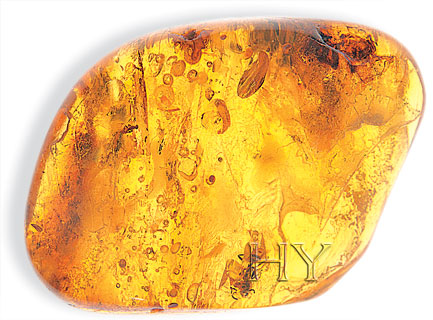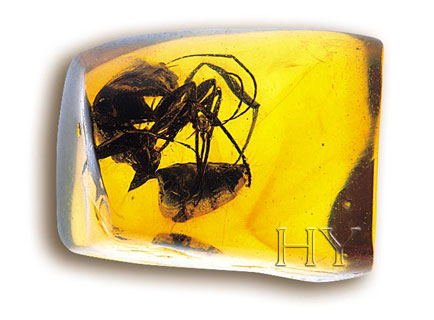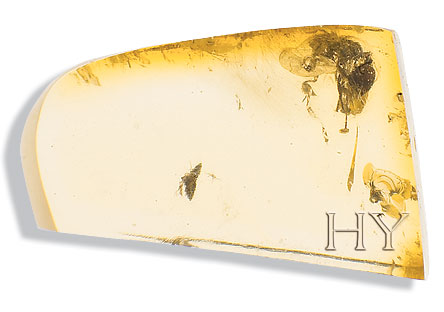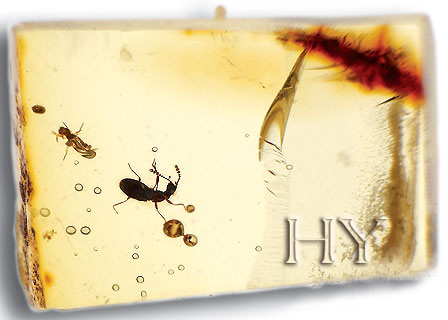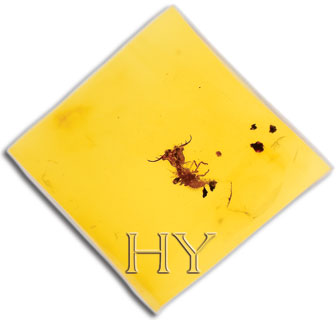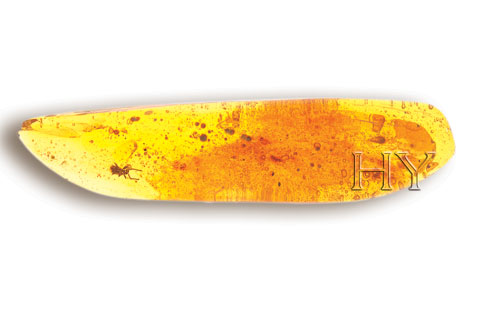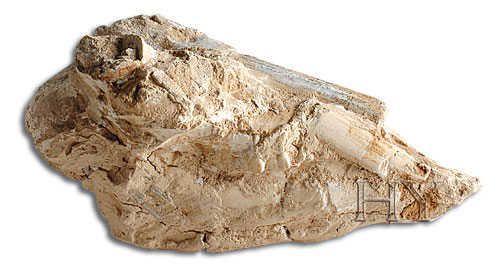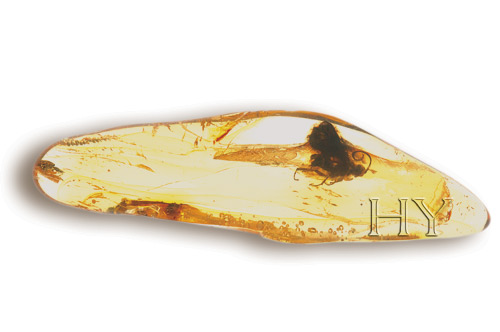
This 45-million-year-old species of wasp that has been preserved to this day in amber is a parasite. It has around 12,000 defined species and unidentified 40,000-50,000 species are estimated to be living around the world today. To lay eggs, these wasps select other species of insects and paralyze them. Then they deposit their eggs into this insect, providing a secure place for their larvae to grow. Some species sting their prey to death, while others make them sterile and slow down their movements, and thus make them secure places for the offspring to hatch and dine. Evolutionists who define species that lived millions of years ago as ""primitive"" cannot explain the identical correspondence between these specimens preserved in amber with those alive today. The exact similarity between today"s wasps and those specimens in the past is an obvious proof that these insects have never undergone evolution.
WASP
795
Articles on Darwinist Deception
Atlas of Creation
Creation
Creation Museum
Creation and the Origin of Life
Creation of man
Darwinism
Darwinism and Racism
Darwinism is a Religion
Darwinizm in Europe
Evolution
Fossil
Fossil exhibition
How Fossils Overturned Evolution
Intermediate Form
Living Fossils
Macroevolution
Microevolution
Modular Evolution
Neo-Darwinism
Signs of Creation
Social Darwinism
Social evolution
Struggle against Darwinism
The Creation Of The Universe
The Miracle of Creation
The claim of evolutionary creation
The collapse of Darwinism
The collapse of atheism
Transitional form
Wasp
What is evolution?
a new creation
amber
election results
fossil record
intermediate form
poisonous
theory of evolution
wasp amber
 Videos
 Videos
 Videos
Videos
Videos
Videos
Videos
 Videos