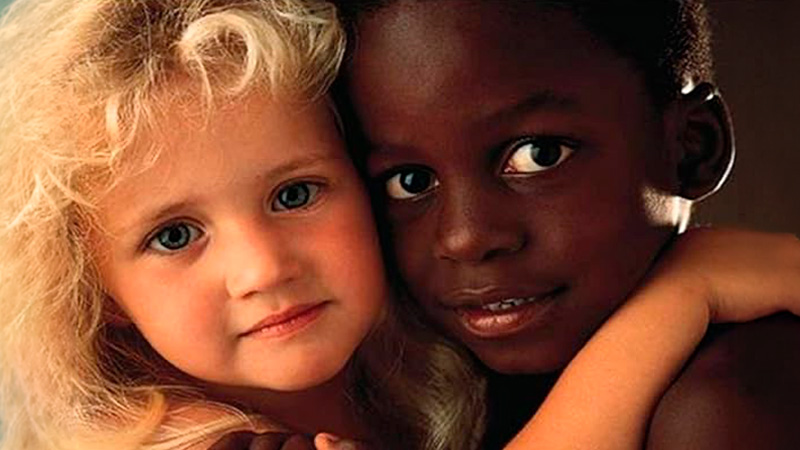
Arthur is a boy living in the West. Arthur is healthy and his family looks after him very well. Even if he gets ill, there is a hospital near their home from which they can get support. His mother takes care of him, ensuring that he eats a proper and balanced diet. He has lots of toys. Even though his life passes by between home and school like many children, he enjoys the time he spends with his friends. He can go outside and play games freely whenever he wants. The biggest dream of 9-year-old Arthur is to be a fighter pilot like his father.
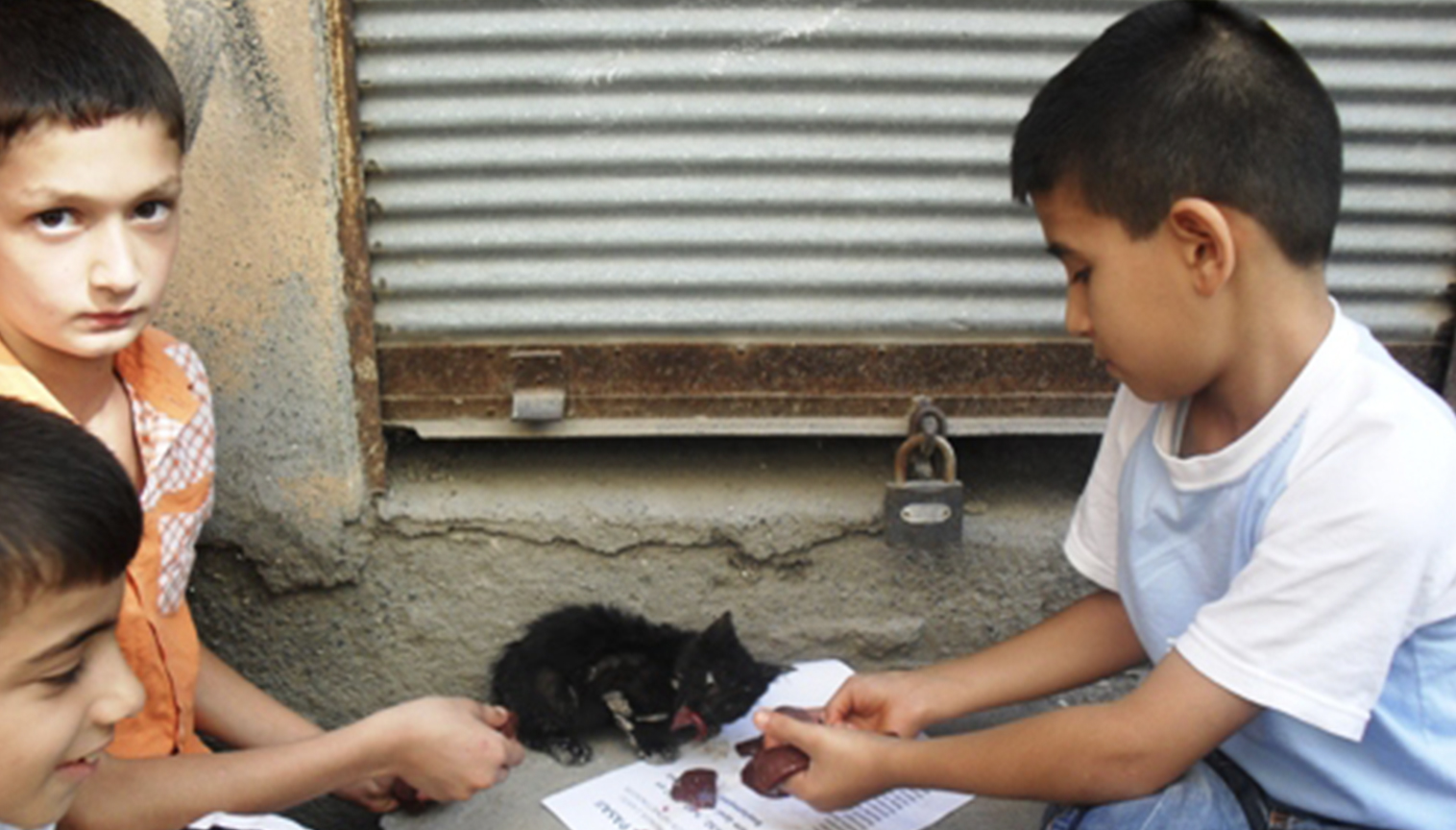
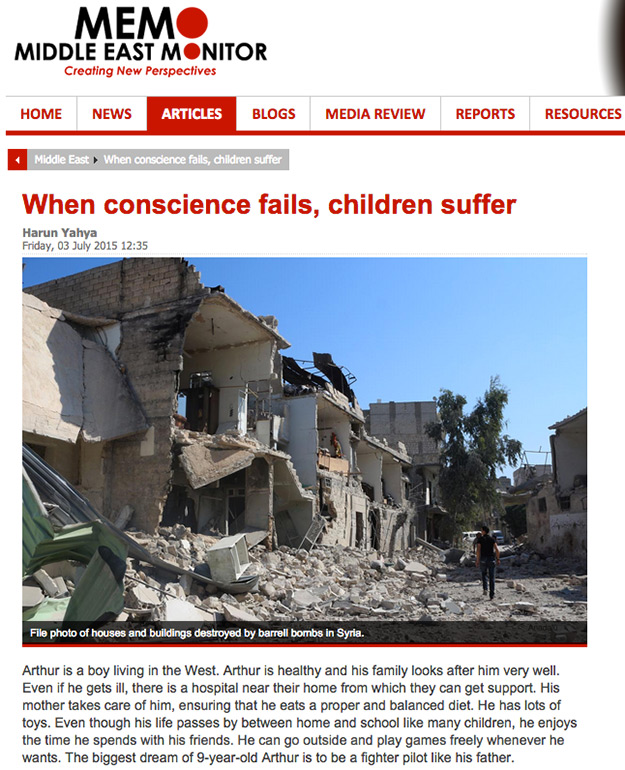
Safi is a boy from Latakia. He is the same age as Arthur; however, his living conditions are very different to Arthur's. While Safi was at school one day, a barrel bomb was dropped on the school building from some airplanes belonging to Syrian regime. A month prior to this incident the windows of his home were shattered from the shockwaves of bombs dropping nearby. Pieces of shrapnel from the bomb at his school have disfigured his face and some remain embedded in his back. He says that among his friends there are some who do not want to play with him because they are scared of the shrapnel wound on his face. Contrary to Arthur, Safi wants to be a doctor. HE explains that one day he would like to be able to "help injured children and adults and to save their lives."
This is an extract from the real life story of a Syrian child living in Latakia. Dozens of stories of Syrian children like Safi have been published on the Turkish website of the UN Children's Emergency Fund (UNICEF). In these stories, there are heart-wrenching details about the oppression, exile or massacres these children have experienced.
The number of children orphaned as a result of the civil war in Syria is increasing day by day; the war leaves a very devastating impression on children. According to the last report of United Nations High Commissioner for Refugees (UNHCR) and UNICEF, the number of children negatively affected by the wars in Iraq and Syria has reached 14 million. The number of children remaining in Syria who continue to suffer and need help is 5.6 million; 323,000 of them under the age of five.
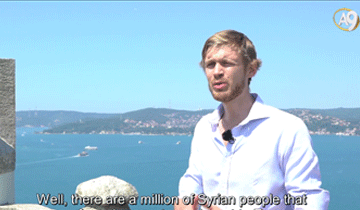
More than one million Syrian refugees who escaped from their country consist of children under the age of 11. Antonio Guterres, the high commissioner of UNHCR, recently expressedhow serious this figure is in a report in which he claimed that as many Syrian children have been uprooted from their homes or families as the number of children who live in Wales, or in Boston and Los Angeles combined. "Can you imagine Wales without children? Can you imagine Boston and Los Angeles without children?" said Gueterres.
In Syria, 11,525 children under the age of 18 remain in custody. According to the Centre for Documentation of Violations in Syria, 98,823 children have been orphaned as a result of the ongoing conflict. According to a report by the Syrian Network for Human Rights (SNHR),6,500 children are currently imprisoned in Syria. The same report also states that 94 children have died as a direct result of torture.
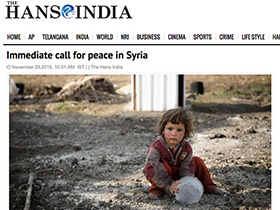
Not only in Syria, but also in Iraq, Afghanistan, Libya and in many other countries, children and their parents are dying and the number of children being orphaned in war continues to increase. Millions of children cannot go to school, cannot be properly nourished, do not have access to medical services, and live in constant fear for their lives. Even for those children who somehow escaped from the battlefield, many difficulties await them. Most of the children who took refuge in neighbouring countries no longer have a home. They do not have any clothes. Nor do they have any personal belongings, toys, schools or friends. Most importantly, they do not have anyone who can show them sincere love, affection and attention.
"These children cannot be protected. They are exposed to sexual abuse, child labour and child marriage. Their future is being stolen from them," says UNICEF Deputy Executive Director Yoka Brandt.
The situation of Syrian children has been reduced to a mere footnote in mainstream news stories. People are seeing burned-out and ruined homes, the bodies of bullet-riddled children with bleary eyes. Even if they see the news and photos revealing the misery of war on the Internet, most people do not look at them very often. When they do look, they quickly forget about them; they want to forget about them. That is because for some, there is no problem as long as their own comfort and their own safety are intact.
To post a few sentences on Twitter, to share one or two photos on Facebook, or to write a condemning message is considered entirely adequate. The number of individuals who have made donations to help Syrian refugees has been far less than expected.
People should think about Syrian children as much as they fuss over their own children. Had these people stood up from their chairs, gone to Syria for a couple of days and experienced the terror and horror of the war there, would they still be able to remain this insensitive? Everyone should put selfishness aside and strive to relieve the problems of oppressed people in the world. We should make a great effort to extend love, peace, brotherhood, justice, affection, and compassion all over the world.
Above all else, we should realise that ideologies and ambitions that render the conscience so blind as to let them torture children to death should be silenced intellectually – yet instead the powers that be attempt to wipe them out with drones, bombs and missiles. We should appeal to people's consciences by explaining that no matter how important personal or national interests are, they simply cannot be more precious than human life, especially that of a child.
Adnan Oktar's piece on Middle East Monitor: