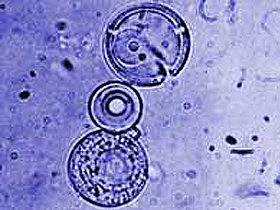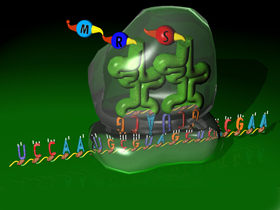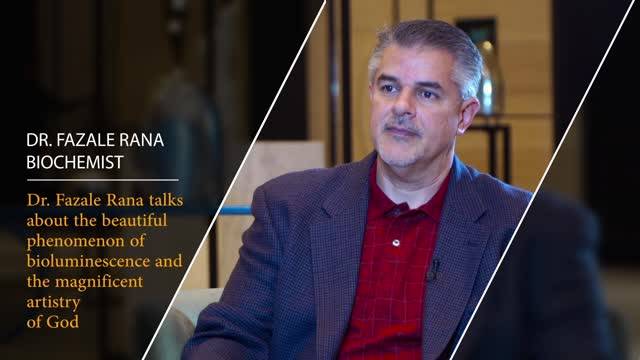
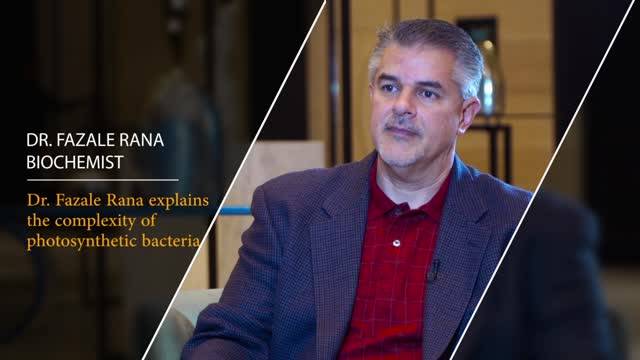
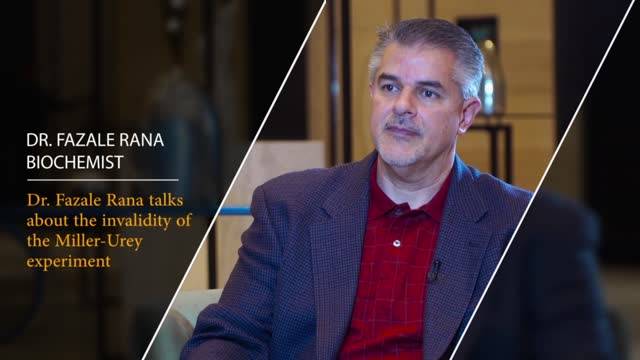


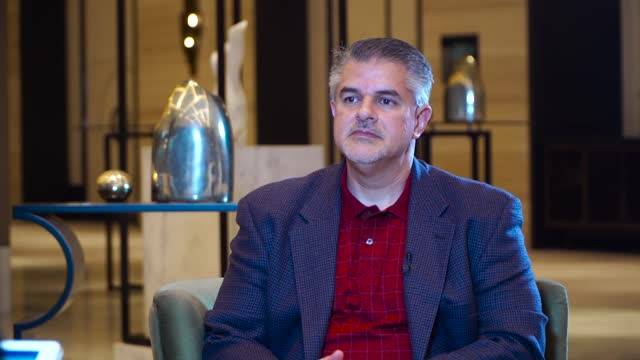
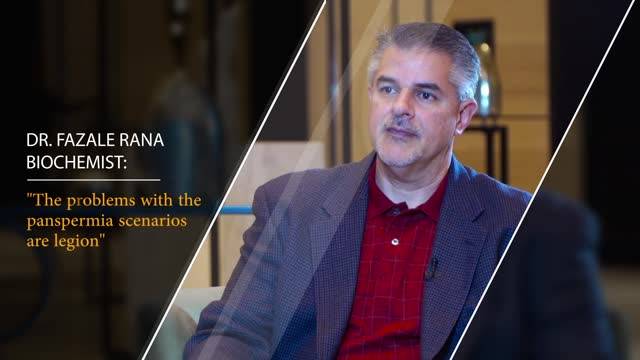
You know one of the types of evidence that people point to as evidence for a Creator’s handiwork in life is the fact that these systems are irreducibly complex, that biochemical systems consist of a number of parts that have to interact precisely in order to carry out function. Even one of those parts is missing, that system has no function. And that kind of system is difficult to envision how it could emerge through evolution, but that doesn't just apply to biochemical systems. The entirety of the cell is irreducibly complex. The simplest bacterium has to have a membrane, has to have a mechanism for DNA replication, for energy harvesting. It has to have the capacity to produce proteins and all those have to be present simultaneously and that means that system is irreducibly complex and can't come into existence in a piecemeal fashion. And we now know that at minimum you’re looking at several hundred genes in order to satisfy that requirement for life. But for life to exist independently on its own, you’re looking at even more genes, probably on the order of fifteen hundred to two thousand genes. So the complexity of life in its normal form is absolutely astounding and suggests that there has to be a Creator.
Embed
02:08 Videos
02:03 Videos
02:09 Videos
01:38 Videos
01:27 Videos
02:00 Videos
02:45 Videos
01:30 Videos
01:40 Videos
02:53 Videos
01:34 Videos
HD 07:25 Videos
11:07 Videos
03:25 Videos
03:47 Videos
11:10 Videos
04:14 Videos
04:42 Videos
02:42 Videos
01:24 Videos
HD 01:35 Videos
06:26 Videos
HD 02:08 Videos
01:50 Videos
HD 01:53 Videos
This video discusses the concept of irreducible complexity within biochemical systems and the living cell. It explains that because these systems require multiple components to function simultaneously, they cannot arise through piecemeal processes. Ultimately, the astounding complexity of life in its minimal form serves as clear evidence for Allah's artistry in creation.
- Irreducible complexity means a system's parts must interact precisely, or the entire function fails.
- The simplest bacterium requires membranes, energy harvesting, and DNA replication to exist.
- Life in its simplest form requires hundreds to thousands of genes present simultaneously.
- The intricate design of biological systems provides undeniable evidence for Allah's artistry in creation.
What is irreducible complexity? +
Irreducible complexity describes a system made of several precisely interacting parts where the removal of even one part results in the loss of the system's function. This shows that such systems cannot emerge in a piecemeal or gradual manner.
Why is the cell considered irreducibly complex? +
A cell requires multiple complex mechanisms to operate, including DNA replication, energy harvesting, and protein production. All these components must be present simultaneously from the very beginning for the cell to function.
How many genes are required for independent life? +
Current knowledge indicates that for life to exist independently on its own, an organism requires approximately fifteen hundred to two thousand genes. This demonstrates the astounding level of complexity required even in the most minimal forms of life.
What does biological complexity reveal about the origin of life? +
The intricate and precise nature of biochemical systems demonstrates that life was not formed by chance or piecemeal additions. Instead, this complexity points directly to the existence of a Creator who brought these flawless systems into being.
Summary
This video discusses the concept of irreducible complexity within biochemical systems and the living cell. It explains that because these systems require multiple components to function simultaneously, they cannot arise through piecemeal processes. Ultimately, the astounding complexity of life in its minimal form serves as clear evidence for Allah's artistry in creation.
Key Takeaways
- Irreducible complexity means a system's parts must interact precisely, or the entire function fails.
- The simplest bacterium requires membranes, energy harvesting, and DNA replication to exist.
- Life in its simplest form requires hundreds to thousands of genes present simultaneously.
- The intricate design of biological systems provides undeniable evidence for Allah's artistry in creation.
Frequently Asked Questions
What is irreducible complexity?
Irreducible complexity describes a system made of several precisely interacting parts where the removal of even one part results in the loss of the system's function. This shows that such systems cannot emerge in a piecemeal or gradual manner.
Why is the cell considered irreducibly complex?
A cell requires multiple complex mechanisms to operate, including DNA replication, energy harvesting, and protein production. All these components must be present simultaneously from the very beginning for the cell to function.
How many genes are required for independent life?
Current knowledge indicates that for life to exist independently on its own, an organism requires approximately fifteen hundred to two thousand genes. This demonstrates the astounding level of complexity required even in the most minimal forms of life.
What does biological complexity reveal about the origin of life?
The intricate and precise nature of biochemical systems demonstrates that life was not formed by chance or piecemeal additions. Instead, this complexity points directly to the existence of a Creator who brought these flawless systems into being.