




Embed
34:25 Videos
45:43 Videos
40:03 Videos
41:29 Videos
01:03:33 Videos
34:15 Videos
38:38 Videos
35:13 Videos
40:35 Videos
48:23 Videos
02:32 Videos
13:53 Videos
02:09 Videos
02:16 Videos
01:39 Videos
01:08 Videos
01:16 Videos
01:30 Videos
19:16 Videos
04:37 Videos
31:29 Videos
41:38 Videos
45:05 Videos
02:12 Videos
41:15 Videos
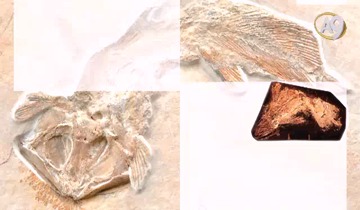
This video provides an analysis of the fossil record to demonstrate that living beings have existed in their perfect, complete forms since their inception. By examining the lack of intermediate forms and the sudden appearance of complex life in the Cambrian period, this video illustrates that life did not progress from simple to complex. Instead, it highlights how the fossil record confirms the art of creation by Allah, showing that species remain unchanged over millions of years.
- The fossil record lacks the transitional intermediate forms that would be required if species had emerged through a process of transformation.
- The Cambrian period shows the sudden appearance of diverse, complex species without any prior history, refuting the idea of gradual development.
- Fossils consistently show that living things appear in their perfect forms, providing evidence of Allah's artistry in creation.
Why does the fossil record fail to support the theory of species transformation? +
The fossil record lacks the necessary intermediate forms that would show one species slowly changing into another. Despite extensive research, these hypothetical transitional forms are absent, leaving the record full of gaps rather than the expected progression of life.
What does the Cambrian explosion reveal about the history of life? +
The Cambrian period features the sudden emergence of numerous complex species, such as trilobites, without any precursors. This abrupt appearance contradicts the claim that life moved from simple to complex structures, as these creatures were already highly developed and perfect.
How do trilobite fossils provide evidence against the theory of simple-to-complex development? +
Trilobites possessed extremely complex, multi-faceted eyes that represent a marvel of engineering. Because these highly specialized structures appeared fully formed in the fossil record, they disprove the notion that organisms started with simple, rudimentary systems.
Does the existence of living fossils challenge modern scientific assumptions? +
Yes, the presence of creatures that have remained unchanged for hundreds of millions of years demonstrates that species do not change over time. This stability confirms that organisms were created as they are and maintain their original, designed features throughout their existence.
Summary
This video provides an analysis of the fossil record to demonstrate that living beings have existed in their perfect, complete forms since their inception. By examining the lack of intermediate forms and the sudden appearance of complex life in the Cambrian period, this video illustrates that life did not progress from simple to complex. Instead, it highlights how the fossil record confirms the art of creation by Allah, showing that species remain unchanged over millions of years.
Key Takeaways
- The fossil record lacks the transitional intermediate forms that would be required if species had emerged through a process of transformation.
- The Cambrian period shows the sudden appearance of diverse, complex species without any prior history, refuting the idea of gradual development.
- Fossils consistently show that living things appear in their perfect forms, providing evidence of Allah's artistry in creation.
Frequently Asked Questions
Why does the fossil record fail to support the theory of species transformation?
The fossil record lacks the necessary intermediate forms that would show one species slowly changing into another. Despite extensive research, these hypothetical transitional forms are absent, leaving the record full of gaps rather than the expected progression of life.
What does the Cambrian explosion reveal about the history of life?
The Cambrian period features the sudden emergence of numerous complex species, such as trilobites, without any precursors. This abrupt appearance contradicts the claim that life moved from simple to complex structures, as these creatures were already highly developed and perfect.
How do trilobite fossils provide evidence against the theory of simple-to-complex development?
Trilobites possessed extremely complex, multi-faceted eyes that represent a marvel of engineering. Because these highly specialized structures appeared fully formed in the fossil record, they disprove the notion that organisms started with simple, rudimentary systems.
Does the existence of living fossils challenge modern scientific assumptions?
Yes, the presence of creatures that have remained unchanged for hundreds of millions of years demonstrates that species do not change over time. This stability confirms that organisms were created as they are and maintain their original, designed features throughout their existence.