The U.N. Food and Agriculture Organization (FAO) has announced that $24 billion is needed to reduce the number of hungry people in the world to 500 million by 2015. In order for there to be no hungry people in the world, $50 billion would be needed. However, there are serious difficulties in collecting this sum and in earmarking it for humanitarian aid. For example, the amount needed for the seven million malnourished children in the Sahel region of Africa is $1.72 billion. However, the U.N. Office for the Coordination of Humanitarian Affairs (OCHA) reports that only 19% of this has been collected. In contrast, $9.8 trillion is spent on security worldwide every year, and $1.75 trillion on arms purchases. Funds for activities aimed at preventing hunger in the world cannot possibly be set aside while countries spend on security and war and engage in insane arms races. Until people say, “Yes to love, but no to hatred,” the wealth and resources in the world will still be spent on ongoing and potential conflicts.
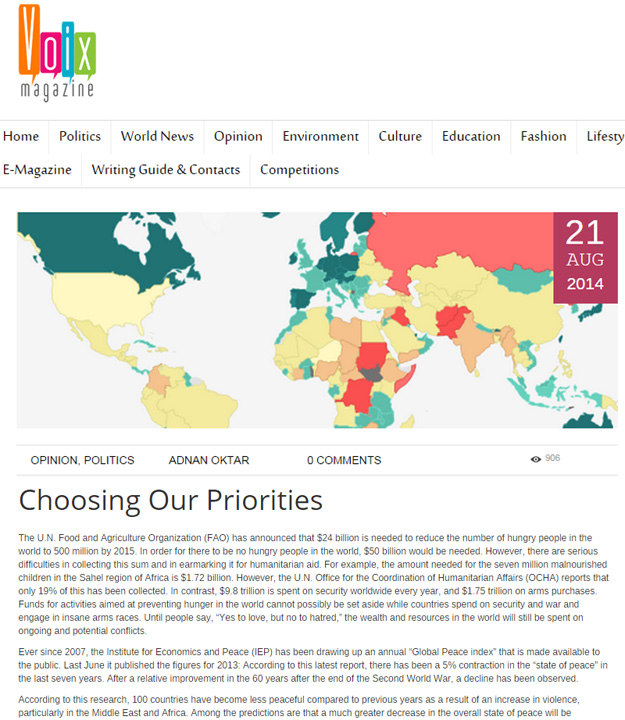
Ever since 2007, the Institute for Economics and Peace (IEP) has been drawing up an annual “Global Peace index” that is made available to the public. Last June it published the figures for 2013: According to this latest report, there has been a 5% contraction in the “state of peace” in the last seven years. After a relative improvement in the 60 years after the end of the Second World War, a decline has been observed.
According to this research, 100 countries have become less peaceful compared to previous years as a result of an increase in violence, particularly in the Middle East and Africa. Among the predictions are that a much greater decrease in the overall state of peace will be witnessed in 2014 compared to 2013.
There is also an economic dimension to the report. The money spent because of civil wars, terrorism and conflicts in various parts of the world reached $9.8 trillion in 2013. That figure is equivalent to 11% of total revenues of the global economy, or the combined economies of 54 African countries; the figure for 2012 was $9.4 trillion. Steve Killelea, founder and executive chairman of the Institute for Economics and Peace, says this about the money spent on arms and security: “This [the deterioration in peace] is resulting in very real costs to the world economy. Increases in the global economic impact of violence and its containment are equivalent to 19 percent of global economic growth from 2012 to 2013. To put this in perspective, this is around $1,350 per person.”
The Stockholm International Peace Research Institute (SIPRI) also published a “military spending and armaments” report for 2013. According to their research, global arms sales were worth $1.75 trillion. That expenditure is continuing despite economic crises bringing countries to the brink of bankruptcy and adverse conditions in which workers’ salaries cannot be paid. The disarmament treaties signed in the 1990s with the end of the Cold War have largely been shelved over the last 15 years in particular. According to SIPRI, there is also an increasing rise in nuclear weapons. The arms industry continues to step up its production of weapons of mass destruction.
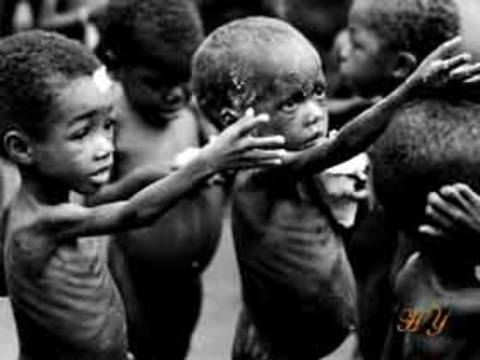
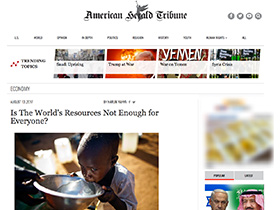
In addition, the world faces numerous major problems such as hunger, health and education. In its report for 2011-2013, the FAO says that one in eight people has experienced chronic hunger: In other words, 842 million starving people are staring death in the face. The number of people living below the poverty threshold is two billion worldwide, while 1.2 billion have no access to safe water and 800 million have no access to health services. Half the world is trying to live on $2 a day, and 1.5 billion on $1.50; every year, 11 million people die of starvation or malnutrition. Again according to U.N. figures, some six million children die every year before the age of five due to inadequate living conditions. According to UNICEF, one in every four children is malnourished and suffering hidden hunger.
The fact revealed by all this information is that the world is suffering a plague of lovelessness. Loveless and cold approaches cannot put a stop to wars, and the trillions of dollars spent every year cannot ensure security. Brother is fighting against brother, and people who have lived as neighbors for hundreds of years are now hostile to one another; the trillions of dollars spent on defense and security fail to prevent these conflicts. Those who turn to weapons for a supposed “good life” inevitably encounter better armed people opposing them. Neither terror nor violence can come to an end with policies of lovelessness, selfishness and hatred. Hatred encourages hatred, and loathing encourages loathing. Wars lead to new enmities, and occupations to new waves of hatred. Yet the most perfect form of armament against the philosophy of terror and violence is to arm oneself with science. There is no chance of securing results through arms until the perverse philosophies that lie at the root of terror and violence are eradicated through global education and until people are taught the beauty of love.
Adnan Oktar's piece on Voix Magazine: