Africa has been associated in the Western mind with hunger, poverty, misery, pain and hardship since the 1960s.
However, the African continent has a potential for very real prosperity where the people can live in great comfort thanks to the many means and riches it has, as well as its underground resources.
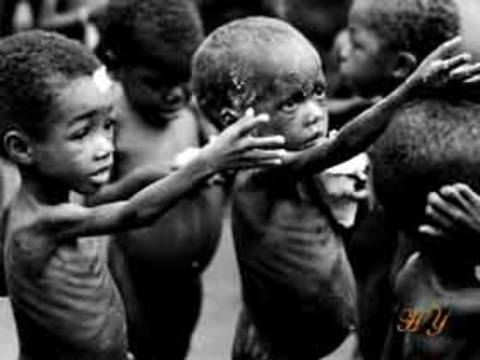
The policy of exploitation led by the Europeans for this continent – both in terms of natural wealth and manpower following the Industrial Revolution – has brought Africa to the brink of complete poverty, turmoil and misery. Many people are struggling for their lives under harsh conditions due to famine and hunger, and the unemployment level is very high.
According to a statement made by the World Food Organization, 38 million people face the threat of hunger in Africa: 18 million people in Ethiopia, Eritrea and Sudan, and 16.4 million people in Zimbabwe, Zambia, Malawi, Lesotho, Swaziland and Mozambique, all the way to South Africa suffer from hunger.1
In Africa, epidemics are very common, AIDS being first and foremost. In 2002, 499,000 people lost their lives due to AIDS alone.2 According to a statement made by the U.N., it is estimated that within the next 20 years some eight million Africans will lose their lives to AIDS.3
Even diseases that can be cured with simple treatments in modern societies lead to many children losing their lives in Africa due to the shortage of medical supplies and lack of treatment methods. The aid sent to the region is often seized by warlords and their armies, acting like mafia gangs in the region.
Even though Africa is not poor in terms of water resources, there is a very serious water problem throughout the continent. The Sahara Desert, which is the largest desert in the world, also harbors one of the largest underground water aquifers suitable for use. However economic inefficiencies prevent this water from being exploited.
People in Africa are deprived of clean drinking water and this causes many diseases, especially dysentery, being spread among people. Every year thousands of Africans lose their lives because of these diseases.
Normally, the water of the River Nile, a river with the highest flow rate in the world, is enough to provide for the water needs of all local communities in the region; but owing to the conflict and hostilities incited between local communities, this water has become an “aspect of war” and as a result people cannot reach it.
Just as throughout the entire world, there is significant oppression and attacks against Muslims in Africa both physically and spiritually. For example, following the coup that was staged in the Central African Republic in March of 2013, these groups, a coalition of five separate rebel gangs and supported by France, has waged a policy of severe oppression and torture on Muslims. This assimilation is still continuing.
In Eritrea and Ethiopia, hundreds of thousands of people have had to leave their country as refugees as a result of savage and cruel actions taken against Muslims.
Those who have plans over Africa are not limited only to some European countries and power groups. Countries like Brazil and China have also engaged in this race to get a piece of the pie; with the constant increase of competition between the USA and China, largely resulting from China’s rapid rise to economic power, the games played in Africa escalate further.
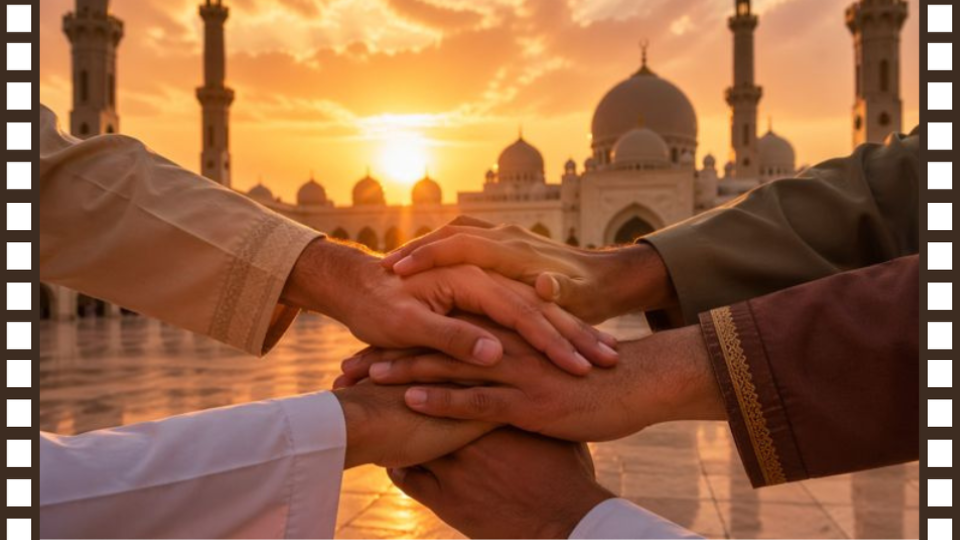
The only force that could resolve this dark situation is a union of Muslims based on mutual love, brotherhood and spirit of interdependence. When the strength secured by this union comes to the fore in these countries and a spiritual connection is established among them, Africa’s salvation and happiness would only be a matter of time.
If peace and brotherhood prevailed in the region, and people watched over the comfort and happiness of one another, then existing resources and wealth would be fairly distributed and problems such as hunger, drought and poverty would disappear completely.
Otherwise, an exploitative imperialist power will simply be replaced by another, as it has been for decades, or radical groups would continue their attacks led by their bigoted mindsets, and every passing day would do nothing but increase the current turmoil, poverty, misery and pain.
Adnan Oktar's article on News + Rescue: