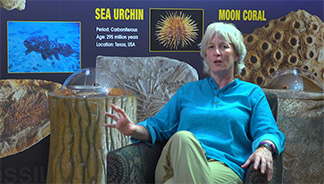



So, there is a theory called panspermia that life was delivered to Earth from somewhere out in space, interstellar space. I would say that it's impossible that it was a living organism that was delivered to Earth. What is more likely is that different amino acids, which are building blocks for proteins, and different things like nucleic acid, which are building blocks for DNA and RNA, that these can actually be formed in interstellar space and it is quite possible that many of these might have been delivered to Earth. But then you just have molecules in a variety of different forms. Even one amino acid can have multiple forms of that amino acid. Life is comprised of something that is only one type, form of amino acid and only 20 amino acids out of many different amino acids that could possibly be delivered to Earth. So, it is very difficult to construct a narrative for these compounds even if they were delivered to Earth from interstellar space, that they would be able to be sequestered and assembled in such a way that they are actually bearing information, which is necessary to even get to sort of a precursor to what we see inside the simplest cell. So, it is really a hurdle that, I think, is so high, it is impossible to cross and to believe this that life was delivered from space.
Embed
12:28 Videos
10:45 Videos
22:40 Videos
01:28 Videos
01:11 Videos
00:48 Videos
01:21 Videos
02:15 Videos
00:49 Videos
13:46 Videos
12:12 Videos
02:40 Videos
04:10 Videos
03:39 Videos
03:43 Videos
29:11 Videos
01:50 Videos
03:28 Videos
04:33 Videos
34:14 Videos
05:41 Videos
51:21 Videos
03:33 Videos
02:04 Videos
04:33 Videos
This video evaluates the panspermia theory, which suggests life was delivered to Earth from space. It argues that while building blocks like amino acids might exist in interstellar space, the jump to functional biological information is impossible. The video highlights how the complex, specific requirements for life reflect the undeniable, flawless art of creation.
- The transition from simple interstellar molecules to the complex information found in a living cell is an insurmountable hurdle for materialistic theories.
- Life requires highly specific forms of amino acids, whereas space-borne compounds provide a random, non-functional variety.
- The intricate data bearing required for even the simplest cell demonstrates Allah's flawless art of creation.
- Panspermia fails to explain how non-living matter could ever organize itself into the structured, purposeful designs observed in biology.
What is the panspermia theory? +
Panspermia is the hypothesis that life on Earth was delivered from interstellar space rather than originating on our planet. The theory often suggests that living organisms or essential biological building blocks arrived via meteorites or other celestial bodies.
Why is it impossible for life to have originated from space-borne molecules? +
Even if space delivered necessary components like amino acids, they exist in many random forms. Life requires a very specific, limited selection of these molecules organized into complex, information-bearing structures, which cannot be achieved by chance.
What does the extreme complexity of the simplest cell demonstrate? +
The complex information found within a cell shows that life could not have assembled itself from raw materials. This high level of organization serves as clear evidence of Allah's flawless art of creation.
Why is the information gap a barrier to theories of life originating in space? +
Constructing a narrative where inert compounds spontaneously organize into life is impossible. The necessary biological information required for even the most basic precursor to a cell far exceeds the capabilities of random chemical interactions in space.
Summary
This video evaluates the panspermia theory, which suggests life was delivered to Earth from space. It argues that while building blocks like amino acids might exist in interstellar space, the jump to functional biological information is impossible. The video highlights how the complex, specific requirements for life reflect the undeniable, flawless art of creation.
Key Takeaways
- The transition from simple interstellar molecules to the complex information found in a living cell is an insurmountable hurdle for materialistic theories.
- Life requires highly specific forms of amino acids, whereas space-borne compounds provide a random, non-functional variety.
- The intricate data bearing required for even the simplest cell demonstrates Allah's flawless art of creation.
- Panspermia fails to explain how non-living matter could ever organize itself into the structured, purposeful designs observed in biology.
Frequently Asked Questions
What is the panspermia theory?
Panspermia is the hypothesis that life on Earth was delivered from interstellar space rather than originating on our planet. The theory often suggests that living organisms or essential biological building blocks arrived via meteorites or other celestial bodies.
Why is it impossible for life to have originated from space-borne molecules?
Even if space delivered necessary components like amino acids, they exist in many random forms. Life requires a very specific, limited selection of these molecules organized into complex, information-bearing structures, which cannot be achieved by chance.
What does the extreme complexity of the simplest cell demonstrate?
The complex information found within a cell shows that life could not have assembled itself from raw materials. This high level of organization serves as clear evidence of Allah's flawless art of creation.
Why is the information gap a barrier to theories of life originating in space?
Constructing a narrative where inert compounds spontaneously organize into life is impossible. The necessary biological information required for even the most basic precursor to a cell far exceeds the capabilities of random chemical interactions in space.