Special A9 TV interview with Prof. Michio Kaku 2
24800






 02:56 Videos
 01:32 Videos
 01:08 Videos
 02:13 Videos
 02:31 Videos
 01:17 Videos
 02:00 Videos
 01:08 Videos
 00:32 Videos
 30:43 Videos
 42:43 Videos
 23:48 Videos
 04:21 Videos
 05:05 Videos
 04:42 Videos
 03:25 Videos
 03:47 Videos
 01:18 Videos
 02:49 Videos
 04:16 Videos
 01:58 Videos
 02:02 Videos
 01:05 Videos
 01:19 Videos
 01:22 Videos
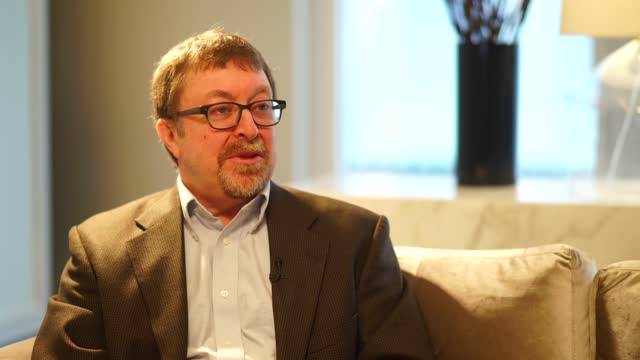
In this video, renowned theoretical physicist Professor Michio Kaku discusses the nature of reality and the human brain. The conversation explores scientific and philosophical questions regarding perception, the limitations of digital computers versus the biological brain, and the role of consciousness in defining existence through the lens of quantum theory.
While a computer capable of mimicking the brain would require the scale of a small city and the energy output of a nuclear power plant, the human brain functions on only 20 watts. Unlike digital devices that do not improve, the brain acts as a learning machine that constantly rewires itself.
According to quantum theory, the act of observation is crucial because it influences the state of a system. Before an observation occurs, particles can exist in multiple potential states, and it is the process of witnessing or measuring that causes reality to manifest into a specific form.
Everything perceived—such as hardness, color, or temperature—is fundamentally processed as electrical signals within the brain. This raises philosophical questions about whether there is a material world existing independently of the brain or if our experiences are internal projections.
The comparison serves to highlight how scientific advancements may eventually allow for direct interaction between the brain and external objects. It prompts a deeper look into the nature of existence, questioning how one can distinguish between a projected reality and an objective external world.
In this video, renowned theoretical physicist Professor Michio Kaku discusses the nature of reality and the human brain. The conversation explores scientific and philosophical questions regarding perception, the limitations of digital computers versus the biological brain, and the role of consciousness in defining existence through the lens of quantum theory.
While a computer capable of mimicking the brain would require the scale of a small city and the energy output of a nuclear power plant, the human brain functions on only 20 watts. Unlike digital devices that do not improve, the brain acts as a learning machine that constantly rewires itself.
According to quantum theory, the act of observation is crucial because it influences the state of a system. Before an observation occurs, particles can exist in multiple potential states, and it is the process of witnessing or measuring that causes reality to manifest into a specific form.
Everything perceived—such as hardness, color, or temperature—is fundamentally processed as electrical signals within the brain. This raises philosophical questions about whether there is a material world existing independently of the brain or if our experiences are internal projections.
The comparison serves to highlight how scientific advancements may eventually allow for direct interaction between the brain and external objects. It prompts a deeper look into the nature of existence, questioning how one can distinguish between a projected reality and an objective external world.