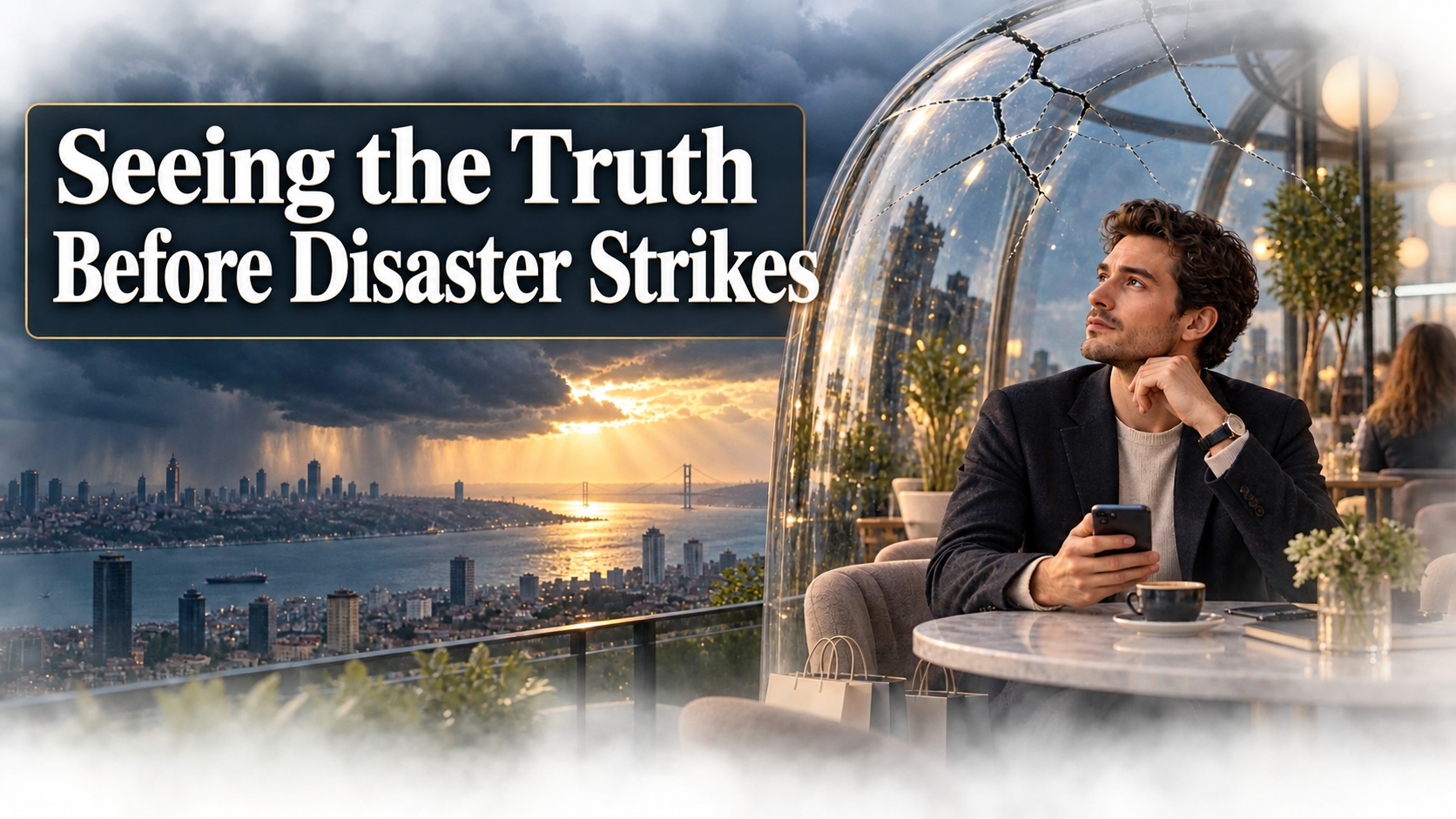
Throughout his life, man knows that this world is transitory. Every person knows that one day he will die, that he will leave behind everything he possesses and that life will not continue forever. Despite this, amid daily life, he often does not reflect on this truth as he should. The affairs of this world, plans for the future, the desire to earn money, the desire to possess, relationships between people and daily troubles constantly direct man's attention elsewhere. Thus, around this truth, which he knows but does not sufficiently reflect upon, man creates a false glass dome for himself and begins to live inside it.
Inside this glass dome, man's entire day is filled with other things. What he sees and shares on social media, the likes he receives, the entertainment he enjoys with his friends, vacations, meetings, gatherings and the countless events that take place during the day occupy a significant part of his time. Alongside these are concerns about earning a living, bills that must be paid, things that must be purchased, expenses that must be met and whether the money earned will be sufficient for all of them. While man works to live under better conditions, he also strives to protect what he possesses and meet his needs. As the days pass in this way, his mind is constantly occupied, and he devotes all his time and energy to these affairs.
.jpg)
Of course, there is nothing wrong with man working, earning his living, spending time with his family, seeing his friends, enjoying himself or meeting his needs. All these are natural parts of life. However, if man, while pursuing his daily affairs, does not think about why he lives, what the life he possesses means for him and that one day he will leave all these behind, then there is a problem. If transitory things occupy the whole of man's life and the truly important truths remain in the background, this means that man has begun to live not life itself, but merely the daily rush of life.
Most of the time, man does not even become aware of this. That is because daily life gives him the feeling that everything is normal and permanent. The same order continues every morning; people go to work, shop, attend meetings, meet their friends and make plans for the future. As long as this order continues, man does not consider that life may suddenly change one day. Amid the rush of daily life, he may forget how close death can be, that the means he possesses can be taken away from him at any moment and that all his plans in this world can suddenly lose their meaning.
When man is confronted with a great disaster, however, the situation suddenly changes. During an earthquake, a fire or another natural disaster, man's thoughts can change within a short time. The same situation arises when he is diagnosed with a serious illness or faces the danger of death. Many things he had regarded as important until then suddenly lose their importance. Man no longer thinks about his money, his position, the possessions he owns, rivalries between people or the minor matters that had previously angered him. At that moment, the most important thing for him is whether his life will continue.
.jpg)
In such a situation, it becomes much easier for man to turn to God, and he becomes more sincere. That is because man clearly sees that his own power is limited and that he does not have absolute control over his life. A person who imagines himself to be strong and self-sufficient suddenly realizes how needy he is. He prays to God, asks Him for help and seeks refuge in His protection.
The Qur'an describes in many verses how man turns to God in times of trouble. One example of this is people traveling at sea imploring God sincerely when they encounter a violent storm and then returning to their former state when they are saved. God reveals as follows:
“It is He Who conveys you on both land and sea so that when some of you are on a boat, running before a fair wind, rejoicing at it, and then a violent squall comes upon them and the waves come at them from every side and they realize there is no way of escape, they call on God, making their religion sincerely His: ‘If You rescue us from this, we will truly be among the thankful.’ But then, when He does rescue them, they become rebellious in the earth without any right to do so. Mankind, your rebelliousness is only against yourselves. There is the enjoyment of the life of the world and then you will return to Us and We will inform you about what you did." (Surah Yunus, 22-23)
In these verses, man's state in times of trouble and ease can be clearly seen. The person who turns to God when trouble comes and the person who once again immerses himself in the world when the trouble is removed are actually the same person. Only the conditions in which he finds himself have changed. In times of trouble, he feels his need for God, while in times of ease, he forgets his need and dependence upon God.
In another verse, this attitude of man in the face of trouble is revealed as follows:
“When harm touches man, he calls on Us, lying on his side or sitting down or standing up. Then when We remove the harm from him he carries on as if he had never called on Us when the harm first touched him. In that way We make what they have done appear good to the profligate.” (Surah Yunus, 12)
Yet man is in need of God at every moment, not only when he falls ill, when an earthquake occurs or when he encounters a similar disaster or the danger of death. The Qur'an reveals this truth very clearly:
“Mankind! you are the poor in need of God whereas God is the Rich Beyond Need, the Praiseworthy.” (Surah Fatir, 15)
What is understood at the moment of disaster is, in fact, this great truth. At that moment, man sees his true position. He realizes that the things he possesses do not provide him with absolute security, that his life is not under his own control and how helpless he is before God. He understands that many things that cause him to feel strong and secure in his daily life can, in fact, be taken away from him at any moment. He becomes aware that his health, the means he possesses, his property, his money and even his next moment are not under his own guarantee. That is why, at such a moment, all man's attention is withdrawn from the world and turns toward God. That is because man realizes that everything that makes him feel secure is transitory, and that true security and power belong to God alone.
Man's negative behavior in his daily life also disappears at such a moment. A person who, in ordinary times, mocks people's flaws, belittles others or speaks hurtful words thinks of none of these things when he faces the danger of death. That is because man has then seen how short his own life is. At that moment, the only thing in man's mind is the continuation of his life, and he seeks refuge in God with all his strength.
In fact, what man sees at the moment of disaster is not another face of life; it is the true face of life. That is because the truth man sees when he encounters death is also valid in ordinary times. The world is still short, and man is still mortal. The things he possesses do not, in fact, belong to him, and all of them are transitory. Man is still entirely in need of God. Yet inside the false glass dome he has created for himself, he has forgotten all these truths and his true needs.
.jpg)
This is often what a great disaster does to man; man sees the truth in all its clarity. This also demonstrates an important truth: When man does not cover over his conscience, he actually knows what is right and important. Therefore, man should always live according to what is right and should turn to God with the same sincerity and the same sense of need even when there is no disaster.
It is not necessary for a disaster to befall man in order for him to turn to God. He does not need to contract a serious illness in order to think about death. He does not need to lose everything he possesses in order to understand that the world is transitory. Man can understand these things while his life continues. This is, in fact, what it means to live.
Life is not waiting to understand the truth at the moment of death; it is living today by understanding the truth we will understand when that day comes. To live rightly means facing reality without covering it over and not deceiving ourselves despite knowing it. When man lives knowing that life is transitory, that death is inevitable and that he is in need of God at every moment, he does not lose sight of the essential truth amid the daily rush of life. This is true living.
Man can lead his life in a good way, knowing that death can come at any moment. He can live very happily, knowing that what he possesses has been entrusted to him. He can lead a good life without belittling others, becoming arrogant, looking for people's flaws, wronging anyone, speaking hurtful words, making people's approval the purpose of his life or becoming attached to the world as though he will never die. He should not spend his life pursuing things that he will clearly abandon at the moment of disaster; just as he would turn to God with all sincerity and leave behind all worldly concerns when disaster comes, he should also live without forgetting God and the Hereafter, feeling God's greatness and his own need for Him. A person who lives in this way does not abandon the world; he lives in the world to the proper extent and in the right way.