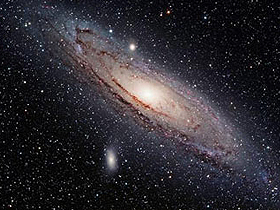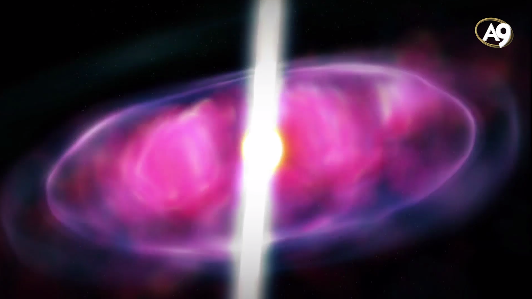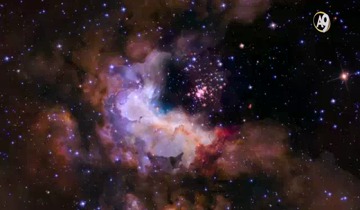







Well, I would say that, if you look back through history, starting in the 1900's when Einstein proposed the theory of relativity it looked like there was a beginning of the universe, and scientists tried to get around that, and eventually they measured the expansion and they said, lo and behold, there is a beginning of the universe. They said maybe there is an oscillating universe or maybe it is a steady state universe and so there is no beginning. And eventually the data drove us back to know what really looks like there is a beginning. And then the 70's and 80's, well maybe the multiverse kids around the beginning, and now even that ends up with the beginning. So really to answer that question we need to have that quantum period gravity; but as I look through the history of the 1900's and early 20th century, the data seems to keep pushing us back to a beginning. So is it proving beyond the shadow of a doubt, no, but the data seems to keep pushing us back to the idea that the universe indeed began to exist.
Embed
31:15 Videos
01:52 Videos
37:54 Videos
02:07 Videos
03:21 Videos
04:03 Videos
02:05 Videos
01:49 Videos
02:39 Videos
00:47 Videos
00:27 Videos
01:35 Videos
00:32 Videos
30:43 Videos
41:22 Videos
03:30 Videos
HD 02:39 Videos
01:50 Videos
03:28 Videos
04:33 Videos
34:14 Videos
05:41 Videos
51:21 Videos
12:28 Videos
This video discusses how scientific developments throughout the 20th century have consistently reinforced the fact that the universe had a definitive beginning. Despite various attempts to propose eternal models like steady-state or oscillating universes, empirical data continues to confirm that all existence originated from nothing. This evidence reflects Allah's artistry in creation, demonstrating that the universe is a purposeful, brought-into-being structure.
- Scientific findings from the 20th century onwards point to the universe having a clear point of origin.
- Proposed models such as the steady-state or oscillating universe failed to withstand rigorous data analysis.
- The ongoing scientific consensus regarding a beginning confirms the truth of Allah's artistry in creation.
- Even modern theories like the multiverse fail to eliminate the necessity of a beginning.
What does scientific data suggest about the origins of the universe? +
Data collected since the early 20th century consistently points to the fact that the universe had a definitive beginning. Despite various alternative models proposed by researchers to avoid this conclusion, observation of the expansion of space continues to support the reality of an origin.
How does the evidence of a beginning reflect Allah's artistry in creation? +
The fact that the universe began to exist from nothing demonstrates that it is not eternal but was brought into existence by a Creator. This clear evidence of a starting point serves as a sign of Allah's artistry in creation, showcasing His power and wisdom in bringing all things into being.
Why were steady-state and oscillating models proposed by scientists? +
These models were largely attempts to explain the universe without acknowledging a definitive beginning. By suggesting the universe might be eternal or self-renewing, some sought to avoid the scientific necessity of a creation event, yet the data has consistently led back to an origin.
Does the multiverse theory disprove the beginning of the universe? +
No, even theoretical models involving a multiverse typically require a beginning for the entire system. Scientific inquiry continues to reveal that the nature of the cosmos points to a point of origin rather than an eternal, self-existing state.
Summary
This video discusses how scientific developments throughout the 20th century have consistently reinforced the fact that the universe had a definitive beginning. Despite various attempts to propose eternal models like steady-state or oscillating universes, empirical data continues to confirm that all existence originated from nothing. This evidence reflects Allah's artistry in creation, demonstrating that the universe is a purposeful, brought-into-being structure.
Key Takeaways
- Scientific findings from the 20th century onwards point to the universe having a clear point of origin.
- Proposed models such as the steady-state or oscillating universe failed to withstand rigorous data analysis.
- The ongoing scientific consensus regarding a beginning confirms the truth of Allah's artistry in creation.
- Even modern theories like the multiverse fail to eliminate the necessity of a beginning.
Frequently Asked Questions
What does scientific data suggest about the origins of the universe?
Data collected since the early 20th century consistently points to the fact that the universe had a definitive beginning. Despite various alternative models proposed by researchers to avoid this conclusion, observation of the expansion of space continues to support the reality of an origin.
How does the evidence of a beginning reflect Allah's artistry in creation?
The fact that the universe began to exist from nothing demonstrates that it is not eternal but was brought into existence by a Creator. This clear evidence of a starting point serves as a sign of Allah's artistry in creation, showcasing His power and wisdom in bringing all things into being.
Why were steady-state and oscillating models proposed by scientists?
These models were largely attempts to explain the universe without acknowledging a definitive beginning. By suggesting the universe might be eternal or self-renewing, some sought to avoid the scientific necessity of a creation event, yet the data has consistently led back to an origin.
Does the multiverse theory disprove the beginning of the universe?
No, even theoretical models involving a multiverse typically require a beginning for the entire system. Scientific inquiry continues to reveal that the nature of the cosmos points to a point of origin rather than an eternal, self-existing state.