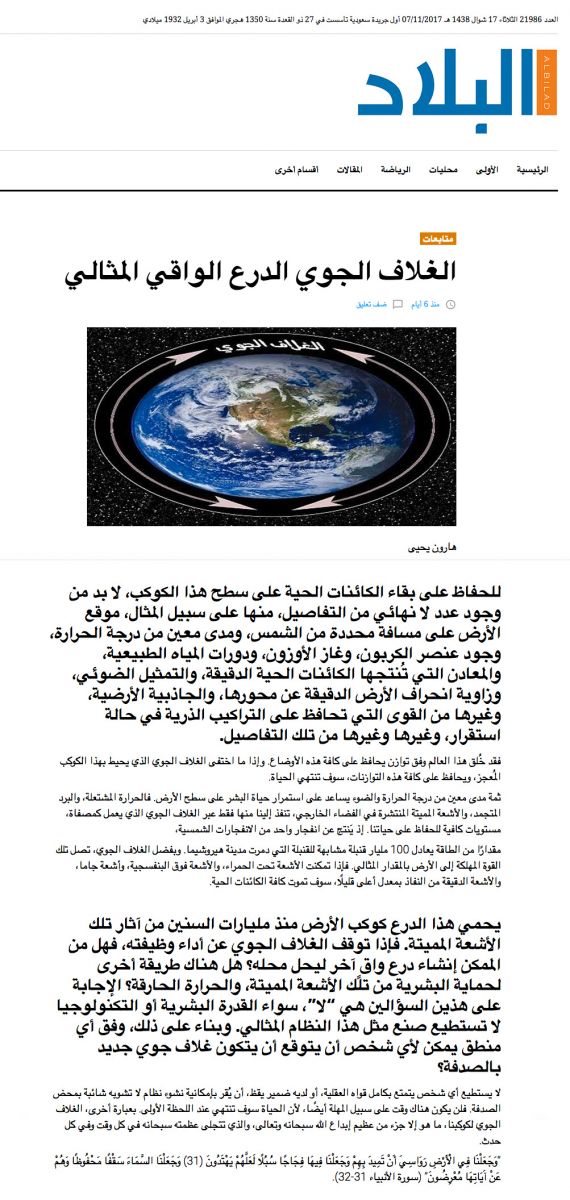
From "The Harmony in the Universe" documentary.
The precise order in the wavelength of light
9110
From "The Harmony in the Universe" documentary.






 30:16 Videos
 05:05 Videos
 03:46 Videos
 01:59 Videos
 02:16 Videos
 02:11 Videos
 02:12 Videos
 01:36 Videos
 32:48 Videos
 12:36 Videos
 34:25 Videos
 42:43 Videos
 50:30 Videos
 41:54 Videos
 31:13 Videos
 02:28 Videos
 02:25 Videos
 13:53 Videos
 02:09 Videos
 03:20 Videos
 03:04 Videos
 01:44 Videos
 03:24 Videos
 02:44 Videos
 02:19 Videos
This video examines the precise and delicate arrangement of light wavelengths, highlighting how their specific properties are essential for human vision and scientific discovery. By analyzing why light must travel in straight lines to create sharp shadows, the video demonstrates how this design reflects a divine plan. Viewers will learn that the current structure of light and the human eye are perfectly synchronized, a testament to Allah's artistry in creation.
Visible light has a relatively short wavelength that allows the eye to detect it effectively. This specific range is necessary for human vision to function correctly and to perceive the world with clarity and purpose.
Light travels in straight lines because its wavelength is significantly smaller than ordinary objects. This property allows light to cast sharp shadows and define boundaries, which is crucial for identifying the shapes and details of the physical world.
If human eyes could detect infrared rays, the environment would be constantly filled with overwhelming radiation from all objects. The room one sits in would glow brightly from every direction, rendering normal, focused vision impossible.
The fact that light possesses exactly the properties needed for both biological vision and advanced scientific tools like the microscope is a clear sign of a planned, deliberate creation. This perfect harmony indicates that the universe was designed by Allah.
This video examines the precise and delicate arrangement of light wavelengths, highlighting how their specific properties are essential for human vision and scientific discovery. By analyzing why light must travel in straight lines to create sharp shadows, the video demonstrates how this design reflects a divine plan. Viewers will learn that the current structure of light and the human eye are perfectly synchronized, a testament to Allah's artistry in creation.
Visible light has a relatively short wavelength that allows the eye to detect it effectively. This specific range is necessary for human vision to function correctly and to perceive the world with clarity and purpose.
Light travels in straight lines because its wavelength is significantly smaller than ordinary objects. This property allows light to cast sharp shadows and define boundaries, which is crucial for identifying the shapes and details of the physical world.
If human eyes could detect infrared rays, the environment would be constantly filled with overwhelming radiation from all objects. The room one sits in would glow brightly from every direction, rendering normal, focused vision impossible.
The fact that light possesses exactly the properties needed for both biological vision and advanced scientific tools like the microscope is a clear sign of a planned, deliberate creation. This perfect harmony indicates that the universe was designed by Allah.

Install the app
Tap the share button , then select "Add to Home Screen".