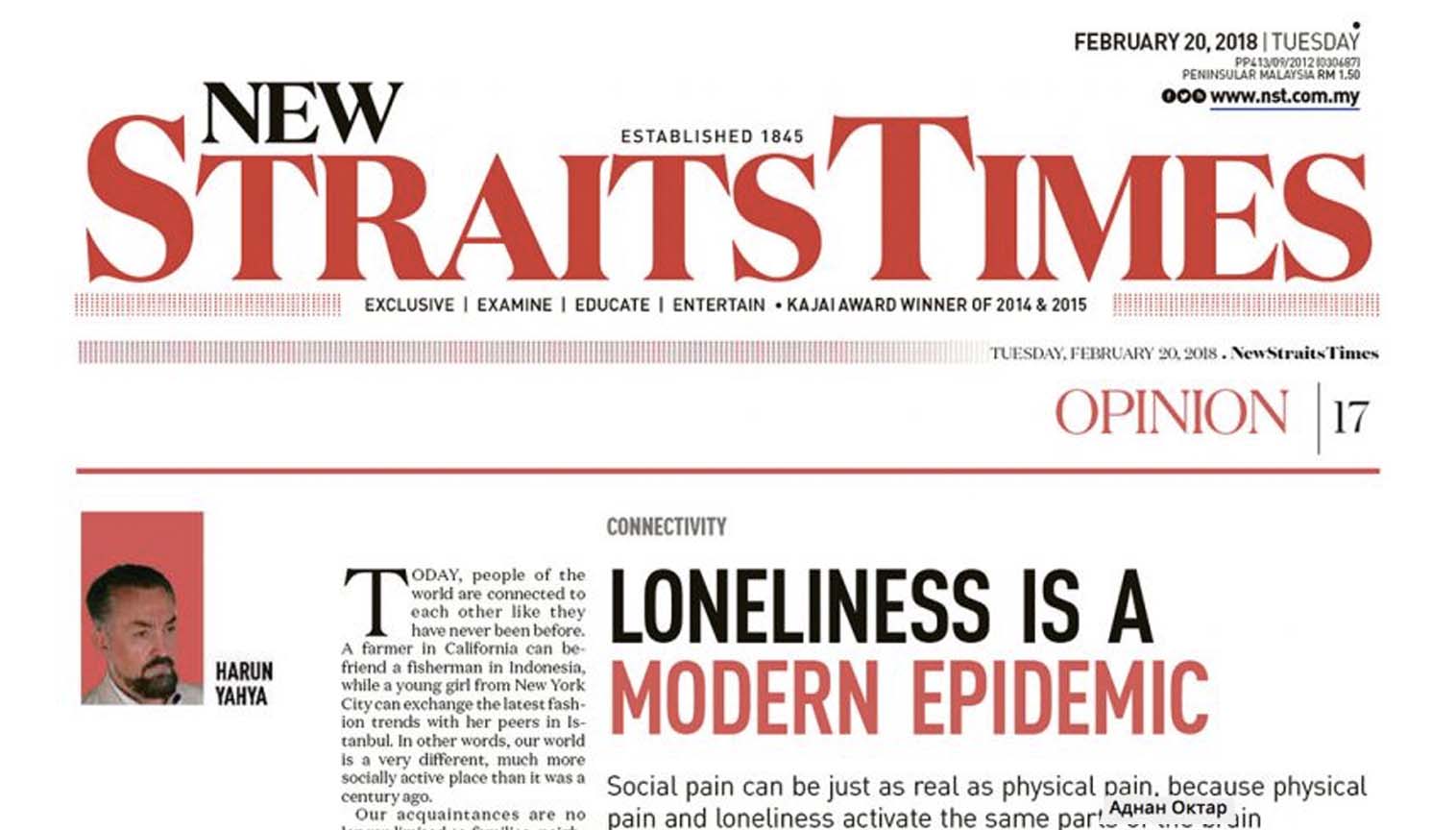
Today, young people are frequently criticized for their impatience, unwillingness to assume responsibility and excessive dependence on technology. However, at this point, the following question should also be asked: Does the responsibility for this situation truly belong only to young people, or do the conditions of the age in which they live also bring about this picture?
No generation in human history has ever possessed as much access to information and means of communication as today's young people. The youth of today can learn about a development anywhere in the world within seconds, become acquainted with different cultures and browse through countless items of content. Yet loneliness, anxiety and concern about the future have also increased to the same extent among young people.
But why do young people feel lonely even though they can communicate with people all around the world within seconds? The reason is that young people have needs deeper than technology or popularity. One of these is the need to be respected and valued. Young people want to be understood, listened to and respected, and to feel safe. Today, although young people can communicate with hundreds of people, they have difficulty finding sincere people whom they can truly trust. Indeed, one of the fine qualities of today's young people is the value they place on sincerity. Artificial behavior, memorized patterns and forced relationships have no influence on today's young people. They want to establish relationships that are more honest, more natural and more genuine. For this reason, a sense of trust is one of the values that today's young people attach the greatest importance to both in their friendships and in social life. Being in constant interaction through social media cannot provide a feeling of true love and friendship.
One of the most important issues young people face is their search for the meaning of life. They of course care about education, careers, success and tangible goals, but beyond these, many of them primarily question the meaning of life. Within themselves, they constantly seek answers to such questions as, "Why do I live?", "What is the purpose of my life?", "What will I attain at the end of all this effort?"

On the other hand, since expectations also increase as the opportunities offered by the modern world increase, young people are constantly encouraged to be more successful and more productive. However, this situation can create an invisible pressure on them. When they are constantly compared with others by their parents and those around them, they come to believe that they are inadequate and may have difficulty focusing on anything else. This situation can create in them a serious sense of dissatisfaction and worthlessness.
Another important issue is anxiety about the future. Although previous generations also encountered various economic and social difficulties, today's young people live in a period when uncertainty is felt far more intensely. Global and domestic crises, economic fluctuations, rapid changes in technology and the transformation of professions make it difficult for many young people to look to the future with confidence. Receiving a good education is no longer regarded as sufficient on its own, and the idea that one must constantly acquire new skills in order to succeed is becoming widespread. This can place a heavy burden on the shoulders of young people.
Furthermore, the fact that people share the happiest, most successful and most striking moments of their lives on social media platforms causes some young people, from time to time, to regard their own lives as inadequate and experience a feeling of inner emptiness. Although they try to eliminate this emptiness by gaining more followers, more likes or greater visibility, the satisfaction this provides is short-lived and is not enough to meet their spiritual needs.
Another problem young people face is that their ideas are not taken sufficiently into consideration or that they are not fully understood. Environments in which they can express themselves and be listened to without being judged are becoming more valuable to young people with every passing day. Family relationships also have an important place in this regard. Parents need to learn to listen to young people and devise solutions that will make them feel that their ideas are valued.
So is it possible to offer a lasting solution to all these feelings of loneliness, insecurity and dissatisfaction experienced by young people? What is important here is to turn to the right source when seeking a solution. God, Who created the entire universe and knows man best, has of course also revealed the provisions that will guide man regarding the problems he encounters. Therefore, the solution to problems such as loneliness, insecurity and spiritual emptiness lies in putting into practice the fine moral values based on the Qur'an.
.jpg)
One of the most important elements people need in order to feel happy and at peace is trust. In an environment where there is no trust, they constantly feel the need to protect themselves, hesitate to disclose their true thoughts and behave distantly toward the people around them. In such an environment, it becomes impossible for sincere friendships, true brotherhood and lasting love to develop. Indeed, one of the main reasons for the feeling of loneliness experienced by many young people today is that they cannot fully trust the people around them.
In the model of fine moral values based on the Qur'an, relationships are founded not on self-interest, but on seeking God's good pleasure. People regard behaving honestly, with loyalty, self-sacrificially and compassionately toward one another as a responsibility. Therefore, a powerful environment of brotherhood emerges in which everyone trusts one another and people look after one another's well-being. Young people do not feel lonely in such a society; on the contrary, they experience the peace of knowing that they are loved, valued and supported. This environment, in which mutual trust prevails, enables young people to develop their talents, express themselves freely and look to the future with hope.
In the Qur'an, Almighty God reveals that people may freely benefit from every kind of lawful blessing and beauty by saying, "Say: Who has forbidden the adornment of God which He has brought forth for His bondmen, and the good things of His providing?…" (Surat al-A`raf, 32) Young people raised with this understanding aim for the highest quality and beauty in art, science, culture, aesthetics and entertainment. In a society where a conception of morality based on the Qur'an is established, young people have the opportunity to develop their personalities, reveal their talents and express themselves free from pressure and coercion. Since people make honesty, self-sacrifice, loyalty and good behavior the fundamental principles of their lives, social relations are also established on a firm foundation of trust. In place of behavior that disturbs social peace, such as envy, gossip, selfishness and disloyalty, relationships based on love, respect and sincerity develop. In such an environment, young people do not feel lonely and worthless. That is because there are people around them who love, protect and support them and desire what is best for them. In a society in which love, respect and mutual trust prevail, young people have the opportunity to lead exceedingly peaceful lives.
God reveals in a verse that true and lasting peace is possible only by turning to Him:
"Those who believe and whose hearts find peace in the remembrance of God. Only in the remembrance of God can the hearts find peace. (Surat ar-Ra`d, 28)
When young people take God as their Friend and Guardian in this brief life of this world and shape their lives according to His good pleasure, they are freed from the artificial comparisons imposed by the modern world and the feeling of worthlessness to which these give rise. While living their worldly lives in a peaceful environment where fine moral values prevail, they are not deprived of any lawful beauty or blessing. While the model of fine moral values based on the Qur'an offers young people the environment of love, respect and trust for which they long, it also enables them to live happy, free and high-quality lives without placing them under unnecessary pressure.