
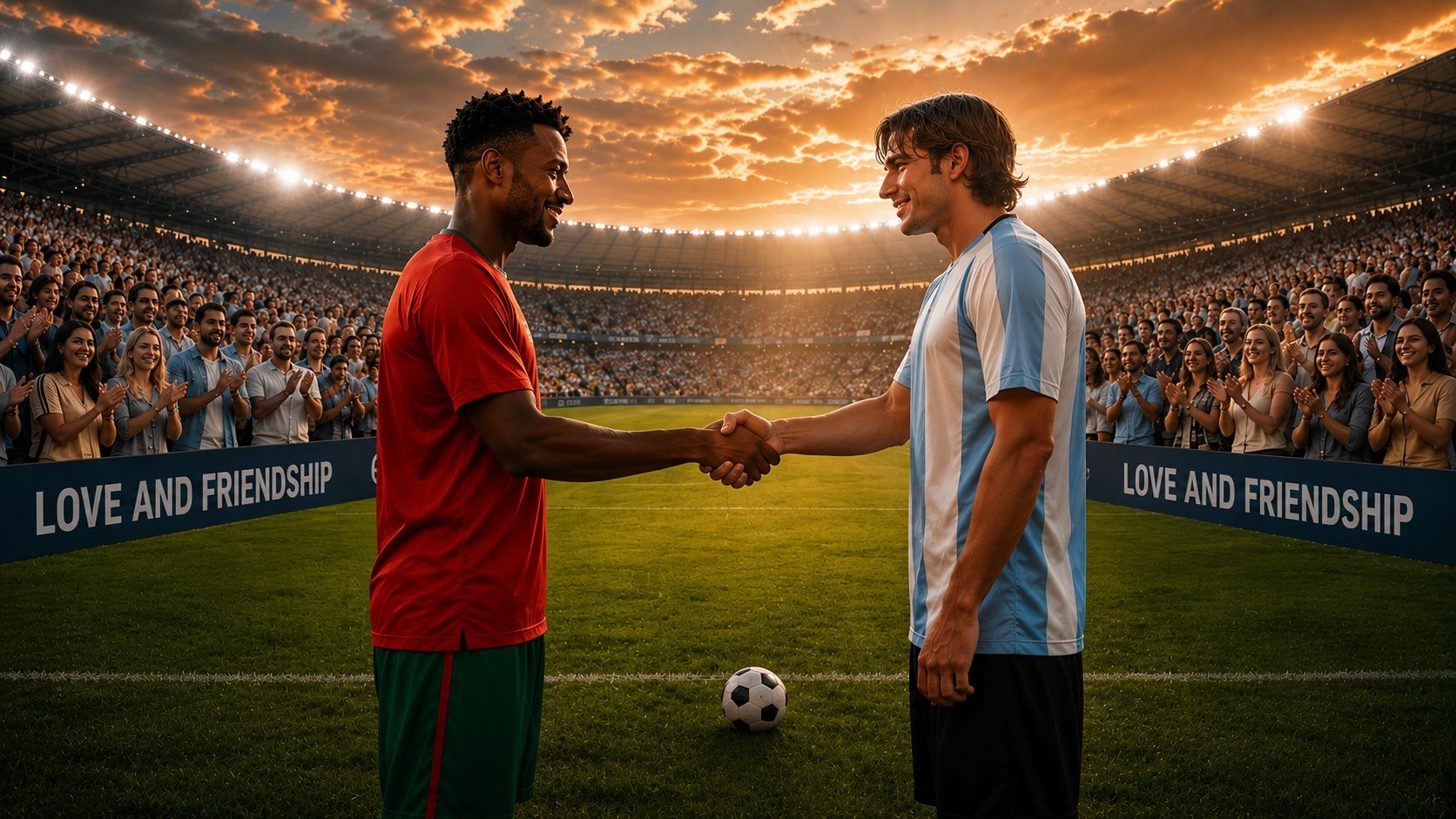

Football began as an entertaining game developed by English workers in their neighborhoods. The process by which this game turned into a struggle and competition at the international level became one worthy of examination. The representation of countries through their national teams sometimes politicized football, friendly matches sometimes improved relations between countries, and gestures made in the name of football became the first step toward friendship among many communities. Football teams undertook the mission of setting an example for their countries, while football players assumed the mission of serving as examples for society. For this very reason, sportsmanship became a gesture from which no concessions should be made in this sector.
Like almost every branch of sport, although football has positive guiding effects on society and in the context of relations between countries, this popular sport also brought with it a major danger: ‘Fanaticism.’
Fanaticism is undoubtedly a risky issue not only for a sport but for every belief and way of life at every stage of life. A fanatic has been afflicted with a profound illness that makes him feel the need to force others to accept what he believes to be true. For this reason, fanaticism is most often associated with violence. When it comes to football, the situation has been no different.
Acts of violence led by fanatic supporters have, throughout history, often caused blood to be shed on football pitches and in stadium stands that should have been arenas of ‘sportsmanship.’ The actions of these violence-prone individuals have at times distanced football from being a beautiful game and a sport. So much so that today football has become the scene of rivalries described as age-old between teams turning into fights and an atmosphere of struggle that triggers anger. There is no doubt that the transformation of football into an ‘industry’ has also played a major role in this. Today, football has become a commercial field discussed in terms of astronomical budgets, where billions are spoken of regarding matters such as funding, transfers, and sponsorship fees. Considering that FIFA’s profit from the 2022 World Cup amounted to 6.314 billion dollars, the situation can be understood more clearly.
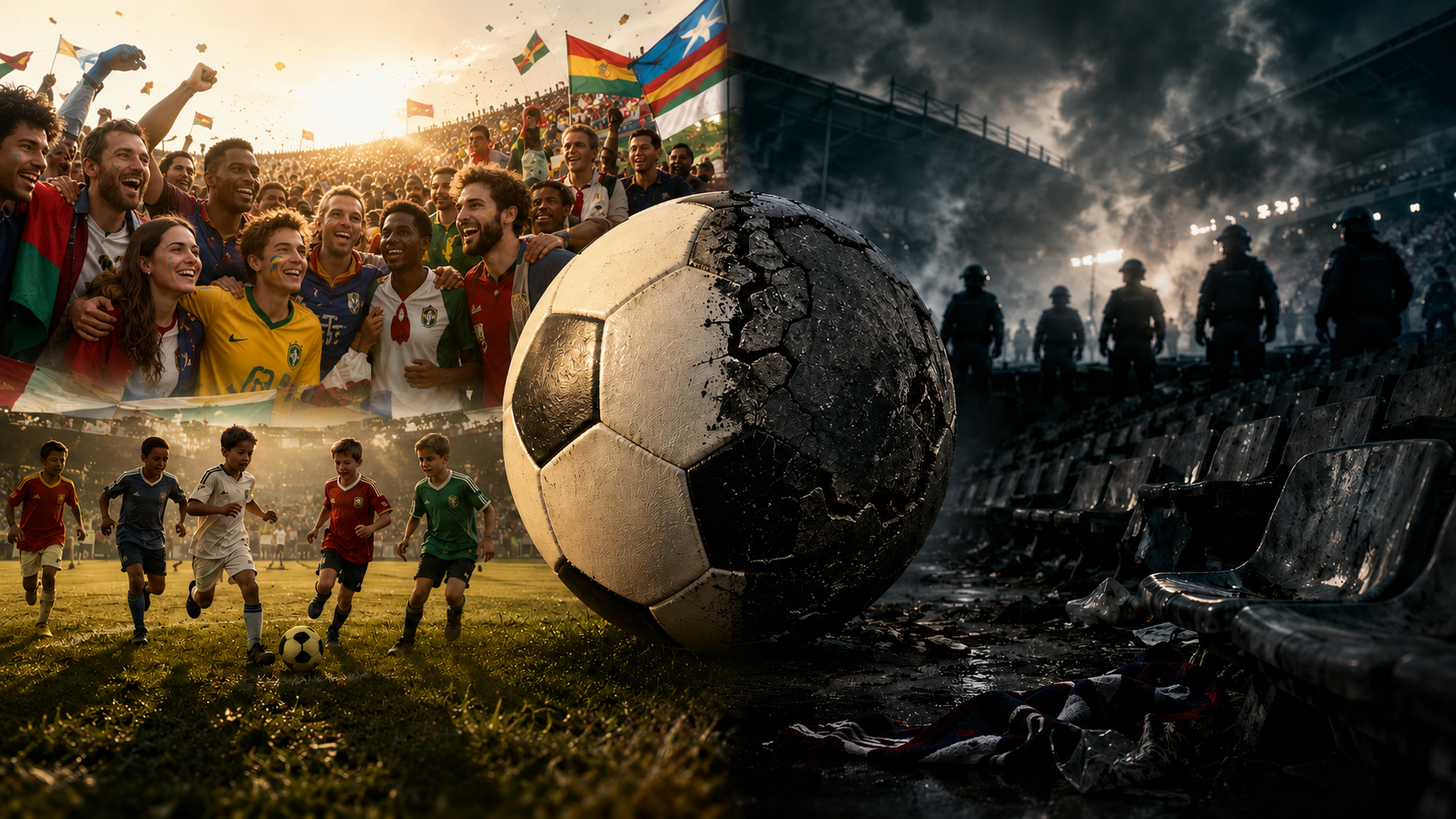
When we examine football from its social dimension, we see that football fanaticism, from past to present, has led to extremely horrific acts of violence and racism. In this, the language used during the transformation of football into an industry is important. For example, the contests between major teams are always presented in the media in a manner that stimulates a strong spirit of rivalry. Exaggerated descriptions and commentaries before and after matches that fuel this rivalry distance people from the spirit of the game and virtually turn them into hooligans.
The way fanatics perceive football brings them to a point where they are willing to ‘risk death’ for their own teams. A person with such a mentality would, without doubt, also be likely to commit the act of killing for the sake of this cause. The fact that such hooligans carry weapons such as knives and sharpened metal rods with them when going to matches is among the greatest proofs of this. Indeed, it is a situation with which we are familiar that a football match organized for the purpose of making spectators happy has cost many young people their lives. Sadly, this situation is not regional but global.
For example,
On May 24, 1964, after Argentina defeated Peru in an Olympic qualifying match in Peru, supporters rioted, and the ensuing commotion resulted in the deaths of 318 people and injuries to 500 others.
Following a match between the two neighboring countries, El Salvador and Honduras, during the qualifiers for the 1970 FIFA World Cup, a war lasting 100 hours broke out. This war, which entered world literature as the “Football War,” left a toll of 2,100 dead and more than 10,000 injured. The war came to an end through the intervention of the Organization of American States.
On May 29, 1985, during clashes between Juventus and Liverpool supporters at the European Cup Final played in Belgium, 39 people lost their lives; on July 14, 1996, during a match in Libya, 50 people died; on April 11, 2001, 43 people lost their lives during a match in South Africa; and on March 29, 2009, at least 22 people died during a World Cup qualifying match played between Côte d’Ivoire and Malawi.
In 2012, following a match played between El Ahly and Al Masry in Egypt, at least 74 people died and thousands were injured when Al Masry supporters invaded the pitch. A group of supporters set the stadium on fire, and the Egyptian army was mobilized to restore public order.
In 1996, a stadium stampede occurred during the Guatemala–Costa Rica World Cup qualifying match played in Guatemala City. In the incident, 84 people died and 147 were injured.
During the 1998 FIFA World Cup in France, following the Germany–Yugoslavia match in Lens, German hooligans attacked police officer Daniel Nivel and other police officers. No deaths occurred as a result of the incident, but 3 people were injured.
During the 2006 FIFA World Cup in Germany, disturbances broke out in Stuttgart between German and English supporters. No deaths occurred in the incidents, but 9 people were injured.
In 2009, a stadium stampede occurred during the Côte d’Ivoire–Malawi World Cup qualifying match played in Abidjan. In the incident, 22 people died and 132 were injured.
Prior to the 2010 FIFA World Cup in South Africa, a stampede occurred during the Nigeria–North Korea friendly match played in Johannesburg. No deaths occurred in the incident, but between 15 and 20 people were injured.
On the opening day of the 2014 FIFA World Cup in Brazil, clashes occurred between protesters and police in São Paulo. No deaths occurred in the incidents, but at least 11 people were injured.
At the 2022 FIFA World Cup in Qatar, following the France–Morocco semi-final, one person was killed in Montpellier as a result of a vehicle collision during the disturbances that broke out. The number of injured was not specified clearly.
During Argentina’s championship celebrations at the 2022 World Cup, incidents related to crowds and clashes occurred in Buenos Aires. No deaths occurred in the incidents, but 18 people were injured.
During the 2022 World Cup, incidents related to the rivalry between Argentina and Brazil supporters occurred in Bangladesh. In these incidents, 23 people died, 35 people were hospitalized, and an additional 45 people were injured.
The incidents we have listed are only a few of the tragic consequences brought about by football fanaticism. It should also be noted that racism in football has reached alarming dimensions. Players, referees, and supporters can easily be subjected to swearing and insults because of their countries, their social backgrounds, or their religions.
It is important that football be rescued from this vicious cycle. Statements made by individuals who encourage fanaticism, violence, and racism in football, or who engage in propaganda in this direction, should not be given a place in the media; the media should not support racism and fanaticism. More importantly, however, measures should be taken against racist and hooligan-minded ideas before they even emerge. Education based on love is important at this point. It is known that the fundamental characteristic of people who behave toward others in an unloving, intolerant, accusatory, and discriminatory manner is that they act on the basis of prejudices. It should not be forgotten that the belittlement, rejection, isolation, and exclusion that emerge together with prejudices can lead to the fueling of hatred, violence, and even brutality in some people.
With a special education directed at football supporters, football can also be transformed into an educational environment that guides people in a positive direction. This important sector, which has a very broad scope, should no longer be associated with hooliganism, anger-based rivalry, and violence; and with a fundamental transformation, more emphasis should be placed on love and brotherhood in the name of football.
In this regard, football teams, the media, and of course football players will have a major share of responsibility. Every sector, from art to industry, has a great responsibility in accustoming the world to love. Football should be one of them.