
The Earth is home to a silent miracle that has endured for billions of years... Life, which contains a unique artistry in every corner and a profound intelligence in every cell, has confronted humanity for centuries with a fundamental question: "How did it all begin?"
When human beings examine this magnificent mechanism of existence, they encounter two different explanations.
On one side stands the theory of evolution, deliberately kept alive and promoted despite its fallacies, claiming that everything is the product of blind chance. On the other side stands the profound truth that every living being was brought into existence through infinite power and perfect knowledge — Creation.
For approximately a century and a half, the science of biology has been largely defined by the concept of evolution. Many people regard this claim as an unquestionable fact of observational science. Yet deep beneath the surface, a quiet crisis has been growing. Scientific discoveries made over recent decades have been shaking the foundations of this theory, long assumed to be firmly established. From paleontology to biochemistry, numerous fields have revealed evidence indicating that life did not arise through chance, but was brought into existence by a supreme intelligence.
Now is the time to set aside our preconceptions and embark on a journey into the heart of this great crisis.
Lamarck
Although the philosophical roots of evolutionary theory can be traced back to ancient Greece, it did not enter the scientific mainstream until the 19th century. The figure who laid the foundations for one of the first major misconceptions in this field was the French biologist Jean-Baptiste Lamarck.
In his 1809 work, Philosophie Zoologique, Lamarck put forward a hypothesis that reduced the magnificent balance of life to a remarkably simple assumption. According to him, living organisms could physically modify themselves in response to the struggle for survival, and these acquired characteristics could then be passed on to the next generation. This is how the famous giraffe story was born. Lamarck claimed that giraffes were originally short-necked, but as they continually stretched to reach higher branches, their necks became longer, and this change was inherited by their offspring. What appeared at first glance to be an innocent observation was, in reality, an attempt to replace the immutable, flawless, and divine laws of creation with accidental modifications.
In reality, giraffes do not make a special effort to reach great heights. On the contrary, they feed more efficiently when their necks are lowered, and this is generally how they feed. Even during the dry season, when competition among them would be expected to be at its most intense, giraffes are observed feeding predominantly on low shrubs rather than on tall trees.
Science advances not through ideological tales that are detached from reality, but through concrete facts. By the middle of the twentieth century, the greatest secret at the heart of life was revealed in all its magnificence.
Today, we know that the hereditary information of living organisms is stored within an extraordinary molecular system known as DNA.
To understand what this means, we may consider an example from modern technology.
The computer software and video games we use today operate, at their core, through a digital language consisting of zeros and ones stored in memory. Every color we see on a screen, every button we click, every measurement, every shape, and every design is the result of code that has been consciously written beforehand.
A far more advanced and awe-inspiring counterpart of this system exists within the cells of living organisms on Earth. Every detail of our bodies, every function, and every characteristic that can be passed on to future generations is encoded through a four-letter molecular coding system that utilizes the molecules Adenine, Thymine, Guanine, and Cytosine.
This molecular coding system possesses a level of precision, order, and intelligence far beyond anything that chance could produce. The encoding and storage of information through molecules, its flawless replication during every cell division, and its perfect reading and execution whenever needed are among the clearest evidences of our Almighty Lord’s supreme art of creation.
However, the genetic realities that became much better understood following the discovery of DNA in 1943 were completely unknown during the 1800s. Under the primitive microscopes of that era, the cell could be seen only as a blurred spot. It was within this environment of limited scientific knowledge and widespread ignorance that Darwinism would emerge and develop.
Darwin
The materialist worldview needed a foundation. The architect of this approach, which was more philosophical than scientific in nature, would be Charles Robert Darwin, who was influenced by Lamarck.
When we turn back the dusty pages of history, a dark shadow emerges from the misty atmosphere of the nineteenth century. In those years, when science had not yet penetrated the depths of life through the lens of the microscope, an idea was put forward that stood in complete opposition to the reality of creation as revealed in the Holy Scriptures. This was the world of Charles Darwin, who left the Faculty of Theology and advocated the claim that living things could arise on their own, through chance, without a Creator.
At the age of twenty-three, Charles Darwin, an adventurous young man who had abandoned the path to becoming a clergyman despite his theological education, embarked in 1832 on a five-year voyage around the world aboard the HMS Beagle, an official exploration vessel of the British Royal Navy that set sail from the shores of England. Darwin was particularly fascinated by the diversity of life he observed on the Galápagos Islands. The small differences in the beaks of finches living on different islands inspired an idea in him: Had these creatures changed in order to adapt to the environments in which they lived?
When the voyage ended, Darwin carried his observations to the livestock markets of England. He witnessed how cattle breeders produced different breeds of cattle through selective breeding. This artificial selection began to shape a new theory in Darwin's mind.
Finally, in 1859, On the Origin of Species, a work that would provoke enormous controversy in the scientific world, was published. This book was presented as a supposedly scientific pretext developed in opposition to the belief in God that had existed for thousands of years.
Darwin, while attempting to explain the diversity of life—which, in every one of its particles, displays the infinite power and unparalleled artistry of Almighty God—through irrational chance events, a supposed common ancestor, and natural processes, was in reality bequeathing to the world a claim that he himself was unable to prove.
This idea soon found resonance not so much in laboratories as in the cold halls of philosophy.
The heart of materialism had begun to beat to the rhythm of this theory. Indeed, while shaping the Marxist ideology that would later lay the groundwork for the exile, starvation, and execution of millions of people, Karl Marx dedicated Das Kapital to Charles Darwin and used the following words:
“To Mr. Charles Darwin on the part of his sincere admirer Karl Marx.”
The principal point that distinguished Darwin’s theory from Lamarck’s was its emphasis on the concept of natural selection. Lamarck’s giraffe example took on a different form in Darwin’s mistaken scenario. According to this claim, the short-necked animals that could not reach the trees were gradually eliminated, while only the taller individuals survived, and thus long-necked giraffes emerged over successive generations.
Natural selection refers to the survival of those organisms that are stronger or better suited to the conditions of their environment in the struggle for existence found in nature. However, this unsupported claim put forward by Darwin brought with it many questions regarding the theory of evolution. Darwin maintained that living things had evolved gradually, step by step. If this were true, then vast numbers of transitional forms should have existed throughout history. Yet the fossil record contained no trace of these supposed intermediate creatures.
Darwin devoted considerable thought to this problem and ultimately had to conclude that these fossils may be discovered in the future. How could complex organs such as the eye, ear, and wing be explained through natural selection? How could it be argued that structures which would lose their function if even a single part were missing had developed gradually, step by step? Even before these questions, there was an even more fundamental one: How had the first living organism—the original living being that Darwin described as the “common ancestor” of all life—come into existence? Since nonliving matter cannot become alive through natural processes, how was Darwin to explain the origin of the first living organism? Darwin was aware of at least some of these difficulties. In the chapter entitled “Difficulties on Theory”, which he included in his book, he openly acknowledged them. However, the answers he offered to these problems possessed no scientific validity.
The British physicist Henry Lipson commented on the chapter “Difficulties on Theory” as follows:
"On reading The Origin of Species, I found that Darwin was much less sure himself than he is often represented to be; the chapter entitled 'Difficulties of the Theory' for example, shows considerable self-doubt. As a physicist, I was particularly intrigued by his comments on how the eye would have arisen."
— Henry Lipson
(H. S. Lipson, “A Physicist’s View of Darwin’s Theory,” Evolution Trends in Plants, Vol. 2, No. 1, 1988, p. 6.)
The Origin of Life
Darwin did not address the question of the origin of life in his book. This was because the primitive scientific understanding of his era assumed that living organisms possessed extremely simple structures. According to the theory of spontaneous generation, which had been accepted since the Middle Ages, it was assumed that nonliving matter could accidentally come together and produce a living organism.
At that time, it was widely believed that insects arose from food scraps and that mice originated from wheat. Curious experiments were even conducted to support this idea. In one such experiment, wheat was placed on a dirty rag, and it was expected that mice would eventually emerge from the mixture. The appearance of maggots on meat was likewise regarded as evidence that life could arise from nonliving matter. However, it would later be understood that the maggots on meat did not form spontaneously; rather, they developed from microscopic larvae deposited by flies.
During the period when Darwin was writing On the Origin of Species, the belief that bacteria could arise from nonliving matter was widely accepted within the scientific community. Yet only five years after the publication of Darwin’s book, the renowned French biologist Louis Pasteur decisively refuted this belief, which had served as a foundation for evolutionary thought. After years of careful research and experimentation, Pasteur summarized his conclusion with the following words:
“Never will the doctrine of spontaneous generation recover from the mortal blow struck by this simple experiment.”
— Louis Pasteur
(Sidney Fox, Klaus Dose, Molecular Evolution and The Origin of Life, W. H. Freeman and Company, San Francisco, 1972, p. 4.)
The theory of evolution presents the following story regarding the origin of life:
Once upon a time, there was no life on Earth. There was no cell, no plant, no animal, and none of the flawless systems that govern living organisms... There were only nonliving substances, water, gases, minerals, and natural phenomena.
According to this account, over millions of years lightning had to strike repeatedly, temperatures had to fluctuate, chemical substances had to come together randomly, and within this uncontrolled environment the amino acids—the fundamental building blocks of life—had to form by chance.
But even this would not be enough.
This is because the amino acids used in living organisms possess a highly specific arrangement. Amino acids exist in two different forms, commonly referred to as left-handed and right-handed. Yet in the proteins of living organisms, almost exclusively left-handed amino acids are used. If left-handed and right-handed amino acids were combined together indiscriminately, the result would not be the orderly structures required for life, but rather a biologically useless mixture.
Therefore, it would not be sufficient for chance merely to produce amino acids. Coincidences would also have to select only the left-handed amino acids from among them, eliminate the others, and continuously preserve this selection.
Next, these amino acids would have to assemble not randomly, but in extraordinarily precise sequences to form proteins. For proteins are not simple chains. Each one is a highly specialized molecule with a specific function, folded with remarkable precision into a complex three-dimensional structure. For a protein to function properly, its amino acids must be connected in the correct type, the correct number, the correct sequence, and the correct configuration.
But the story does not end there.
Even if such proteins were somehow formed, they would still have to remain intact under the destructive conditions of nature. Temperature fluctuations, radiation, chemical influences, and uncontrolled reactions in the environment would have to leave them unharmed. In other words, chance would not only have to produce these highly delicate structures, but also preserve them.
Then an even greater problem emerges:
Where did the information describing how proteins are to be produced come from?
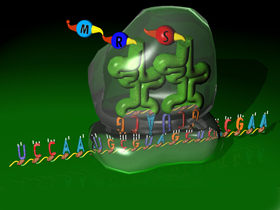
Proteins within living cells are not produced by blind chance. The structure of every protein is recorded in DNA as a specific code. These codes are read, copied, transported, and then converted into proteins by molecular machines within the cell. Thus, what exists is not merely raw material; there is information, planning, a reading system, a translation mechanism, and a production process.
According to the evolutionary story, however, nonliving matter would somehow have had to accomplish the following entirely on its own:
First, proteins would have to form. Then the structures of those proteins would somehow have to be encoded. After that, other molecular systems capable of reading those codes would have to emerge. Next, those systems would need to identify and collect the appropriate components from nature and then manufacture new copies of the same proteins.
Moreover, more advanced proteins would have had to emerge over time, these advanced characteristics would likewise have had to be added to the codes, and all of these processes would have had to proceed without error.
In other words, within the evolutionary tale of the origin of life, nonliving atoms and molecules must eventually transform into conscious factories capable of storing information, reading codes, manufacturing products, performing error correction, and reproducing themselves.
Yet the nonliving matter and natural forces that evolutionists regard as the creators of life possess no intelligence. Atoms do not know what they are building. Molecules do not make plans, set goals, make choices, or contemplate the future. They cannot determine the function of a protein and then write the instructions for producing it. They cannot establish the systems required to read the information stored in DNA. Nor can they design the extraordinary production processes operating within the cell.
For this reason, the origin of life remains one of the greatest dilemmas facing evolutionary theory.
Evolutionists often attempt to address this dilemma through sophisticated-sounding, supposedly scientific terminology. Expressions such as “chemical evolution,” “random processes,” and “self-organization” are frequently used to give the impression that the issue has been explained. Yet regardless of the terminology employed, the fundamental problem remains unchanged: what stands before us is an immense body of information, order, and purposeful design that demands an explanation.
It is impossible for nonliving matter, chance occurrences, and blind natural forces to produce such a system.
The superior intelligence evident at every stage of life is one of the clearest proofs of Almighty God’s infinite art of creation. Every code within the cell, every protein, every molecular machine, and every flawless system demonstrates that life is not the product of chance, but rather the creation of our Lord, Who possesses infinite knowledge and power.
I seek refuge in God from the accursed Satan.
“Is He who creates like him who does not create? So will you not pay heed?”
(Surat an-Nahl, 17)
Irreducible Complexity
The greatest problem with all the stories evolutionists tell about the origin of life is that they ignore the staggering complexity of the cell. Yet the scientific reality is this: for a protein to come into existence, it is not enough merely for the correct amino acids to be arranged in the correct sequence; there must already be a complete and fully functional cell in which that protein can exist, be protected, and be assigned a role.
A cell may be compared to a vast factory composed of thousands of interconnected parts. In this factory, proteins are the workers, while DNA serves as the plans and instructions housed in the management center. However, it must not be forgotten that without the factory building itself (the cell membrane), without the power station operating (the mitochondrion), and without the systems for transporting raw materials (the cytoplasm and organelles), possessing the most intelligent workers or the most detailed plans in the world would be of no value whatsoever.
If the cell membrane were to lose its selective permeability even for a moment, or if the delicate pH balance of the cytoplasm were disrupted, all of the miraculous proteins within it would break down within seconds.
Proteins are dynamic three-dimensional molecular machines operating on the nanoscale, each performing different functions within the cell. They carry out millions of chemical reactions per second at the atomic level. The production of these extraordinarily sophisticated machines cannot be explained by accidental mechanisms.
To manufacture even a single protein within a cell, more than 100 specialized proteins are required, each performing a different function. If even one of these proteins were absent, protein synthesis—that is, protein production—could not occur within the cell. For a single protein to be produced, all of them must be present at the same time.
And even this is not sufficient. All of these components must also be available in the same region of the cell. At the same time, the organelles within the cell must be carrying out their functions perfectly. The DNA in the nucleus must provide the information specifying the sequence of amino acids. The mitochondrion must generate the energy required for production in the form of ATP. The endoplasmic reticulum must provide a suitable environment for production. The vacuole must store the proteins that are produced. Meanwhile, the cell membrane must form a selectively permeable barrier that protects all of these components from external influences while maintaining the appropriate acidity level, or pH value. Each of these factors we have outlined in broad terms is indispensable both for protein production and for the continued existence of proteins once they have been produced without degrading. In other words, each is essential for the continuation of the cell’s life itself.
In summary, without other proteins, there can be no protein.
Even if we assume that all of the amino acids belonging to a particular protein—that is, all of its raw materials—are present in complete form, that protein still will not come into existence on its own.
Specialized proteins are required to join those amino acids together in a specific sequence through peptide bonds. Then, chaperone proteins must carefully fold them into their functional three-dimensional structures, tying the produced amino acid chain into the correct configuration through highly precise hydrogen bonds at the quantum level.
But of course, all of this is both impossible and meaningless without a complete cell. In an uncontrolled and unprotected environment, that protein would immediately degrade and cease to exist.
This “all-or-nothing” principle in biology leads us directly to the immense barrier that evolutionary theory has been unable to overcome: Irreducible Complexity.
When evaluated in light of the level of biochemical knowledge reached in the 21st century, it is unmistakably evident that the idea of Darwinism, proposed 150 years ago, has been rendered obsolete.
This is because life is far too orderly, precise, and integrated to be explained by a process that supposedly advances from simplicity to complexity through chance. Every structure within the cell is connected to other structures. Every function is supported by other functions. Every molecule operates as part of a greater plan.
This perfect order is clear evidence not of blind coincidence, but of the creation of God, Who possesses infinite knowledge and power. Our Lord states in the Qur’an:
I seek refuge in God from the accursed Satan.
“... Or have they assigned partners to God Who create as He creates, so that all creating seems the same to them? Say: “God is the Creator of everything. He is the One, the All-Conquering.”
(Surat ar-Ra‘d, 16)
Eye
“The eye to this day gives me a cold shudder... ”
— Charles Darwin
(Norman Macbeth, Darwin Retried: An Appeal to Reason, Boston; Gambit, 1971, p. 101)
Why did Darwin have to say such a thing?
Because when one part is missing in a delicate machine, the existence of the other components has no meaning. Cars waiting for parts in service are a direct example of this situation.
The eye, however, is a far more complex biological structure than any human-made machine.
In order to see, approximately 40 separate components must function simultaneously, completely and flawlessly, in a mutually compatible manner. Cornea, iris, lens, sclera, retina, optic nerve, eyelid… all must be present at the same time. If one of these is absent, vision does not occur. If their positions are changed, their existence again loses meaning. If only the lacrimal glands and the tears they produce were absent, that eye would dry out within minutes and lose its function.
If one is missing, the existence of the other components also has no meaning or purpose.
Such a system, which cannot be explained by random accidental arrangements, is defined as “Irreducible Complexity.”
Darwin’s claim was based on the hypothesis that a continuous process from primitive to advanced forms operated over millions of years. However, the fact of irreducible complexity also shows that the parts of a clearly seeing eye do not have the luxury of waiting for one another for millions of years. Today, it is a known clinical medical fact that even an eye that sees blurredly because its lens or cornea is not transparent becomes neglected by the brain due to its lack of function and gradually becomes blind.
However, according to the theory of evolution, for a component to remain permanent and continuously present, it must be beneficial and functional at that time. This is what will be selected by natural selection. At precisely this point, Charles Darwin expresses concern that he cannot explain how such intermediate structures that have not yet acquired full function would be maintained, and how they would wait for the completion of other parts over millions of years.
“To suppose that the eye with all its inimitable contrivances for adjusting the focus to different distances, for admitting different amounts of light, and for the correction of spherical and chromatic aberration, could have been formed by natural selection, seems, I freely confess, absurd in the highest degree. ”
— Charles Darwin
(Darwin, Charles. The Origin of Species, J.M. Dent & Sons Ltd, London, 1971, p. 167.)
Genetics
Another issue that placed Darwin’s theory into an impasse was the matter of heredity. At that time, how living organisms transmitted their characteristics to subsequent generations—in other words, how heredity occurred—was not fully known. For this reason, primitive ideas such as the transmission of heredity through blood were widely accepted.
This uncertainty regarding heredity had led Darwin himself, while developing his theory, to rely entirely on incorrect assumptions. Darwin fundamentally proposed natural selection as the mechanism of evolution. However, how would the beneficial traits to be “selected” by natural selection arise, and how would they be transmitted from generation to generation?
At this point, Darwin had resorted to the thesis of the inheritance of acquired characteristics, put forward by Lamarck. Gordon Rattray Taylor, a researcher who supports evolutionary theory, describes Darwin’s strong influence from Lamarckism in his book The Great Evolution Mystery as follows:
“Lamarckism... is known as the inheritance of acquired characteristics... Darwin himself, as a matter of fact, was inclined to believe that such inheritance occurred and cited the reported case of a man who had lost his fingers and bred sons without fingers... [Darwin] had not, he said, gained a single idea from Lamarck. This was doubly ironical, for Darwin repeatedly toyed with the idea of the inheritance of acquired characteristics and, if it is so dreadful, it is Darwin who should be denigrated rather than Lamarck... In the 1859 edition of his work, Darwin refers to 'changes of external conditions' causing variation but subsequently these conditions are described as directing variation and cooperating with natural selection in directing it... Every year he attributed more and more to the agency of use or disuse... By 1868 when he published Varieties of Animals and Plants under Domestication he gave a whole series of examples of supposed Lamarckian inheritance: such as a man losing part of his little finger and all his sons being born with deformed little fingers, and boys born with foreskins much reduced in length as a result of generations of circumcision.”
— Gordon Rattray Taylor
(The Great Evolution Mystery, London: Abacus, Sphere Books, London, 1984, pp. 36, 41– 42.)
However, Lamarck’s thesis was refuted by the laws of heredity discovered by the Austrian botanist and priest Gregor Mendel. In this case, the concept of “beneficial traits” also became unsupported.
The laws of heredity showed that acquired physical characteristics are not transmitted from father to son, and that heredity occurs according to certain immutable laws. These laws supported the view of the invariability of species. The cattle that Darwin observed in animal markets in England, no matter how many different combinations they were bred in, would not change species and would remain cattle. At most, their colors, sizes, productivity, or certain physical characteristics could change. However, these changes could not take them beyond the limits of their own creation.
Mendel was familiar with The Origin of Species and opposed Darwin’s theory. While Darwin put forward the theory of evolution from a common ancestor through natural selection, Mendel believed in special creation.
This precise system observed in heredity is one of the clear proofs of the infinite intellect and fine artistry in the creation of our Lord. Every living being transmits its characteristics to its offspring within certain rules. Generations change, individuals differ; however, living beings preserve the fundamental characteristics of their own species. This situation shows that life was not created by blind chance, but by a superior knowledge, measure, and wisdom.
Indeed, our Lord states in the Qur’an as follows:
I seek refuge in God from the accursed Satan.
“He Who created and moulded;
He Who determined and guided”
(Surat al-A‘la, 2–3)
The laws discovered by Mendel made Darwinism difficult to sustain. For these reasons, scientists who supported Darwinism attempted to develop a new model of evolution in the first quarter of the 20th century.
Neo-Darwinism
A group of scientists aiming to reconcile Darwinism with genetics gathered in 1941 at a meeting organized by the American Geological Society. After extensive discussions, geneticists such as G. Ledyard Stebbins and Theodosius Dobzhansky, zoologists such as Ernst Mayr and Julian Huxley, and paleontologists such as George Gaylord Simpson and Glen L. Jepsen reached the conclusion that a new interpretation of Darwinism was necessary.
In response to the “genetic stability” established by the laws of genetics, these individuals employed the concept of “mutation,” which had been proposed at the beginning of the century by the Dutch botanist Hugo de Vries. Mutations are disruptions in DNA that occur due to X-rays, ultraviolet rays from the Sun, various radioactive substances, or harmful chemicals.
The scientists who gathered at the American Geological Society adopted this mutation mechanism as an evolutionary force and, in response to Darwin’s question—attempting to be explained through Lamarckian ideas—“What is the source of beneficial changes that improve living organisms?” they answered: “random mutations.” This new explanation, formed by adding the concept of mutation to Darwin’s theory of natural selection, was named the “Modern Synthetic Theory of Evolution.” In a short time, this theory became known as “Neo-Darwinism,” and its proponents came to be referred to as “Neo-Darwinists.”
However, there was an important problem: it was true that mutations changed the genetic information of living organisms, but this change generally occurred in a negative direction or, at best, without producing any effect. Most observed mutations produced deformed, diseased, and weak individuals, and sometimes directly caused death. For this reason, Neo-Darwinists conducted numerous experiments and observations in an attempt to obtain examples of “beneficial mutations” that would confer entirely new characteristics on living organisms. For this purpose, mutation experiments lasting decades were carried out in the laboratory, primarily on fruit flies. However, in these experiments, no new species ever emerged through mutations.
“It is a striking, but not much mentioned fact that, though geneticists have been breeding fruit-flies for sixty years or more in labs all around the world—flies which produce a new generation every eleven days—they have never yet seen the emergence of a new species or even a new enzyme.”
— Gordon Taylor
(The Great Evolution Mystery, New York, Harper & Row, 1983, p. 48.)
The helplessness of scientists who worked for years in laboratories on fruit flies, yet failed to obtain even a single new species, is in fact presented to humanity as a lesson in the Qur’an centuries earlier. Our Lord reminds, through the following verse, that He manifests an incomparable power even in the smallest creature He has created:
I seek refuge in God from the accursed Satan.
“Mankind! An example has been made, so listen to it carefully. Those whom you call upon besides God are not even able to create a single fly, even if they were to join together to do it. And if a fly steals something from them, they cannot get it back. How feeble are both the seeker and the sought!”
(Surat al-Hajj, 73)
Fossils
According to the theory of evolution, all living organisms have descended from one another. As to the claim, previously existing species transformed into another species over time, and all species emerged in this way. In line with the theory, this transformation spans a very long period of hundreds of millions of years and progresses step by step. In this case, within the alleged long transformation process, countless intermediate species must have formed and lived. For example, in the past, semi-fish–semi-reptile organisms should have existed, which still retained fish characteristics while at the same time acquiring some reptile characteristics. Or reptile–bird forms that possessed reptile features while also acquiring some bird features must have emerged. Since they were in a transitional stage, these should be deformed, incomplete, and defective organisms.
These hypothetical organisms, which are assumed to have existed in the past, are called transitional forms.
Today, there are approximately 1.5 to 2 million identified species of living organisms on Earth. In addition, the fossil record provides us with countless extinct species that lived in the past. However, when both currently living species and extinct species known only from fossils are examined, a common point stands out:
The initial form in which living fossils are found in the earth’s layers is the same as the final fossil example belonging to the period in which they became extinct. If they have not become extinct, there is also no difference between the examples living today and their earliest fossil forms. This situation is defined in paleontology as STASIS, a rule of invariability.
However, according to the theory of evolution, there must have been billions of intermediate species linking these millions of stable species to one another. So much so that we should find trillions of transitional fossil examples with half-developed limbs, incomplete organs, and partial systems. Wherever we dig, we should encounter such aberrant fossils. However, for centuries, the fossil records obtained have always been filled with fossils belonging to stable species.
The American paleontologist and historian of science Stephen Jay Gould wrote the following about these two most prominent features of the fossil record:
“The history of most fossil species includes two features particularly inconsistent with gradualism:
1. Stasis. Most species exhibit no directional change during their tenure on earth. They appear in the fossil record looking much the same as when they disappear; morphological change is usually limited and directionless.
2. Sudden appearance. In any local area, a species does not arise gradually by the steady transformation of its ancestors; it appears all at once and ‘fully formed’.”
— S. J. Gould
(“Evolution’s Erratic Pace”, Natural History, vol. 86, May 1977)
Darwin, in On the Origin of Species, explained the need for transitional forms as follows:
"... if my theory be true, numberless intermediate varieties, linking closely together all the species of the same group, must assuredly have existed. . . . Consequently evidence of their former existence could be found only amongst fossil remains..."
— Charles Darwin
(The Origin of Species: A Facsimile of the First Edition, Harvard University Press, 1964, p. 179.)
However, Darwin was aware that the fossils of these intermediate forms were not being found. He also saw that this constituted a major problem for his theory. For this reason, in the chapter titled “Difficulties on Theory” in The Origin of Species, he wrote as follows:
“Why, if species have descended from other species by insensibly fine gradations, do we not everywhere see innumerable transitional forms? Why is not all nature in confusion instead of the species being, as we see them, well defined? Innumerable transitional forms must have existed; why do we not find them embedded in countless numbers in the crust of the earth... Why then is not every geological formation and every stratum full of such intermediate links? Geology assuredly does not reveal any such finely graduated organic chain; and this, perhaps, is the most obvious and gravest objection which can be urged against my theory.”
— Charles Darwin
(The Origin of Species, pp. 172, 280.)
Evolutionary paleontologists, based on Darwin’s prediction, conducted extensive fossil research all over the world since the mid-19th century and searched for transitional forms. However, despite all efforts, these transitional forms have never been encountered. The findings obtained from excavations and studies have, contrary to the predictions of the theory of evolution, formed the basis for interpretations suggesting that living organisms appeared suddenly and in a complete form on Earth. Evolutionary paleontologist Robert L. Carroll expressed that fossil evidence has disappointed the expectations of Darwinists in the following words:
“Despite more than a hundred years of intense collecting efforts since the time of Darwin's death, the fossil record still does not yield the picture of infinitely numerous transitional links that he expected.”
— Robert L. Carroll
(Patterns and Processes of Vertebrate Evolution, Cambridge University Press, 1997, p. 25.)
When we look at nature, what we observe is not crippled or incomplete organisms “trying to evolve,” but beings that are like works of art, at the peak of aesthetics and functionality. The eye is located at the most ideal position for seeing; the wing has the most suitable geometry for flying. This magnificence is not the result of chance, but a manifestation of God, Who gives form and shape (Al-Musawwir), and Who creates everything in perfect and harmonious form (Al-Bari).
This truth is conveyed to humanity in the Qur’an as follows:
I seek refuge in God from the accursed Satan.
“He is God – the Creator, the Maker, the Giver of Form. To Him belong the Most Beautiful Names. Everything in the heavens and earth glorifies Him. He is the Almighty, the All-Wise.”
(Surat al-Hashr, 24)
Entropy
One of the most fundamental laws of physics, the second law of thermodynamics, states that all systems left to themselves under natural conditions tend, over time and in direct proportion, toward disorder, dispersion, and deterioration. Everything—living or non-living—wears down, degrades, decays, breaks apart, and disintegrates over time. This is an inevitable end that every entity will eventually face, and according to this law, this process is irreversible.
This reality is also something we closely observe in our daily lives. For example, if you take a car to a desert and leave it there, and then check its condition months later, you do not expect it to have become more advanced or better maintained. On the contrary, you would see that its tires have deflated, its windows have broken, its body has rusted, and its engine has decayed. The same inevitable process occurs much more rapidly for living beings.
Thus, the second law of thermodynamics is the expression of this natural process in physical equations and calculations. This well-known physical law is also referred to as the “law of entropy.” In physics, entropy is a measure of the disorder contained in a system. The transition of a system from an orderly, organized, and structured state to a disordered, scattered, and unplanned state increases the entropy of that system.
The law of entropy has demonstrated that the entire universe is irreversibly progressing toward an increasingly disordered, unstructured, and dispersed state. The theory of evolution, however, is an assertion that is presented while entirely disregarding this fundamental physical law encompassing the whole universe. The theory proposes a mechanism that is in direct opposition to this law.
According to Darwin’s theory, disordered, non-living atoms and molecules spontaneously come together over time through chance, forming orderly and structured proteins, and highly complex molecular structures such as DNA and RNA, and subsequently producing millions of living species with even higher levels of organization and design. This hypothetical process is entirely contrary to the reality described by the law of entropy.
Evolutionary scientist Roger Lewin also expressed the thermodynamic dilemma of evolution in an article in Science as follows:
“One problem biologists have faced is the apparent contradiction by evolution of the second law of thermodynamics. Systems should decay through time, giving less, not more, order.”
— Roger Lewin
(“A Downward Slope to Greater Diversity,” Science, Vol. 217, September 24, 1982, p. 1239.)
The second law of thermodynamics, from a scientific and logical perspective, constitutes a physical barrier that is impossible to overcome against the theory of evolution. Evolutionists, unable to provide any scientific and coherent explanation to overcome this obstacle, can only resolve this issue in their imagination. For example, Jeremy Rifkin states that he believes evolution overcomes this physical law in a “magical” way:
“The Entropy Law says that evolution dissipates the overall available energy for life on this planet. Our concept of evolution is the exact opposite. We believe that evolution somehow magically creates greater overall value and order on earth.”
— Jeremy Rifkin
(Entropy: A New World View, p. 55.)
These statements indicate that evolution is more of a dogmatic belief system than a scientific thesis.
Information Theory
At the foundation of the theory of evolution lies the materialist philosophy. Materialism is based on the assumption that everything that exists is only matter. According to this philosophy, matter has existed since eternity, will continue to exist forever, and nothing other than matter exists. Materialists use a form of reasoning called “reductionism” in order to support these claims. Reductionism is the idea that things which do not appear to be material can ultimately be explained through material causes.
To explain this, let us consider the example of the mind. As is known, the human mind is not something that can be touched or seen. Science describes the structure of the brain, its cells, and its electrical signals. However, within all these physical processes, there is no concrete center to which we can point as the thing we call ‘the mind.’ At no point in the brain is there a place where we could say, ‘This is where thoughts are formed.’ And at this point, an inevitable question arises: If the mind is not material, then what is it? The being we call ‘I’—thinking, loving, deciding, remembering, rejoicing, and imagining... Can all of these be reduced to a physical object such as a stone or a table?
For example, visual information coming from the external world is converted into electrical signals through the eye and transmitted to the brain. The brain processes and interprets these signals. However, there is a critical point here: who observes this interpretation? Who is it that sees, understands, and becomes aware of these electrical activities occurring in the brain? Because matter cannot be aware of its own existence. No atom, no molecule can say “I exist.” Therefore, the entity that perceives, evaluates, and gives meaning to all these processes is not matter itself.
Materialists, however, argue that the mind can be reduced to matter. According to the materialist view, our thinking, love, happiness, and all other mental activities are nothing more than chemical reactions occurring between atoms in the brain. From a materialist perspective, our love for a person is a chemical reaction in certain cells of the brain, and fear in response to an event is another chemical reaction.
The well-known materialist philosopher Karl Vogt expressed this reasoning with his famous statement: “The brain secretes thought as the stomach secretes gastric juice, the liver bile, and the kidneys urine.”
However, modern science has revealed a very different reality: information that exists in nature and can never be reduced to matter. Have you ever considered DNA codes, which describe all the physical details of a living body within an extremely small space—about one hundred-thousandth of a millimeter? This information is encoded in combinations of nitrogen-containing organic molecules called adenine, thymine, guanine, and cytosine. Random chance, mutations, natural selection, and matter itself cannot produce information. This is because information is not merely something that exists; it must also be written, preserved, and correctly read. Yet the cell is not aware of the information stored within it; it neither knows what is written nor understands how to read it. Despite this, everything functions in a perfectly ordered system. Prof. Dr. Werner Gitt, Director of the German Federal Institute of Physics and Technology, states the following on this subject:
“A code system is always the result of a mental process (it requires an intelligent origin or inventor) . . . It should be emphasized that matter as such is unable to generate any code. All experiences indicate that a thinking being voluntarily exercising his own free will, cognition, and creativity, is required. There is no known law of nature, no known process and no known sequence of events which can cause information to originate by itself in matter. . . . ‘There is no known natural law through which matter can give rise to information, neither is any physical process or material phenomenon known that can do this.”
— Werner Gitt
(Werner Gitt, In the Beginning Was Information, CLV, Bielefeld, Germany, p. 80.)
Werner Gitt’s statements are the conclusions reached by “Information Theory,” which has developed over the last 50 years and is considered part of thermodynamics. Information theory investigates the structure and origin of information in the universe. The conclusion reached through the extensive research of information theorists is as follows: “Information is something distinct from matter. It can never be reduced to matter. The source of information and the source of matter must be investigated separately.”
In other words, if a material entity contains information, then the existence of a superior intellect possessing the information that organizes that matter is implied. The owner of all this immense information encoded into matter in the universe, and the One Who created both matter and its information, is our Almighty Lord, God.
I seek refuge in God from the accursed Satan.
“… He is the Knower of the Unseen, Whom not even the weight of the smallest particle eludes, either in the heavens or in the earth; nor is there anything smaller or larger than that which is not in a Clear Book.” (Surah Saba, 3)
Chain-and-Lock Mechanism
A large portion of people tend to attach themselves blindly to practices and ideas inherited from society or from the past. Through the persistent repetition of falsehoods, it may become considerably easier to present unreasonable ideas to society as though they were rational, and to accustom people to matters that would otherwise appear unacceptable.
Throughout history, so-called deep state structures have sought methods of conditioning people to accept the implausible, and they have achieved significant success in this regard. The book Nineteen Eighty-Four by George Orwell, known for his writings concerning British intelligence, while describing a society whose minds had been taken under control, also illustrated the methods allegedly employed by intelligence services and deep state mechanisms to dominate the public.
This was likewise the sole reason for the existence of a Propaganda Ministry in Nazi Germany. The notion that “a repeated lie is eventually perceived as truth” was personally implemented by Joseph Goebbels and, after being considered successful, became one of the fundamental principles of propaganda. It was thereby understood that, through this method, people could easily be shaped in the desired manner and persuaded to believe even the most unfounded falsehoods.
A lie that is dressed in a scientific guise, supported by visual and auditory elements, and shielded by academic titles can, over time, become an “unchangeable acceptance” for societies.
Thus, Darwinism is the modern world’s greatest “chain-and-lock” mechanism. It is such a system that even if its lack of logic is as clear as day, even if it is scientifically proven that proteins cannot form by chance, even if it is understood that fossils have remained unchanged for centuries, this “lie” is still attempted to be maintained worldwide.
The most striking aspect of this mechanism is that even those who maintain the system itself, in fact, do not internally believe in this lie.
Regarding this issue, one of our country’s leading evolutionists, Prof. Dr. Ali Demirsoy, made the following significant “confession”:
“A respected late professor who wrote a book on evolution and taught this subject for years at one of the largest universities in Turkey once called me into an empty room and said, “I want to ask you something, my dear Ali.” I replied, “Of course, professor!” He said: DO YOU REALLY BELIEVE THAT EVOLUTION OCCURRED? — I said, “I have absolutely no doubt, professor! The vast amount of data we have shows that this is the case. Do you have doubts, professor?” — EVEN THOUGH I HAVE TAUGHT THIS COURSE FOR YEARS AND WRITTEN A BOOK ON IT, I DO NOT REALLY BELIEVE IT, he said. AT THAT MOMENT, I REALIZED THAT OUR JOB WAS VERY DIFFICULT.”
— Prof. Ali Demirsoy
(Ali Demirsoy, Symposium on Evolution in Biology Education, İnönü University, 2007, Malatya, p. 45)
It is beyond doubt that Ali Demirsoy, as a professor of biology, also knows very well that evolution is entirely a false theory. Because at the foundation of THIS SECRET shared between two scientists lies the fact that BOTH OF THEM KNOW THE TRUTH. However, the only reason they are compelled to defend such a falsehood, despite being so certain of its falsity, under the name of “science,” is the CHAIN-AND-LOCK SYSTEM to which they are subjected.
In today’s modern biological world, “following in Darwin’s footsteps” has turned into a sacred, untouchable domain, much like “following the ancestors” in the belief system of the age of ignorance. True science is not following outdated and false traditions, but following evidence. Yet evolutionists, despite the fact that all evidence clearly demonstrates creation, are unable to abandon the old, erroneous narratives of their predecessors because they are bound by the chains of an ideological legacy.
Our Lord states in the Qur’an the following regarding the condition of those who avoid inquiry and rely solely on ‘what has been inherited from the past,’ describing their state of intellectual stagnation:
I seek refuge in God from the accursed Satan.
“No, in fact they say, ‘We found our fathers following a religion and we are simply guided in their footsteps.’” (Surat az-Zukhruf, 22)
God calls human to use his intellect, to reflect upon evidence, and to avoid imitation. Concealing the truth only makes a person unhappy. Bearing witness to the truth that God created everything brings peace to a person. Being sincere and truthful adds joy and beauty to the heart.
I seek refuge in God from the accursed Satan.
“Do not mix up truth with falsehood and knowingly hide the truth.” (Surat al-Baqara, 42)
Source of Violence
One of the most important claims of the theory of evolution was that the development of living beings is based on the struggle for life in nature. According to Darwin, there was a ruthless struggle for survival in nature and a continuous conflict; the strong always defeated the weak, and development became possible through this process.
The theory of evolution went beyond being merely an explanation of the origin of life and, over time, became the basis for certain ideologies. This approach, originally presented as a so-called scientific theory, in some circles turned into a belief system accepted without question. And the effects of this way of thinking have not been limited to the scientific world. When we look at human history, it is seen that approaches that glorify power, devalue the weak, and regard conflict as inevitable have left deep marks on societies. Today as well, the theory of evolution, which provides a basis for similar erroneous ideas and has no scientific foundation, is taught as a subject in schools to children all over the world.
So, if a person begins to see life only as a struggle, how can they find a place for love? How can they understand compassion? If they seek superiority not in morality but in power, they may come to regard oppressing the weak as natural instead of showing mercy.
At this point, the issue ceases to be merely a scientific debate. It becomes an understanding that shapes a person’s worldview, values, and behavior. Yet a human being is not merely composed of matter. They are a being capable of loving, showing mercy, and seeking what is good and right. And a human’s true value lies not in power, but in morality.
For this reason, the struggle against any idea that harms humanity is not only an intellectual debate, but also a human responsibility. However, this struggle must not be carried out with violence, but with ideas. By presenting truth against falsehood, by showing light against darkness… Because real change begins in human thought, and when truth emerges, falsehood loses its influence.
I seek refuge in God from the accursed Satan.
“Say: ‘Truth has come and falsehood has vanished. Falsehood is always bound to vanish’.” (Surah Isra’, 81)