The element oxygen and the oxygen molecule (O₂) can also be found outside the Earth. However, the presence of free molecular oxygen (O₂), which constitutes a significant part of the atmosphere as it does on Earth, can be used in the respiration of living things and is continuously renewed through various natural processes, is a remarkable feature in terms of planets.
The remarkable feature of the Earth is not merely that it contains oxygen. What truly inspires admiration is that the atmosphere contains approximately 21% molecular oxygen and that this level can be maintained for long periods under conditions that make the continuation of life possible.
The Earth is a planet on which numerous special conditions necessary for the continuation of life come together. The proportions of the gases in the atmosphere are also important parts of these sensitive conditions. The oxygen level being approximately 21% is of great importance, particularly for the life of complex organisms. While a significant increase in the oxygen level may increase the risk of combustion, its falling below an adequate level may make respiration and cellular energy production difficult for living things.
Therefore, what is truly astonishing here is not merely “the presence of oxygen on Earth.” The truly remarkable picture is this:
The presence of oxygen + its presence at an appropriate level + its continuous renewal through various natural processes + its consumption by living things + the reintegration of the carbon dioxide produced as a result of this consumption into biological cycles...
When all these are considered together, we see that oxygen does not merely exist on Earth; it is also part of a great, continuously functioning cycle of matter and energy.
With every breath, man does not merely draw air into himself. At the same time, he benefits from the means offered to him by a complex natural system that has been functioning for billions of years. Viewed from this perspective, even behind a breath that appears ordinary there is an immensely awe-inspiring order that must be reflected upon.
Why Is Oxygen So Important for Living Things?
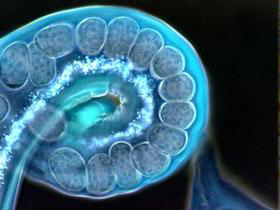
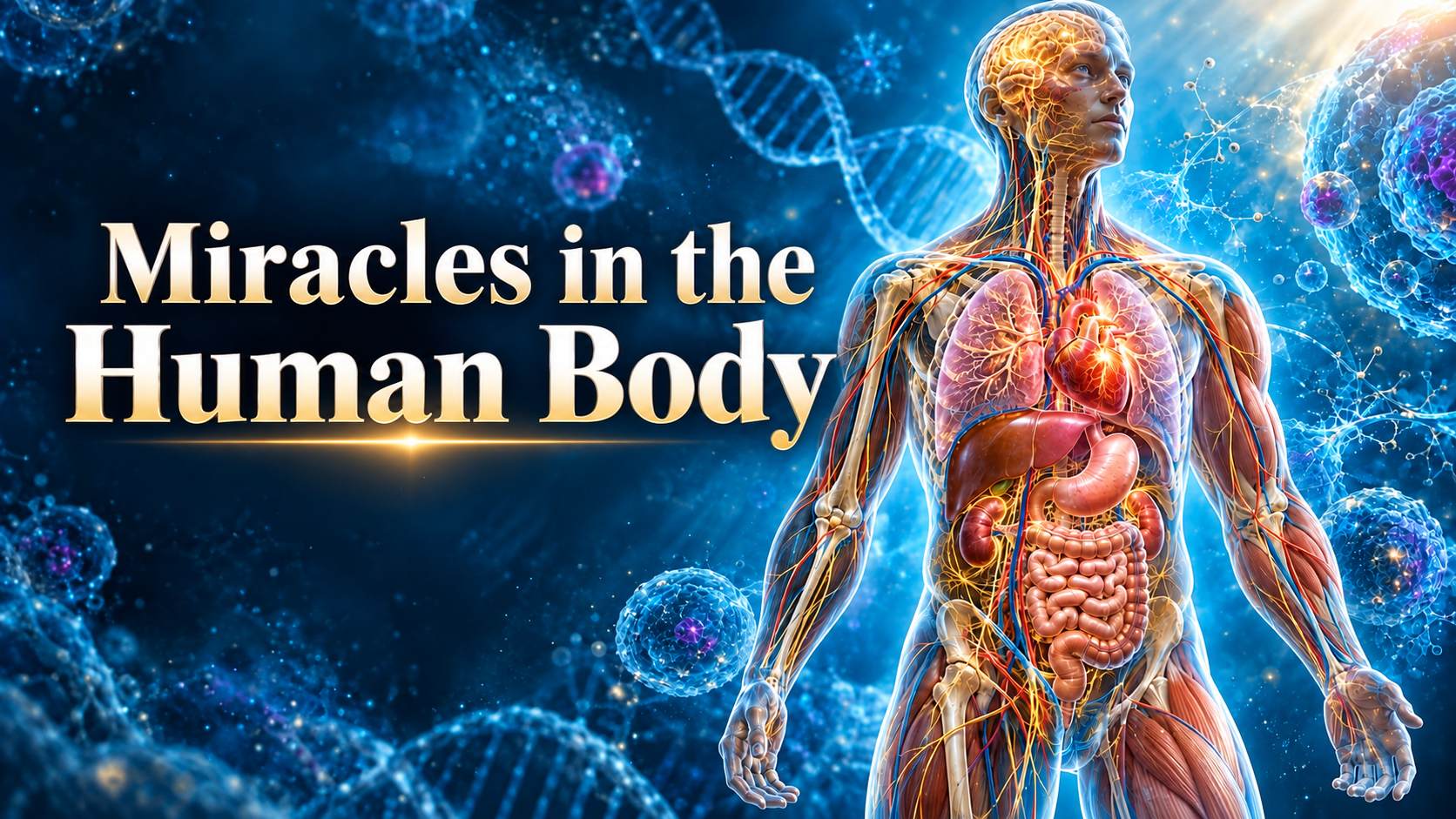
Oxygen plays a fundamental role in obtaining energy, particularly in complex organisms. Usable energy is obtained as a result of nutrients reacting with oxygen in the cells.
Oxygen has a fundamental role in cellular energy production, particularly in aerobic organisms such as animals and human beings. Cells render the energy obtained from nutrients usable through biochemical processes in which oxygen also plays a role.
.jpg)
For this reason, oxygen is a vital element in obtaining the energy necessary for man to:
• walk,
• think,
• keep his heart working,
• move his muscles,
• enable his organs to perform their functions,
• sustain the life of his cells.
At this point, an extremely striking fact draws attention:
Man does not himself produce the oxygen he needs to sustain his life.
Just as man did not create his own lungs, neither did he create the atmosphere. He did not determine the proportion of oxygen in the air he breathes, establish the balance of gases in the atmosphere or plan how oxygen would be renewed.
Moreover, when man comes into the world, all of these are already prepared. The moment a baby is born, he finds himself in an atmosphere in which he can breathe. His heart works, his lungs breathe and his cells begin to produce energy by using oxygen. When man comes into the world, he finds himself amid countless blessings prepared so that he can sustain his life.
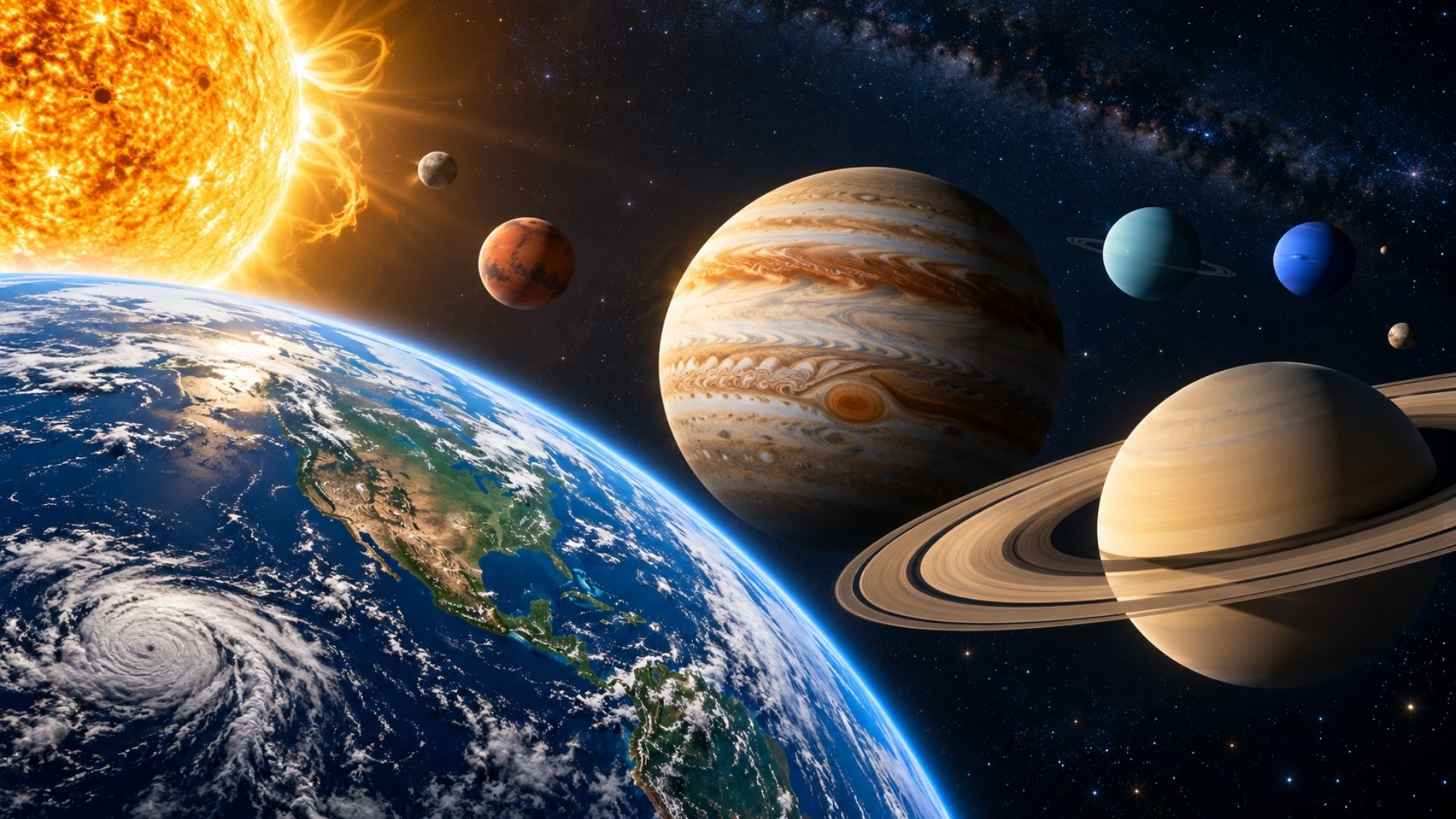
Countless elements that make the continuation of life possible, from the distance between the Sun and the Earth to the composition of the atmosphere, and from the presence of water to the respiratory system, already exist without any intervention by man. Man is born into an order of life prepared for him.
The Measure in Creation: The Sensitive Balance of Oxygen
Our intuition that “a little more oxygen would be better” may, in fact, be misleading.
A significant increase in the proportion of oxygen in the atmosphere may increase the risk of fire, particularly because oxygen supports combustion. On the other hand, the oxygen level falling below an adequate level may make respiration and energy production difficult for living things.
Therefore, the issue is not merely: “Let there be oxygen.” The real issue is: “Let oxygen be present under appropriate conditions that make the continuation of life possible.”
This point is extremely thought-provoking in terms of Creation. That is because the continuation of life depends not only on the presence of a substance, but also on its quantity, its proportion and its relationship with other elements.
It is revealed in the Qur'an:
“We have created all things in due measure.” (Surat al-Qamar, 49)
We see that, with regard to oxygen, both extremes may pose problems for life:
Too much → may give rise to dangers.
Too little → may make life difficult.
The appropriate level → makes the continuation of life possible.
The point that must be reflected upon here is not merely that a single value is appropriate. Numerous elements, such as the composition of the atmosphere, temperature, pressure, the presence of water, the energy received from the Sun and the biological processes carried out by living things, are interrelated.
Therefore, life did not come into being through independent conditions randomly coming together. It continues within an order in which numerous complementary processes function together.
How Does the Waste of One Living Thing Turn into a Blessing for Another?
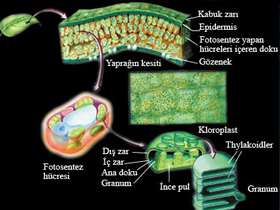
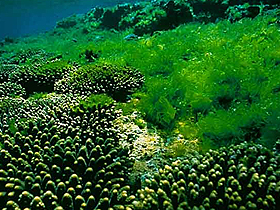
Photosynthesis is an extremely important process in the biological renewal of oxygen in the atmosphere. Plants, algae and various photosynthetic microorganisms release oxygen while producing organic substances from carbon dioxide and water by using energy from the Sun. Photosynthetic microorganisms in the oceans, in particular, have an important role in global carbon and oxygen cycles. Here an extremely remarkable reciprocity emerges:
.jpg)
Man and other aerobic organisms use oxygen → release carbon dioxide.
Photosynthetic organisms use carbon dioxide → release oxygen.
Thus, the product that emerges as a result of the metabolic activity of one living thing can be reused in processes carried out by other living things.
In a sense, outputs are transformed back into inputs within the system.
This reciprocal relationship shows how comprehensive the biological connections between living things are. Yet man did not carry out any engineering activity to establish this system. Man is born into this order that existed before him and benefits from the blessings it offers.
When we consider the entire picture together:
- Oxygen is necessary for life on Earth.
- Oxygen is present in the atmosphere at a specific proportion.
- Living things consume oxygen.
- Photosynthetic organisms contribute to the renewal of atmospheric oxygen through various processes.
- The carbon dioxide produced by living things is reused at different stages of the carbon cycle.
Thus, a great interconnected cycle comes into being between the atmosphere, living things and the environment.
A New Link in the Oxygen Cycle: “Dark Oxygen”
In a study published in the journal Nature Geoscience in 2024, observations associated with oxygen production were reported in regions containing polymetallic nodules in the depths of the ocean where sunlight does not reach. Researchers named this phenomenon “dark oxygen” and focused on electrochemical processes in which metal-rich nodules may play a role.
This research raises new questions suggesting that oxygen is not associated solely with well-known biological processes, but that certain geochemical processes taking place in the depths of the Earth may also contribute to the oxygen cycle.
Therefore, as science advances, new mechanisms and new questions emerge before us.
This reminds us of an important truth:
Science's discovery of a mechanism does not eliminate the question of why and how that mechanism exists. On the contrary, as the details of the mechanism are revealed, we can better understand how comprehensive the order in God's Creation is.
The point that must be reflected upon here, beyond the scientific finding, is this:
Man lives on the surface of the Earth, most often without realizing that behind the air he breathes lie complex processes extending into the depths of the oceans.
What we call “air” is, in fact, part of an extremely comprehensive system that makes the continuation of life possible. Yet man benefits from its blessings from the moment he is born, without having made any contribution to the establishment of this system.
Countless Mechanisms Behind a Single Breath
When we ask, “Where does oxygen come from?” we encounter a chain of interconnected questions:
How is oxygen renewed?
- Through processes carried out by photosynthetic organisms.
How does photosynthesis take place?
- Through complex molecular mechanisms and energy transformations.
How are photosynthetic organisms able to carry this out?
- Because they possess special biological structures and mechanisms that enable them to benefit from light energy.
What purpose do these mechanisms serve?
- They contribute to processes that enable solar energy to be used and organic substances to be synthesized; oxygen is also released during these processes.
What purpose does oxygen serve?
- It makes it possible for oxygen to be used in the cellular energy production of human beings and many other living things.
What happens to the carbon dioxide released by human beings and other living things?
- It is reused at various stages of the carbon cycle and becomes one of the inputs of photosynthetic processes.
When we look at it in this way, what emerges before us is not a series of completely independent events, but a great system whose components complement and connect to one another.
For a person who looks with the eyes of faith, every stage of this system is a separate means for reflection. That is because we are speaking not merely of a gas called “oxygen,” but of the interconnection of numerous elements such as the atmosphere, water, solar energy, the metabolism of living things, plants, microorganisms, oceans and the carbon cycle. This integrity is a means of reflecting on the measure and wisdom in God's creation.
Every Breath Is a Blessing
Perhaps the matter that must be reflected upon most is that, although man lives within a great blessing every day, he most often fails to notice it.
With every breath we take:
- We take oxygen from the atmosphere.
- Our cells use this oxygen.
- We obtain energy.
- We produce carbon dioxide.
- This carbon dioxide joins various cycles in the environment.
Photosynthetic organisms contribute to the continuation of the carbon and oxygen cycles.
None of these occur at man's command. When man comes into the world, he finds himself in a world in which countless conditions necessary for him to sustain his life already exist.
For this reason, man must reflect once again upon the blessings he regards as ordinary because he has grown accustomed to them.
A breath...
Viewed from the outside, it is an extremely ordinary event.
However, for that breath to take place, the atmosphere must exist, oxygen must be present, the lungs must function, the heart must circulate the blood, the cells must be able to use oxygen and all these systems must work in harmony with one another. Each of these is a blessing and a means for reflection in itself.
Had God not willed it, there would be no atmosphere; there would be no oxygen; there would be no respiratory system enabling man to use it.
It is revealed in the Qur'an:
“It is He Who created everything on the Earth for you…” (Surat al Baqara, 29)
“Does He Who created not know? He is the All-Pervading, the All-Aware.” (Surat al-Mulk, 14)
Therefore, for a believer, the issue is not merely knowing how oxygen exists. The real issue is to reflect upon the existence of oxygen and its place in our lives, and thus realize God's infinite power of creation behind it.
Every breath is a blessing God bestows upon man.
Every breath is a means for giving thanks.
Every breath is an opportunity for man to ask himself this question:
“How many of these blessings of life offered to me without any effort do I notice?” Oxygen is not merely a gas.
For a person who believes, oxygen is a great blessing that serves as a means of reflecting on the measure in God's creation, the harmony among living things and how the blessings man needs at every moment are bestowed upon him without interruption. With every breath, man is in fact receiving anew one of the countless blessings bestowed upon him.
For this reason, breathing is not an ordinary biological activity for a believer; it is a means of recognizing God's blessings, reflecting on His might and giving thanks to Him.