The Silent Hero of the Cell: The Sodium-Potassium Pump
Our body consists of approximately 10 trillion cells.
A large part of the cell and its organelles is surrounded by membranes composed mainly of lipids and proteins. The cell membrane has a selectively permeable structure. While the lipid layer prevents the free passage of many ions and polar molecules, special proteins located on the membrane enable various molecules and ions to pass into and out of the cell in a controlled manner.
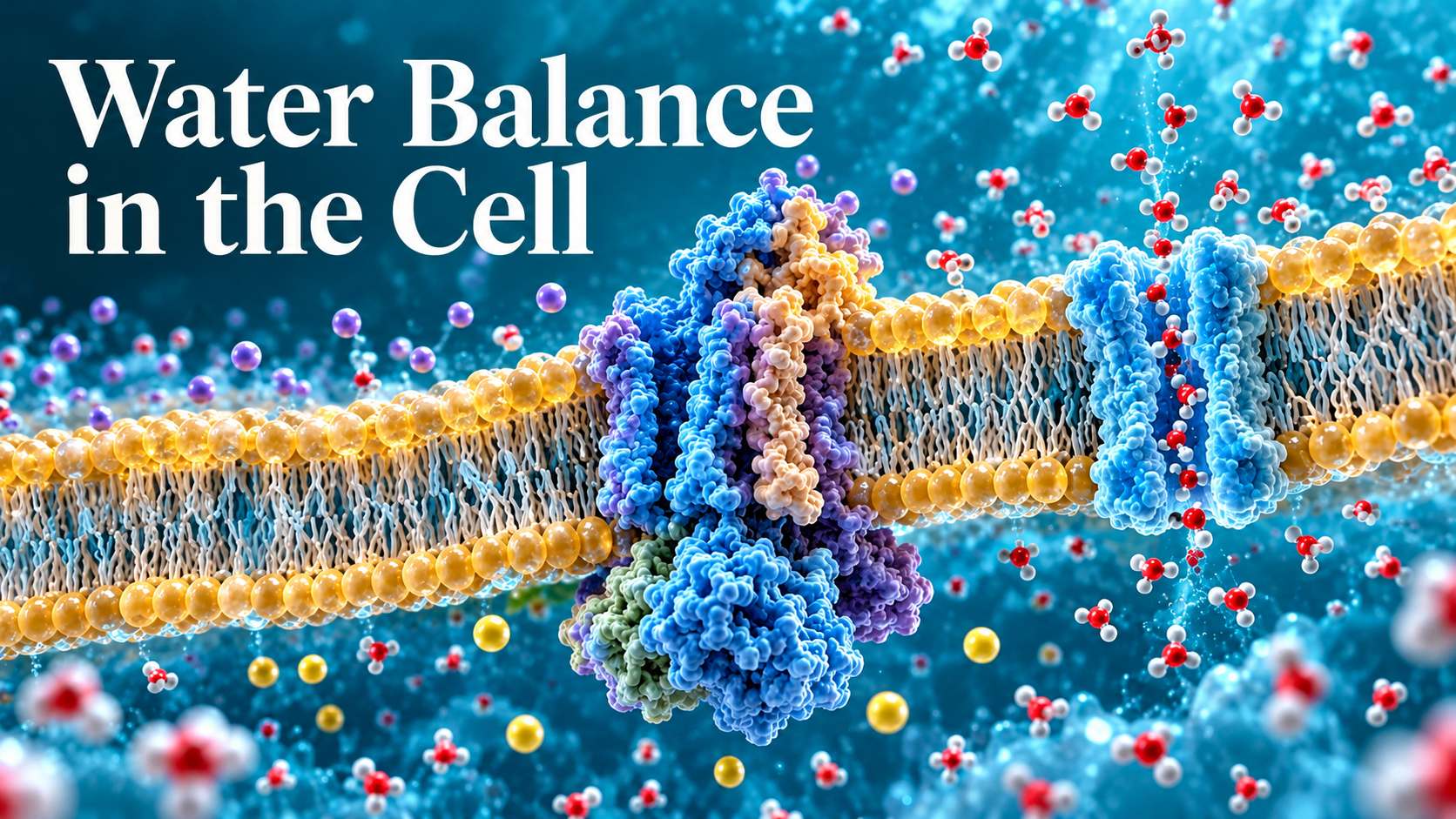
One of the most important factors for the cell to survive is water balance. Water molecules can pass through the cell membrane and can be transported rapidly, especially through special water channels called ‘aquaporins’.
The movement of water into or out of the cell depends on the difference between the concentrations of dissolved substances inside and outside the cell, in other words, the osmotic gradient. When the balance between the concentrations of substances inside and outside the cell is disrupted, water also changes its location in accordance with this change.
It is here that one of the silent heroes of the cell, the Sodium-Potassium Pump (Na⁺/K⁺-ATPase), assumes an important role.
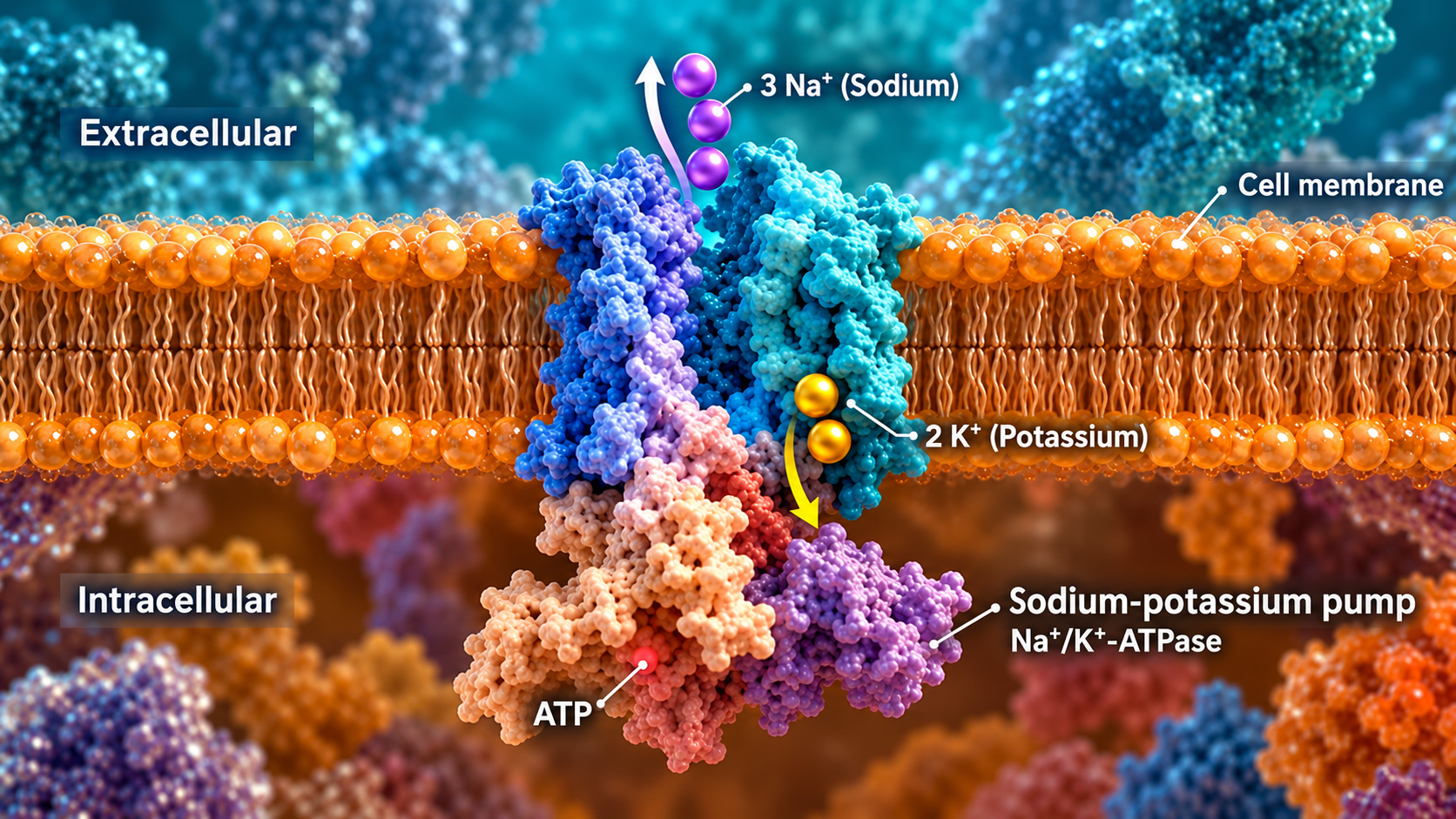
Using ATP energy, the Sodium-Potassium Pump expels 3 SODIUM ions from the cell and takes 2 POTASSIUM ions into the cell in each operating cycle.
As a result of this process, the distribution of ions inside and outside the cell is constantly maintained. The ion gradients created contribute to maintaining the electrical properties and osmotic balance of the cell.
There is an important point here: The sodium-potassium pump does not transport water directly into the cell. By regulating the distribution of ions, the pump helps control the osmotic environment inside the cell. Water, on the other hand, moves into or out of the cell, especially through aquaporins, depending on the osmotic gradients that form.
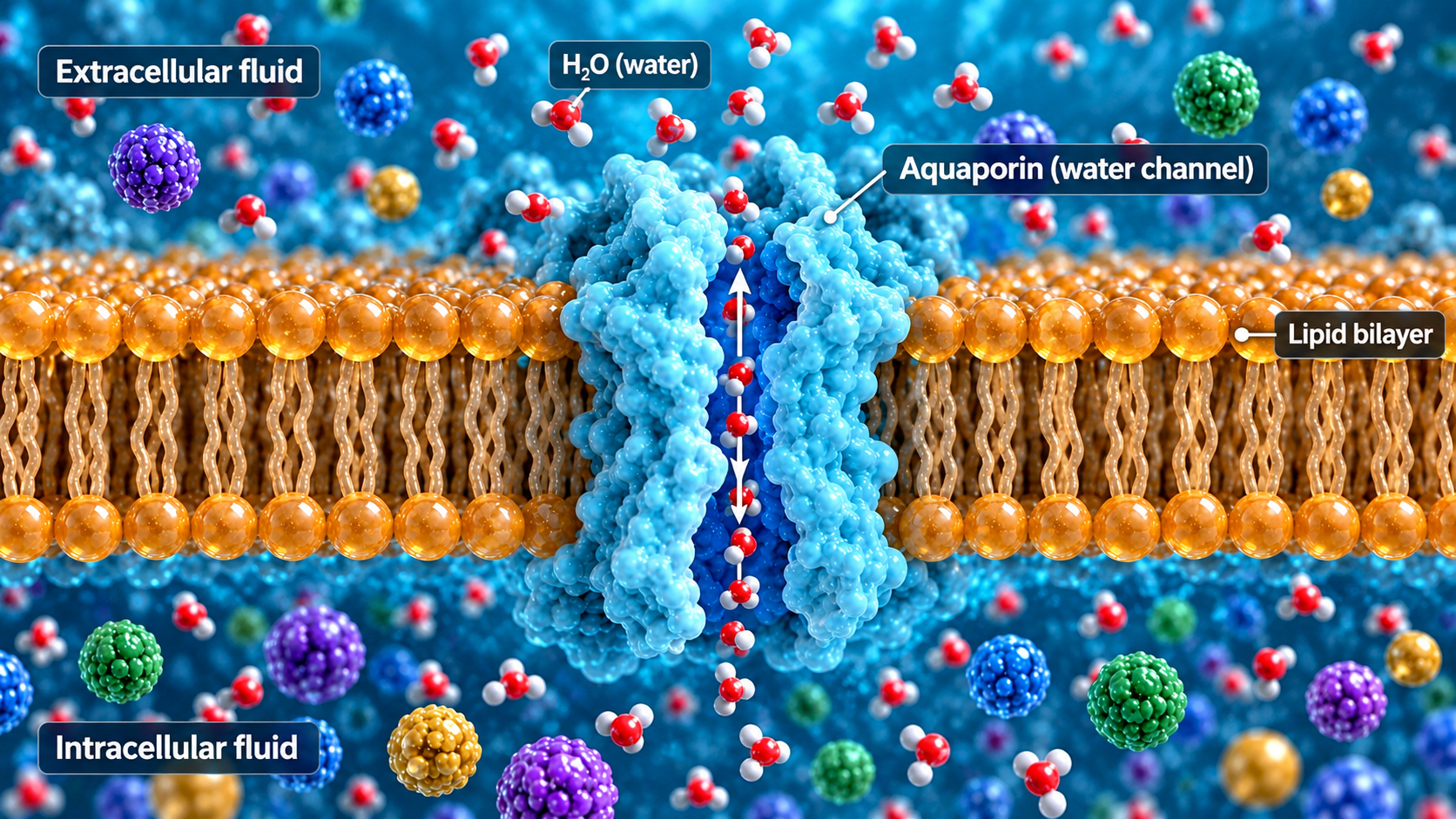
Thus, the cell is protected from swelling by taking in excessive amounts of water or shrinking by losing excessive amounts of water, and the cell volume is kept largely constant.
Consequently, the balance of the cell is maintained not by a single mechanism, but through the combined and continuous operation of many mechanisms such as Sodium-Potassium Pumps, Ion Channels, Aquaporins, Osmotic Forces and the Selective Permeability of the Cell Membrane.
In this microscopic world where billions of molecules are in constant motion, the cell KEEPS ITS IONS, WATER, ELECTRICAL CHARGE AND VOLUME IN BALANCE WITH EXTRAORDINARY PRECISION.
For this reason, the water balance in the cell is a striking example showing us how life is founded upon a delicate and orderly system.
It is Almighty God, the Possessor of infinite knowledge and infinite power, Who maintains these measures and this delicate order at every moment and knows our cells down to their atoms.