The Miraculous Properties of Tannins Found in Plants
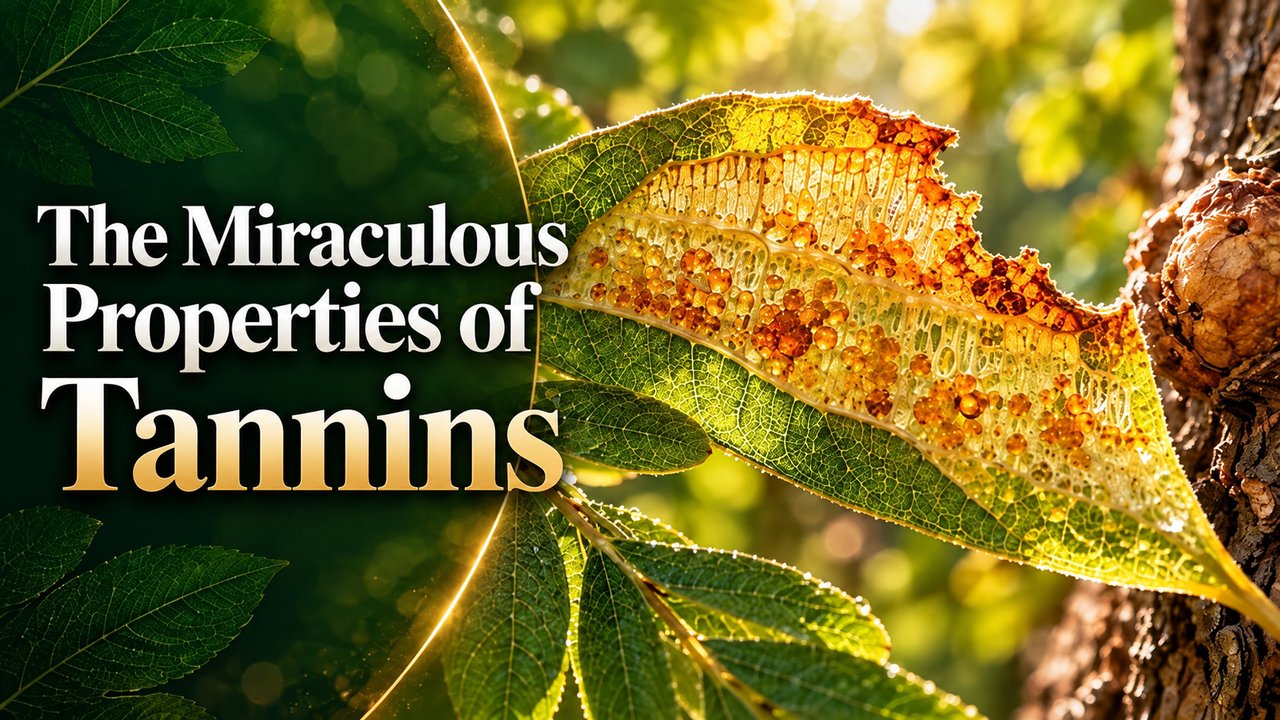
Tannins are the common name given to various polyphenolic compounds that are widely found in plants and are primarily used in tanning raw hides in the leather industry. They are found in particularly high quantities in the bark and galls of certain trees such as oaks.
At first glance, tannins may appear to be merely a simple chemical substance found in the structure of plants, yet they actually undertake important tasks both in the life of the plant and in nature.
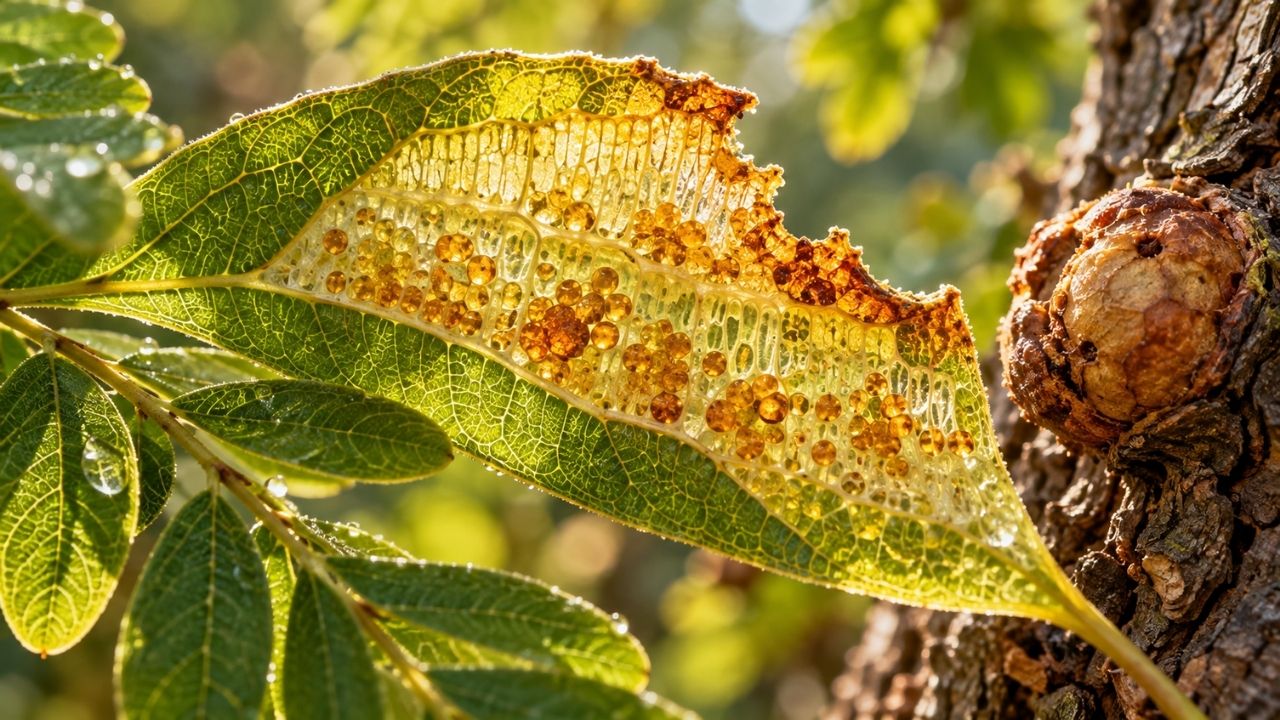
The phenolic groups possessed by tannins can bind tightly to the -NH groups of peptides in proteins by forming hydrogen bonds. This binding makes it difficult for proteins to be broken down by digestive enzymes. Indeed, mankind has benefited from this property of tannins for centuries. In leatherworking, tannins are made to bind to the collagen in animal hides, thus making the hides more resistant to the destructive effects of microorganisms.
What is even more remarkable, however, is that tannins serve as a defense mechanism in plants.
Although a molecule is too small to be seen with the naked eye, it possesses an important property that man has made use of in an art and industrial activity for thousands of years. Moreover, the same molecule also plays a role in protecting the plant's own life.
Tannins have a sharp and astringent taste; they produce a characteristic sensation of astringency and dryness in the mouth. The reason for this is that tannins bind to proteins found in the oral mucosa.
So, what use is this property to the plant?
Animals avoid consuming leaves that contain high quantities of tannins. That is because tannins not only produce an unpleasant taste, but may also make proteins in foods difficult to digest by binding to them. When leaf cells are broken down, the interaction of tannins with plant proteins may reduce the nutritional value and digestibility of the leaf. This means that this chemical substance within the plant is also part of a defense mechanism that protects it from being consumed.
Here, one needs to ask oneself the following question:
How does a plant take into account the taste and digestive systems of the animal that will eat it?
There is an exceedingly sensitive and remarkable result here. The chemical properties of tannins perform a function in such a way as to limit the plant from being eaten. This situation leads us to reflect on the Divine providence and wisdom behind causes.
The Astonishing Defense of Acacias
A more striking example of this order full of wisdom appears in the relationship between acacia trees and kudu antelopes in the South African savannas.
The kudu antelope feeds on acacia leaves. Under normal conditions, the quantity of tannins in the leaves is not at a level that would entirely prevent feeding. However, when the tree begins to be heavily grazed by animals and its leaves are damaged, its defense mechanisms go into action.
It has been observed that injured acacias emit volatile chemical signals and that these signals can rapidly stimulate tannin synthesis in other trees in the vicinity. In this way, not only the damaged tree, but also other trees in the vicinity can develop a defensive response against the approaching danger.

The point that increases one's amazement here is this:
What happens to one tree can also activate the defense systems of other trees around it. It is as if an invisible communication network has been established between them.
The leaf of a tree is eaten; the tree perceives this; volatile chemical signals emerge; the plants in the vicinity respond to these signals; their defense mechanisms go into action, and chemical changes that make the leaves more difficult to eat take place.
All of this very often takes place completely concealed from human sight. Yet the fact that it is concealed from sight does not mean that it is devoid of wisdom.
The defense mechanisms of plants, the feeding behavior of animals, the properties of chemical substances and the ecological balance are not events independent of one another. Each is related to the others. On one side, there is a plant. On the other side, there is an animal. Between them, invisible chemical communications and biochemical defense mechanisms are at work.
The coexistence of such an intricate network of relationships and so many delicate tasks that complement one another demonstrates the existence of an Almighty Creator, God, the Most High, and also shows how all-encompassing the order in His creation is, even in realms that man cannot see.
A Tiny Molecule, a Great Task
We cannot see the tannin molecule with our eyes. Yet we can see the results it produces.
An animal eating a leaf, the cells of the leaf being broken down, tannins binding to proteins, digestibility decreasing, defense systems going into action and the plant protecting itself... All these events require exceedingly sensitive chemical properties to work in harmony with one another. It is here that man sees the difference between smallness and insignificance. The fact that something is small does not mean that its task is small.
An invisible molecule can play an important role in the protection of a plant. A leaf may possess exceedingly subtle and sensitive chemical mechanisms to protect itself. This is so that we may reflect on God's infinite knowledge, power and wisdom.
The fact that even a tiny molecule found in the bark, leaf or cell of a tree has been created suited to a particular task shows that nothing in the universe is uncontrolled or purposeless.
Tannins are a small yet remarkable example showing us that a great order is also at work in invisible realms.
The more carefully we look, the more manifestations of the wisdom and artistry in God's creation we see.
Our Lord reveals as follows in the Qur'an:
“How many Signs there are in the heavens and Earth! Yet they pass them by, turning away from them.” (Surah Yusuf, 105)