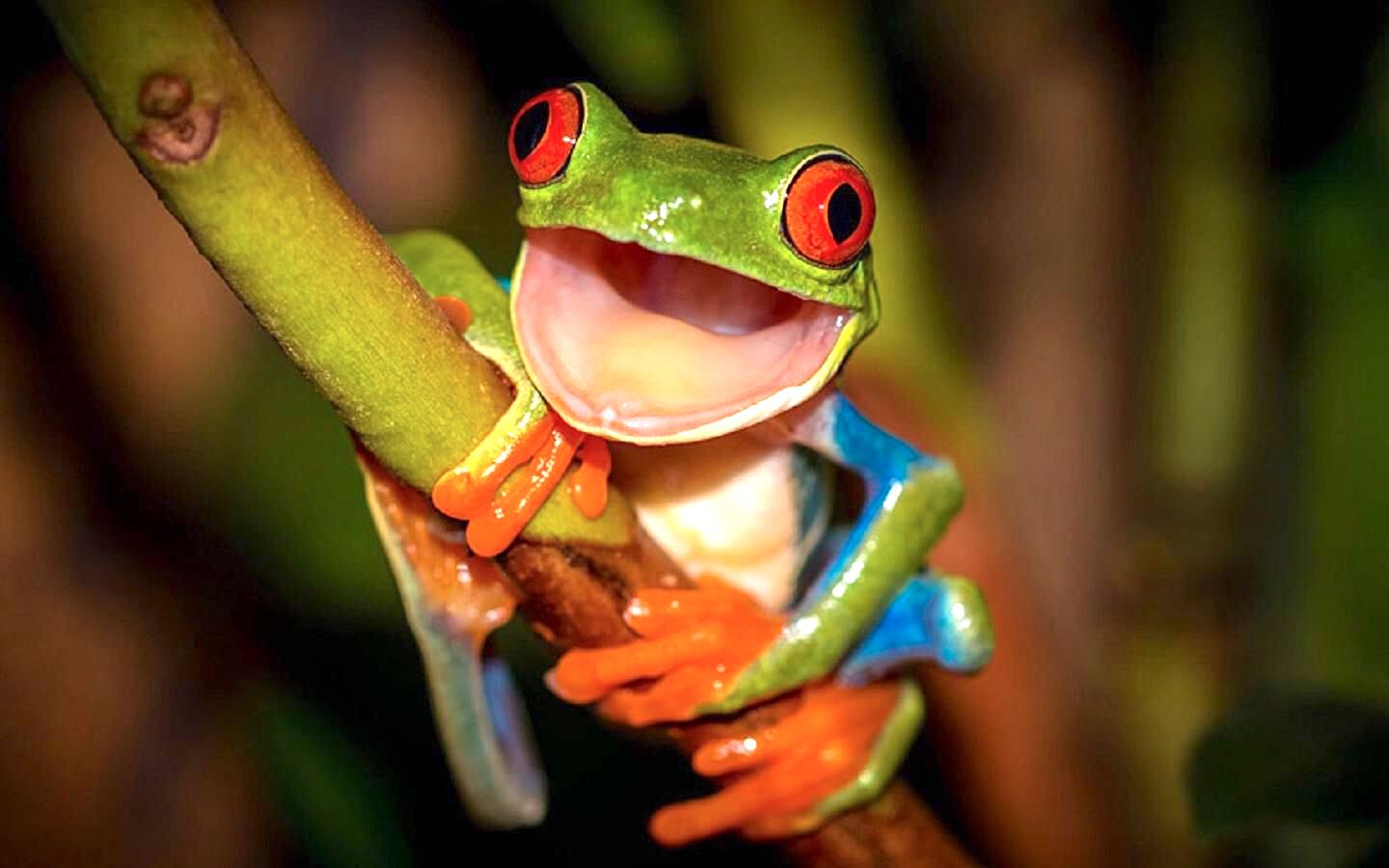
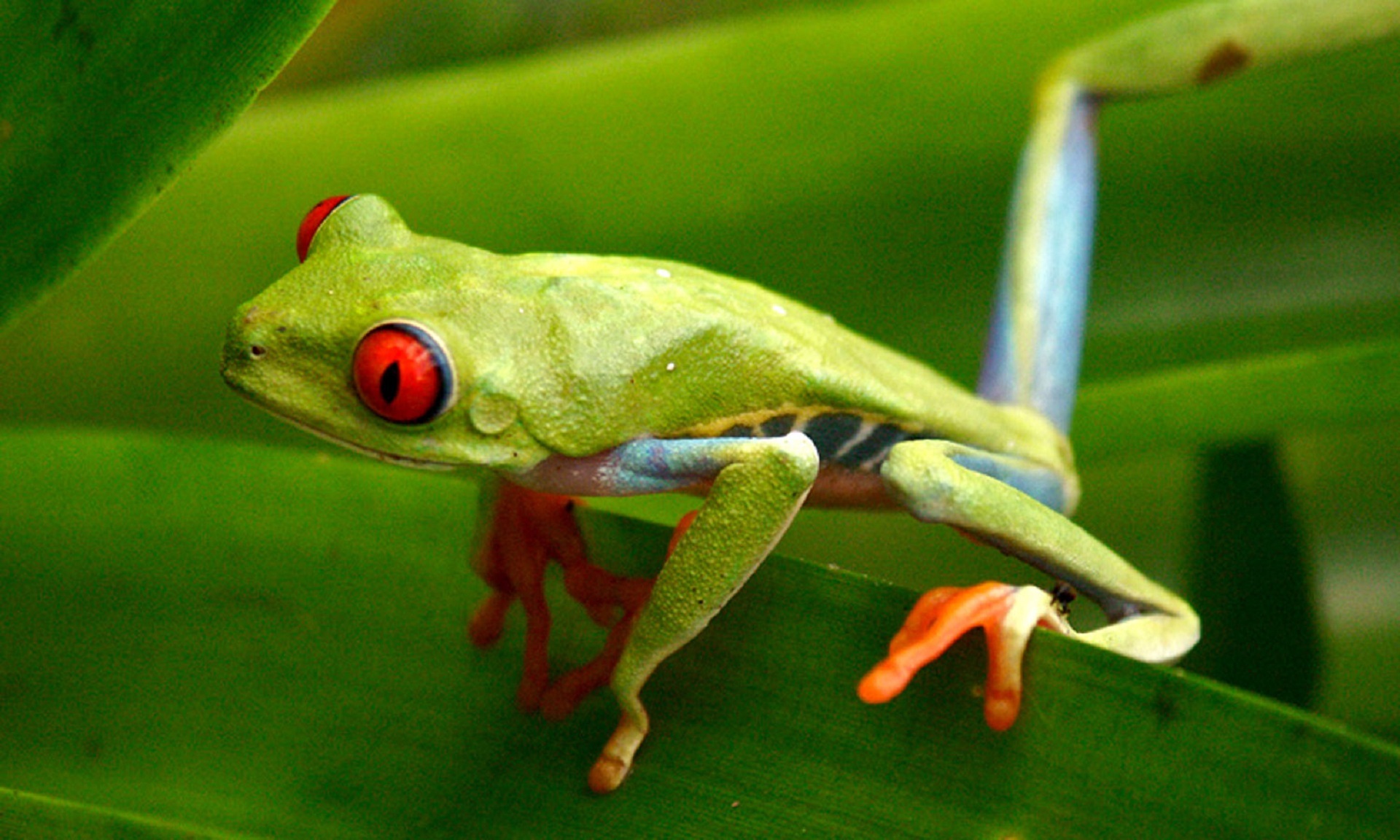
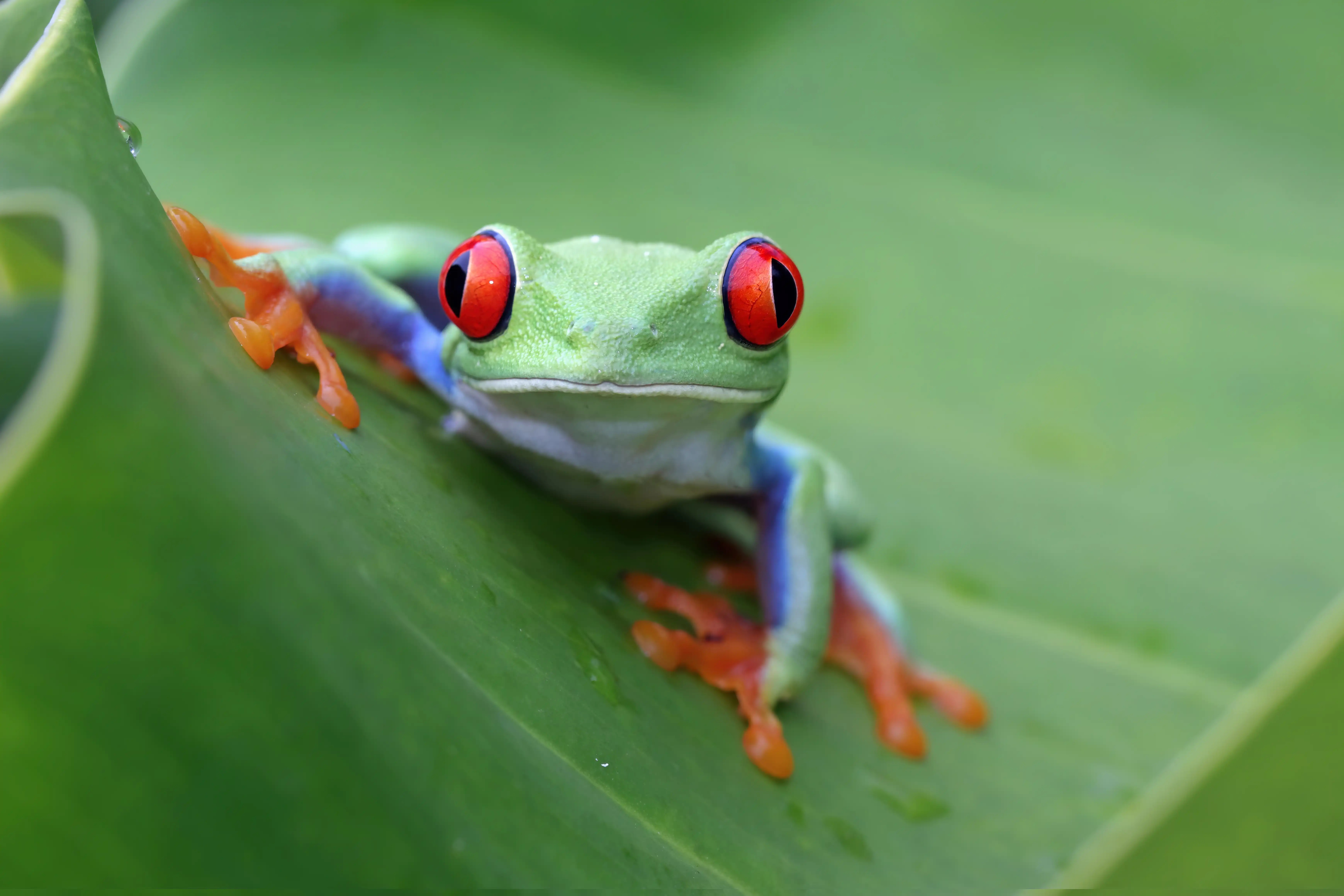
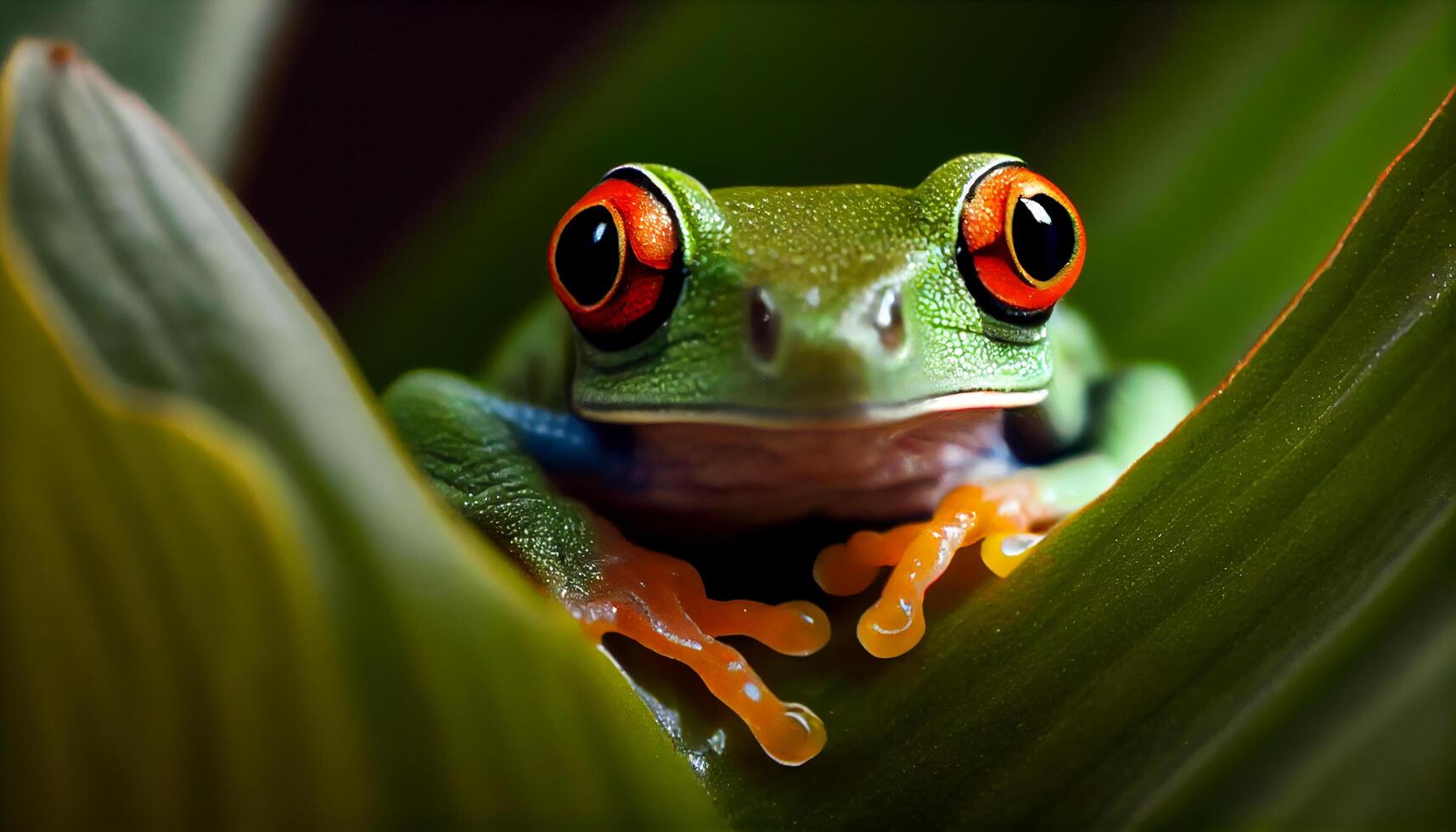
One of the remarkable characteristics of red-eyed tree frogs (Agalychnis callidryas), which live in the humid rainforests of Central America, is seen in their young that have not yet hatched. While still inside the egg, these tiny creatures can respond to vibrations in their surroundings and changing environmental conditions. When a situation that threatens their lives arises, they can leave their eggs without waiting for the normal hatching time and enter the water below.
This characteristic in the lives of these frogs, known for their bright green bodies, colorful side stripes and large red eyes, is one of the proofs of creation that needs to be considered carefully.
Life Beginning on Leaves Above the Water
Red-eyed tree frogs lay their eggs on leaves extending over pools of water. The young develop in eggs within a gelatinous mass. Under normal conditions, the tadpoles hatch after about seven days, fall into the water below and enter the next stage of their lives.
However, neither the eggs on the leaves nor the water itself are entirely free of danger. Snakes and wasps may attack the eggs on the leaves, while fish and various aquatic insects may pose a threat to the young in the water. Therefore, the timing of hatching is critical for the successful development of the offspring.
These tiny creatures possess a sensitive system that can change the time of hatching according to changing dangers.
Being Able to Distinguish the Vibrations Caused by Danger
Research by Prof. Dr. Karen Warkentin of Boston University has revealed that red-eyed tree frog embryos respond differently to different vibrations in their surroundings. The vibrations caused by a snake or wasp attacking the eggs do not produce the same response as the vibrations caused by heavy rain.
Embryos exposed to vibrations associated with a predator attack can hatch as much as three days early, without completing the egg stage that normally lasts about seven days. In this way, they leave the leaf where the attack is taking place and reach the water below.
What is remarkable here is not merely that a creature still inside the egg responds to vibrations. It is that vibrations from different sources lead to different responses and that hatching is brought forward when necessary. The coordinated functioning of the mechanisms that perceive danger and enable hatching plays an important role in protecting the life of the young.
A Sensitive Response to the Danger of Drying Out
Predators are not the only danger to the eggs. Hot and dry weather can also threaten the lives of the developing young.
Young that hatch from eggs containing sufficient water easily slide down and fall into the water below. When the eggs dry out, however, this process may become more difficult. The young may become trapped inside the egg during hatching or while trying to leave the egg.
Researchers examined the chemical changes inside the eggs in order to understand how the embryos responded to the danger of drying out. The concentration of ammonia, a waste product produced by the developing embryos, increases as the eggs lose water. It has been investigated whether this increase is a stimulus capable of triggering early hatching.
The Increase in Ammonia Triggers Hatching
In experiments conducted at the Smithsonian Tropical Research Institute, it was observed that 95 percent of the embryos exposed to high ammonia levels hatched within the 30-minute experimental period. The embryos in the control group, to which no ammonia was added, remained in their eggs.
In the study, the eggs were only partially submerged in water in order to distinguish the effect of ammonia from the effect of reduced oxygen. It was thus shown that high ammonia levels could trigger hatching independently of reduced oxygen.
This finding reveals that the young inside the eggs do not respond to dangers in their surroundings solely through vibrations. The chemical conditions inside the egg can also affect the time of hatching.
A Sensitive System in a Tiny Egg
When one looks at the transparent eggs resting on a leaf, these sensitive systems that protect the lives of the young developing inside them are not noticeable at first glance. Yet every egg contains a living creature capable of responding to vibrations from outside and to changing chemical conditions inside.
It is impossible for a young animal that has not yet hatched to design these mechanisms that protect it. The young does not know what ammonia is, nor does it develop a method of defense by examining the vibrations caused by a snake. Despite this, the systems in its body function in a manner that protects its life in the face of certain dangers.
Reflecting on these characteristics enables one to become more closely aware of the subtleties in the world of living things. This precise functioning that we see in the egg of the red-eyed tree frog is also one of the proofs of God's providence in creation.
“The Originator of the heavens and earth. When He decides on something, He just says to it, ‘Be!’ and it is." (Surat al-Baqara, 117)