Plants are generally living things that produce their own food. Carnivorous plants, however, are different. Since they generally live in marshy areas poor in nitrogen and nutrients, they have to meet these needs in a way other than through the soil. Here we encounter a unique solution that we do not see in any other plant; they catch insects with very special traps consisting of intricate systems. As they dissolve and digest the insects they hunt by means of the special enzymes they secrete, they meet their nitrogen and mineral needs. To this end, they possess very different trap mechanisms and unique hunting techniques. Let us now examine these astonishing examples and witness together how the advocates of evolution are incapable of explaining these unique traps, each of which is the product of a superior intellect.
Drosera
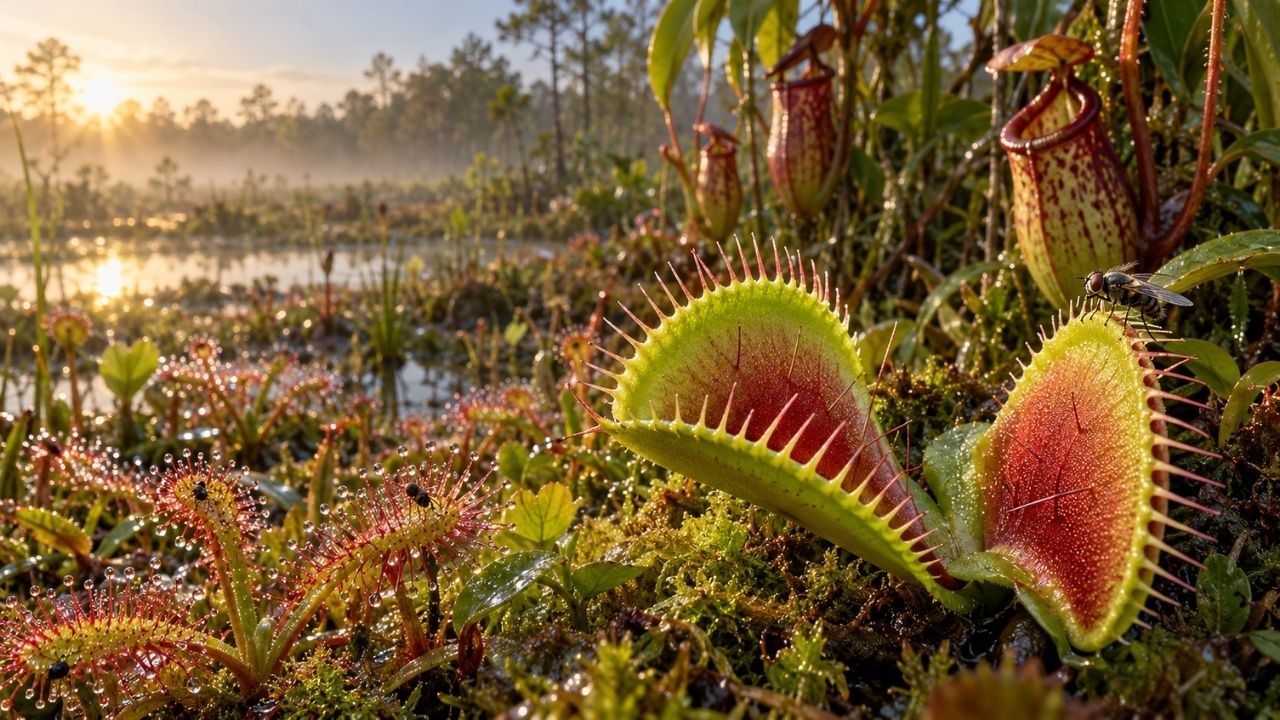
Carnivorous plants such as Drosera and Pinguicula generally possess hairs and tentacles that secrete a thick, sticky substance called mucilage. When an insect comes into contact with the sticky substance on the surface of the plant, it becomes trapped and cannot escape. Once the insect has been trapped, the plant secretes digestive enzymes onto it to break down its prey. These enzymes dissolve the prey's tissues, enabling the plant to absorb the resulting nutrients.
.jpg)
Pitcher Plant
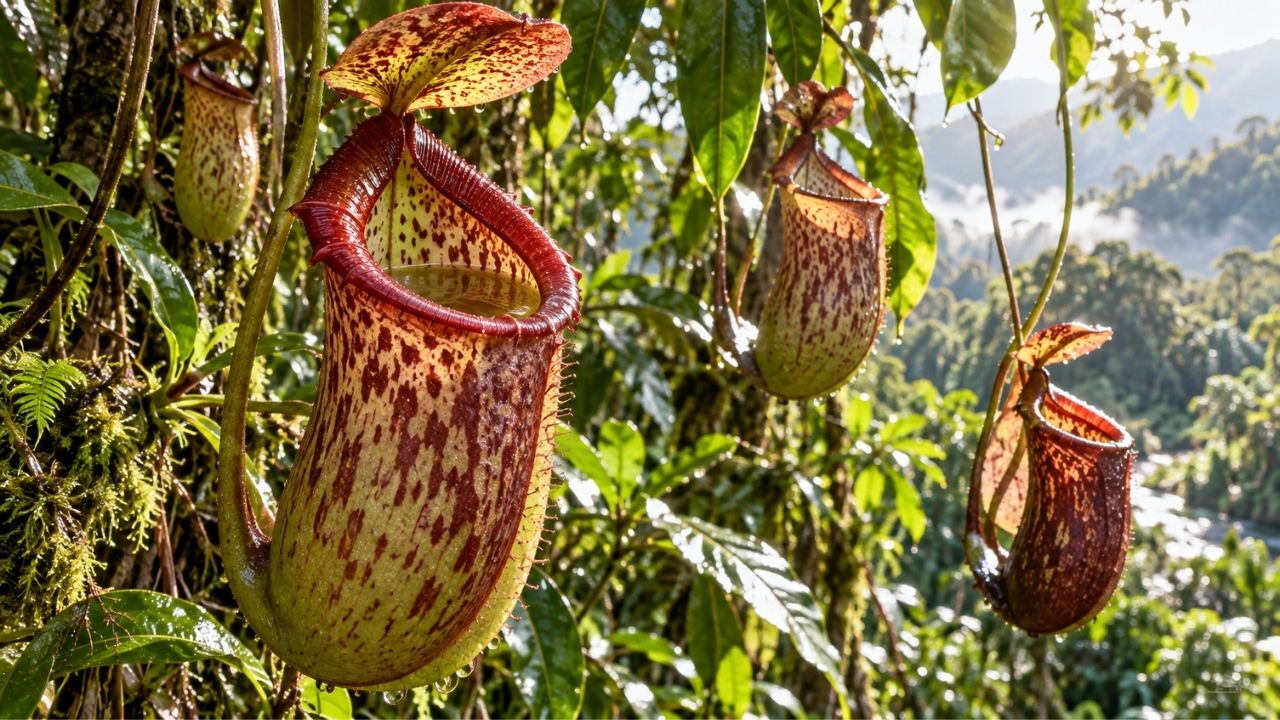
Slippery-type traps seen in species such as Nepenthes (tropical pitcher plants) contain a mechanism based on a combination of special structures and fluids to catch and digest prey. Nepenthes plants possess special pitcher-shaped structures that serve as traps. These are modified leaves that are generally tube-shaped and have a slippery inner surface coated with a waxy substance. This coating makes the surface extremely slippery, causing insects' feet to slip and making them fall into the pitcher; inside the pitcher is a pool of fluid (generally a mixture of rainwater and digestive enzymes) that serves to drown the prey and initiate digestion.
Venus Flytrap
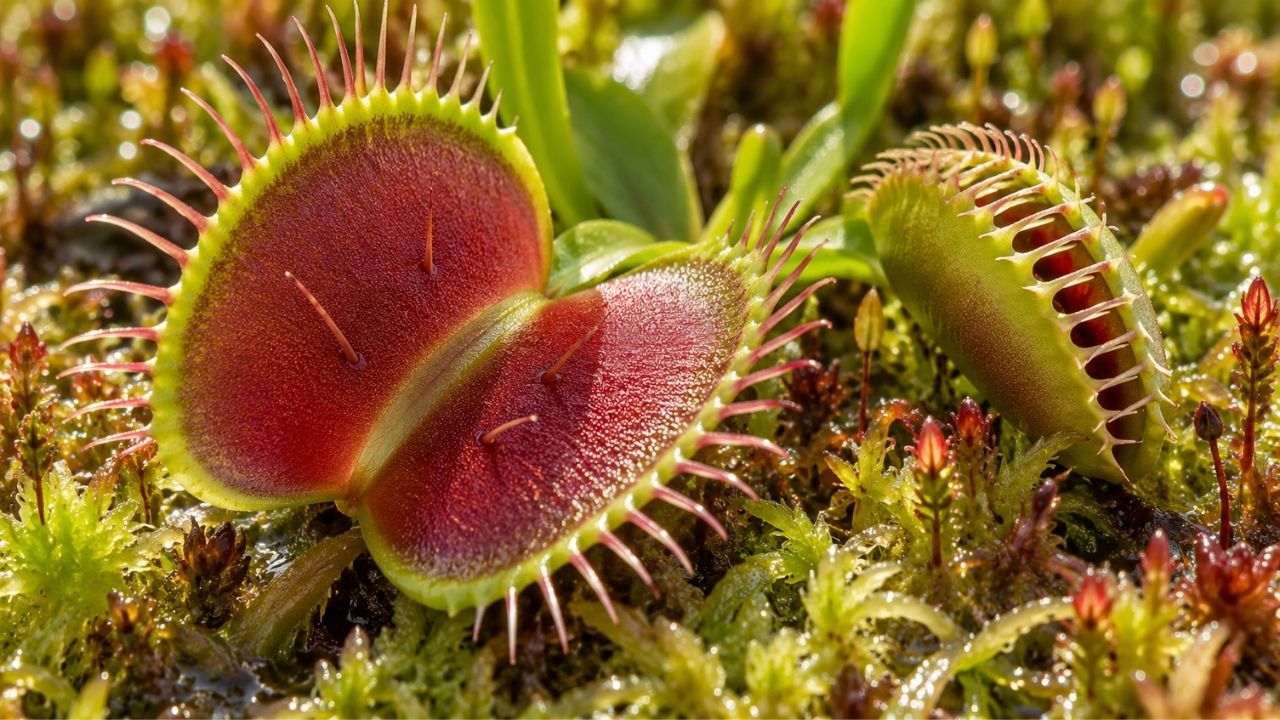
Dionaea muscipula, commonly known as the Venus flytrap, uses unique leaves that form a trap structure. Each leaf consists of two lobes with sensitive trigger hairs on their inner surfaces. When an insect touches the trigger hairs, the plant is stimulated to close its trap. This mechanism is activated only when the trigger hairs are touched twice within a short period of time, signaling the presence of potential prey. When triggered, the trap's lobes close within milliseconds, without giving the fly an opportunity to escape.
After closing, the edges of the lobes interlock tightly, forming a sealed chamber around the prey. The plant then secretes digestive enzymes into this chamber.
Genlisia - Corkscrew Plant
Genlisea, commonly known as the corkscrew plant, is an interesting species of carnivorous plant. It possesses a trap mechanism consisting of slender, specially designed corkscrew-shaped leaves that live underground and descend deep into the soil. The hunting process takes place in three stages:
Attraction Stage: By means of the chemical substances it secretes, the plant attracts tiny living things such as single-celled organisms (protozoa), small crustaceans and larvae.
Trap Mechanism: The prey comes into contact with the corkscrew-shaped tubes in the soil. The inner surface of these tubes is covered with tiny hairs (trichomes) that act like one-way doors. These hairs make it easy for the prey to enter, but absolutely do not allow it to go back out and escape.
Digestion: The prey trapped inside the tubes is broken down by means of digestive enzymes secreted by the plant, and the plant thus meets its nutritional needs.
.jpg)
Vacuum Traps
The genus Utricularia, also known as bladderwort, uses a vacuum suction trap. These plants typically live in marshy environments. Their traps consist of hollow, swollen, bladder-like structures attached to their stems (rhizoids) beneath the surface. The mouth of the bladder is surrounded by trigger hairs. When prey comes into contact with the hairs, the trap mechanism is activated. Inside the bladder is a partial vacuum created through active ion transport. This gives the bladder negative pressure relative to the external environment. At the mouth of the bladder is a special door that acts as a valve. Normally, the valve is held tightly shut by the vacuum. When prey touches the trigger hairs, however, the door suddenly opens, and the suction force draws the prey into the bladder. The process of digestion with enzymes then begins.
Various enzymes function in the digestion of prey caught in the traps described above; these include ACID PHOSPHATASE, PROTEASES, PEPTIDASES, ESTERASES, CHITINASE, RIBONUCLEASE, AMYLASE and DEOXYRIBONUCLEASE.
The Desperately Proposed “Convergent Evolution” Scenario
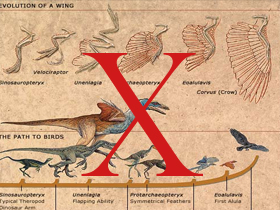
Carnivorous plants are unique living things, each possessing entirely different body plans, organs and systems. For that reason, evolutionists can neither point to a common ancestor nor establish any relationship between them. They therefore admit that these plants did not descend from one another and did not evolve. Yet this situation is an important problem requiring an explanation for the supporters of evolution. At this point, evolutionists try to overcome this problem with the concept of “convergent evolution” they have invented.
According to the scenario of convergent evolution, species that have no relationship at all and do not even resemble one another have SUPPOSEDLY acquired similar abilities over time under the pressure of similar environmental conditions. According to this claim, under the same difficult conditions they somehow always arrive at the same results through different solutions. In other words, they develop different intelligent strategies to survive and successfully apply them to their bodies.
For some reason, genetics is never mentioned or explained in detail in this imaginary scenario, nor are biochemical processes ever addressed. When asked, “What are the biological details of such a process?” they say “we do not yet know,” just as they do with every question they cannot answer, as if this imaginary scenario had been set forth in all its aspects and only this particular aspect remained incomplete.
Yet the problem remains in its entirety. For that reason, the scenario of CONVERGENT EVOLUTION is A UTOPIAN TALE INCOMPATIBLE WITH BIOLOGICAL, GENETIC AND PHYSIOLOGICAL FACTS.
SUPPOSEDLY, random mutations occurring at the tip of a leaf bestowed certain advantages on the plant, and each of these became permanent in the living thing. The so-called “mutations” that would shape the trap mechanism enabling it to survive accumulated and eventually gave rise to a trap mechanism that catches insects with perfect sensitivity.
THIS STORY IS A COMPLETELY INCONSISTENT SCENARIO WRITTEN BACKWARDS FROM THE END; IN OTHER WORDS, IT WAS INVENTED IN AN ATTEMPT TO RECONCILE THE RESULT WITH THE THEORY OF EVOLUTION. MUTATIONS CANNOT PRODUCE A COMPLETELY NEW MECHANISM.
First of all, mutations are damage caused to DNA, the existing genetic information, by external factors such as radiation, ultraviolet rays and harmful chemicals. Their commonly known effect is cancer, and at best they are ineffective. The adenine, thymine, cytosine and guanine molecules, abbreviated as A-T-G-C, bond to one another in a specific sequence and encode the amino acid chains that will make up proteins. A mutation, however, is the breaking of the chemical bonds between A, T, G and C molecules, and thus DAMAGE TO THE CODE THAT IS TO BE READ.
But the point that must be noted here, and which evolutionary ideologues distort, is this: Such damage never adds the information for a new protein. COMPLETELY NEW INFORMATION DOES NOT EMERGE THROUGH MUTATIONS. Sometimes, as a result of breaks, the positions of codes change or the code belonging to a protein is repeated more than once, but this still does not encode from nothing the flawless amino acid chain of a marvelous protein—such as a digestive enzyme—that did not previously exist in that organism and that is a perfect nanomachine with its three-dimensional tertiary structure. We can explain this with the following example: All books are written with the letters that make up the same alphabet, but when the pages or words that make up a geography textbook are mixed up, a medical textbook will never emerge.
Irreducible Complexity
The traps of carnivorous plants possess an irreducibly complex structure. In order to trap prey, there exists a detailed and highly intricate system at the molecular level in which one component complements the function of another and many sensitive parts operate simultaneously, synchronously, harmoniously and flawlessly. The absence of any one of the parts in the system causes the system to cease functioning entirely. Therefore, the trap mechanism cannot be structurally reduced to a simpler form, nor can the number of its parts be reduced.
For example, how could the hairs that trigger the lightning-fast closure of the trap in the Venus flytrap have emerged? In the same way, the design in the Utricularia plant with its vacuum doors is certainly not a structure that could form by one part waiting for another to develop. That is because the emergence of the hairs before the bladder is fully formed provides no advantage. According to the theory of evolution, unused features should disappear. Why should a part that is not yet functional wait for all the other parts to be completed? Why should an unused and idle mechanism continue to be preserved for thousands of years? Why should it maintain its existence for millions of years by devoting all its resources to this nonfunctional system? This is an impossible process that is, in principle, also completely at odds with the tale of gradual evolution.
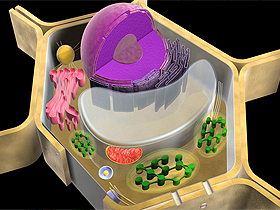
Likewise, for a suction trap, many developmental factors must exist at the same time together with many genes. In other words, all the causes at the genetic and molecular level must exist simultaneously and must all function together at the same time for the trap. The trap mechanism will become functional only through the simultaneous existence and synchronized operation of the countless components that make it up. The absence of a single factor, a single protein or a single molecular detail would mean nothing more than a cumbersome burden for that plant.
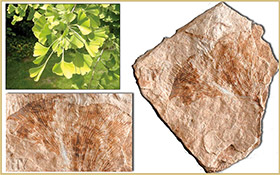
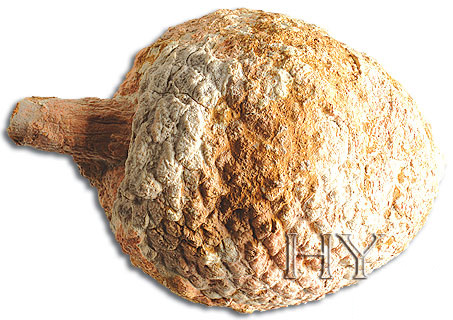
In addition to all these illogical claims, there is not a single fossil record showing the alleged gradual evolution of carnivorous plants. Although there are millions of fossil specimens in which even the veins in the leaves of all kinds of plants can be distinguished, there is not a single fossil with nonfunctional traps that could be presented as evidence for the alleged millions-of-years-long evolutionary process of carnivorous plants.
Conclusion
As can be seen, far from explaining the evolution of species, the theory of evolution cannot even explain the alleged evolution of a single species. Evolutionists are so helpless that they cannot even invent a logical imaginary story. For that reason, they are compelled to say that carnivorous plants 'POSSESS A COMPLEX MECHANISM AND CONSTITUTE A PROBLEM IN EVOLUTION THAT HAS NOT YET BEEN SOLVED.'
The truth revealed by science is that, like all other living things, carnivorous plants came into existence on Earth through God's instantaneous creation, complete and flawless and possessing the hunting mechanisms they have today from the very first moment they appeared on Earth.
"Among His Signs is the creation of the heavens and earth and all the creatures He has spread about in them. And He has the power to gather them together whenever He wills." (Surat ash-Shura, 29)