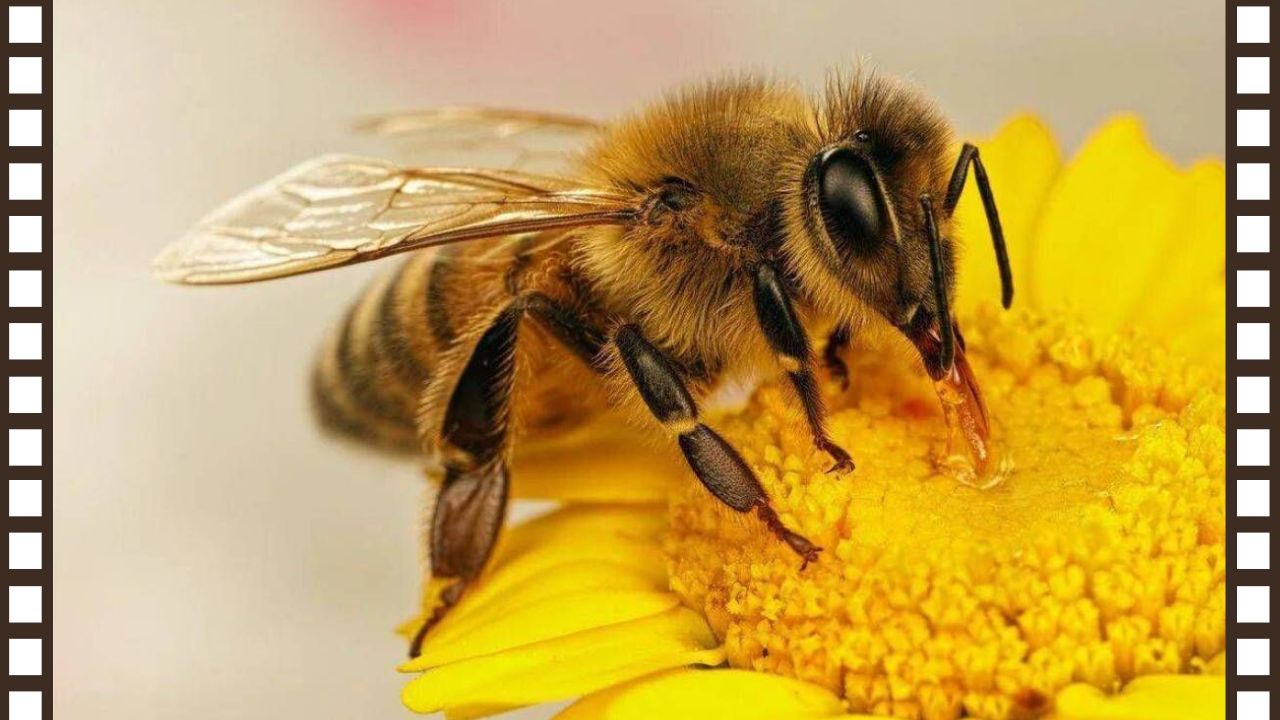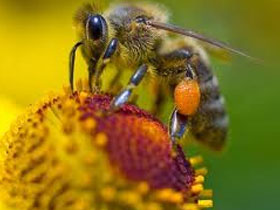
Honeybees are admired not only for the honey they produce but also for their flawless design—an extraordinary reflection of the infinite knowledge and wisdom of Allah. These remarkable creatures inspire scientists, engineers, and designers alike with their unique abilities and intricate biological structures.
The Qur’an draws attention to the creation of honeybees and the blessings they provide for humanity:
“Your Lord revealed to the bees: ‘Build dwellings in the mountains, in the trees, and in what people construct. Then eat from all kinds of fruit and follow the paths made easy for you by your Lord.’ From inside them comes a drink of varying colours, containing healing for mankind. Surely in that is a Sign for people who reflect.”
(Surat an-Nahl, 68–69)
The Perfect Vision System
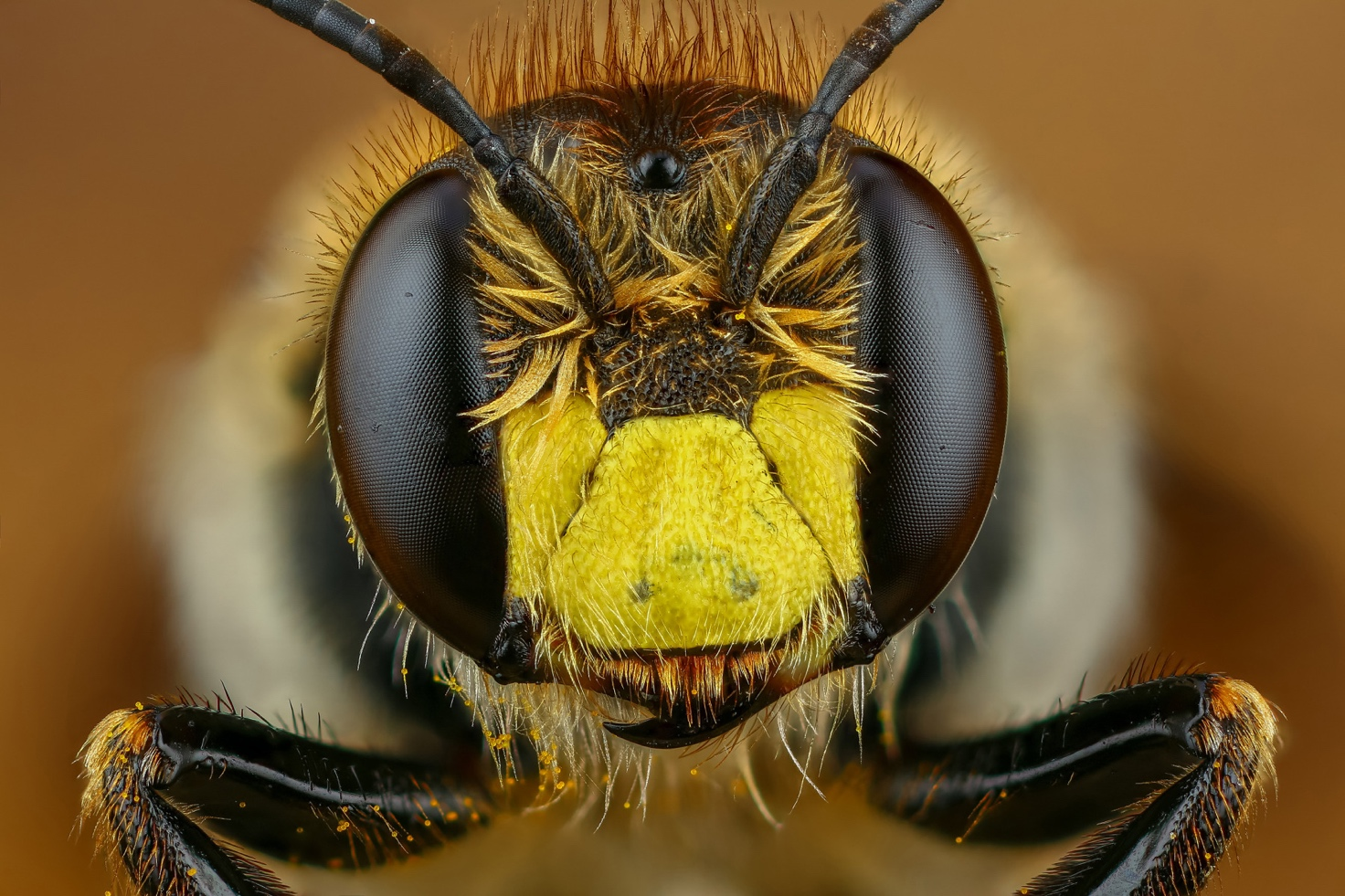
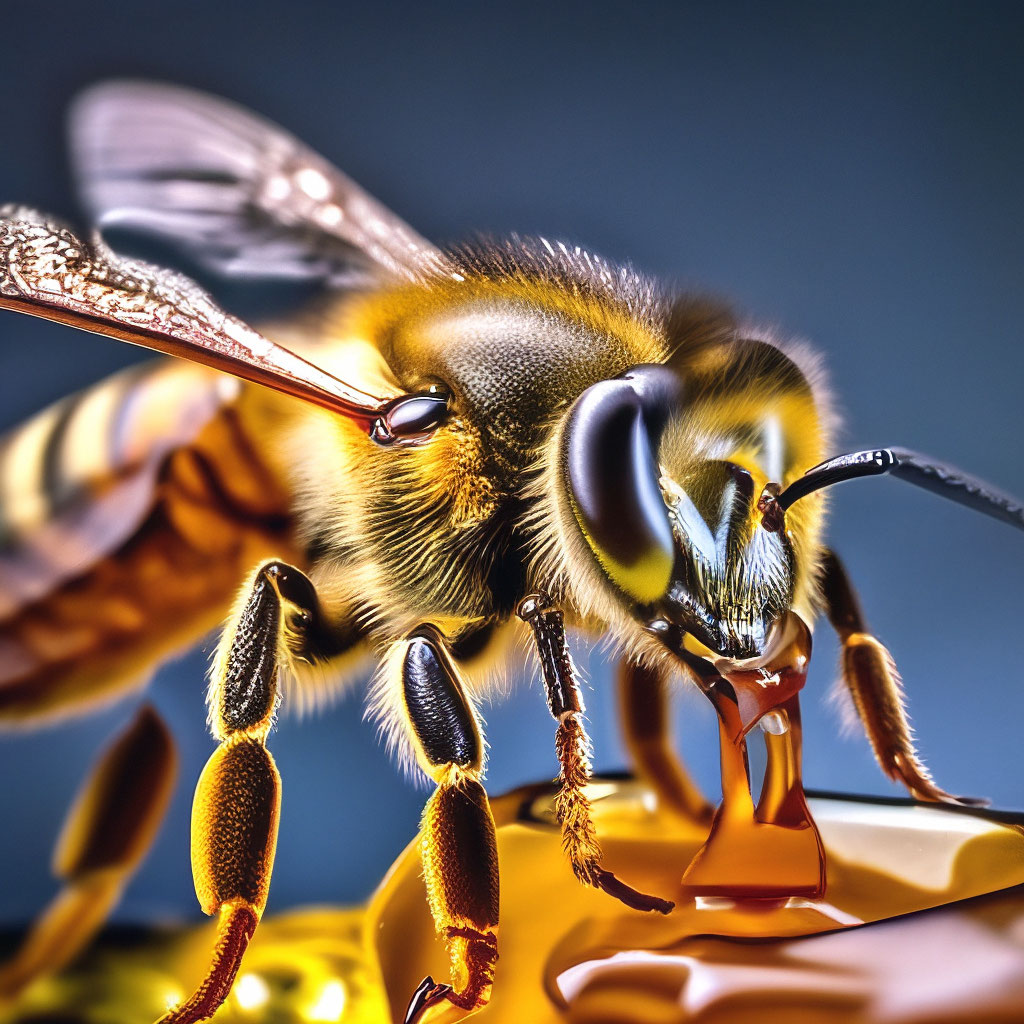
Honeybees have two large compound eyes that together provide a 300-degree field of view—an impressive example of precision design. In addition, they possess three simple eyes located on the top of their heads, bringing the total to five eyes. This configuration allows them to process an exceptionally wide visual range and detect movements with remarkable accuracy.
Modern technology has drawn direct inspiration from these eyes. For instance, Nissan Motors developed laser distance sensors modeled after the honeybee’s curved compound vision, enabling vehicles to detect and avoid collisions. Likewise, German researchers have used the honeybee’s wide-angle optical structure to develop advanced lens systems. Such applications testify to the perfection in Allah’s creation.
Flight: A Marvel of Engineering
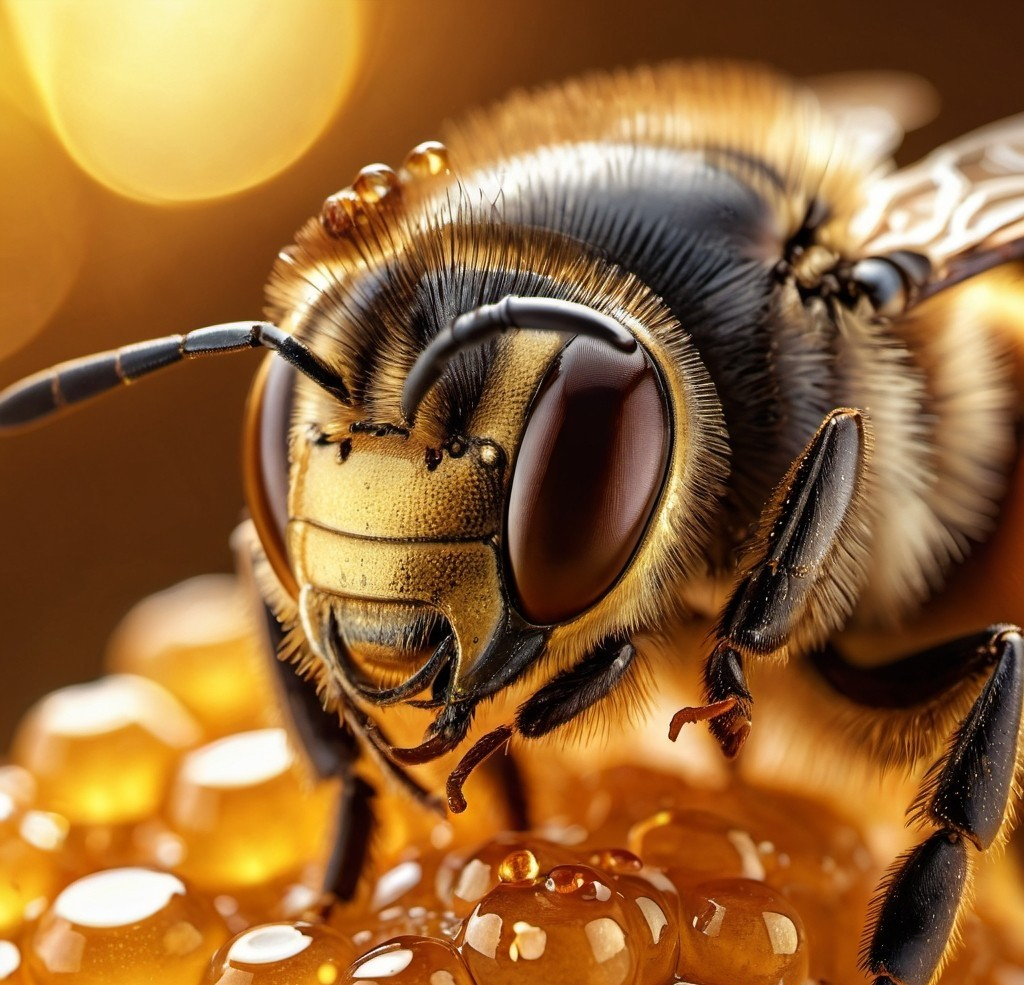
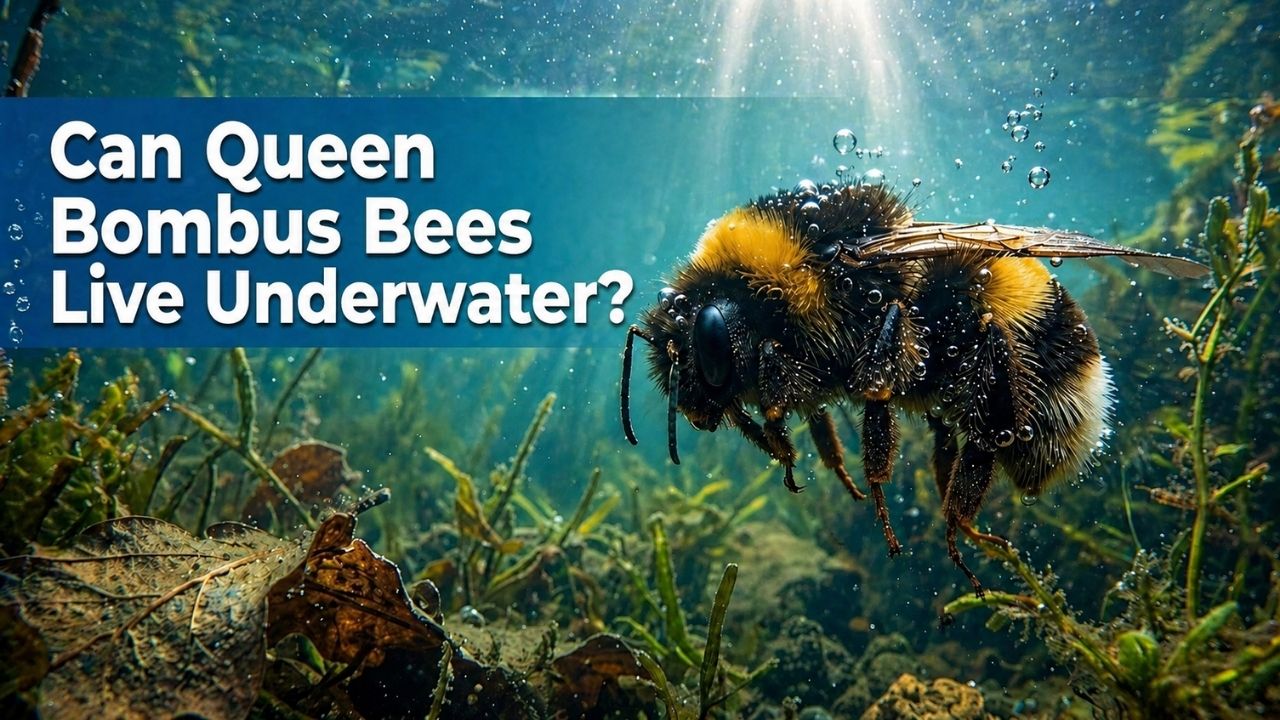
Honeybees beat their wings approximately 230 times per second, enabling precise aerial maneuvers and hovering stability. Bumblebees, though stockier, also achieve highly efficient flight, a feat that continues to intrigue aerospace engineers. Large-volume aircraft concepts have even been modeled after the bumblebee’s unique wing mechanics. These are living examples of how humanity benefits from the sophisticated designs embedded in creation.
Resilin: Nature’s Ultimate Elastic Material
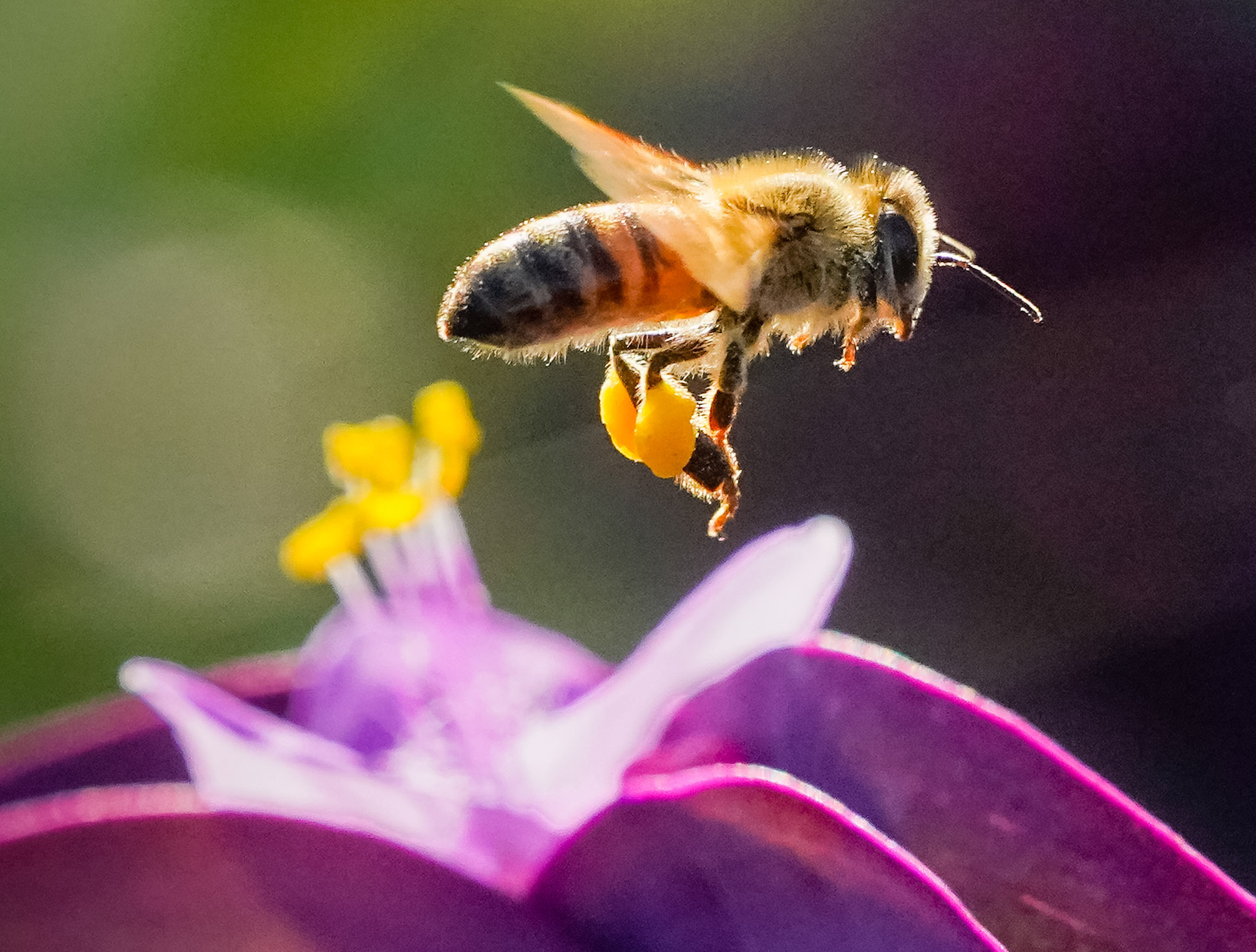
A critical element in honeybee flight is a special protein called resilin found in their wing joints. Resilin is the most efficient elastic substance known, surpassing even the best natural and synthetic rubbers. Its elasticity efficiency is 97%, meaning only 3% of the stored energy is lost as heat. Thanks to resilin, bees can flap their wings hundreds of millions of times over their lifetimes without damage, and fleas can jump distances 100 times their own body length.
Australian government researchers have successfully replicated resilin synthetically, achieving an efficiency of 98%, offering potential breakthroughs in various engineering fields.
Honeycomb Architecture: A Manifestation of Divine Precision
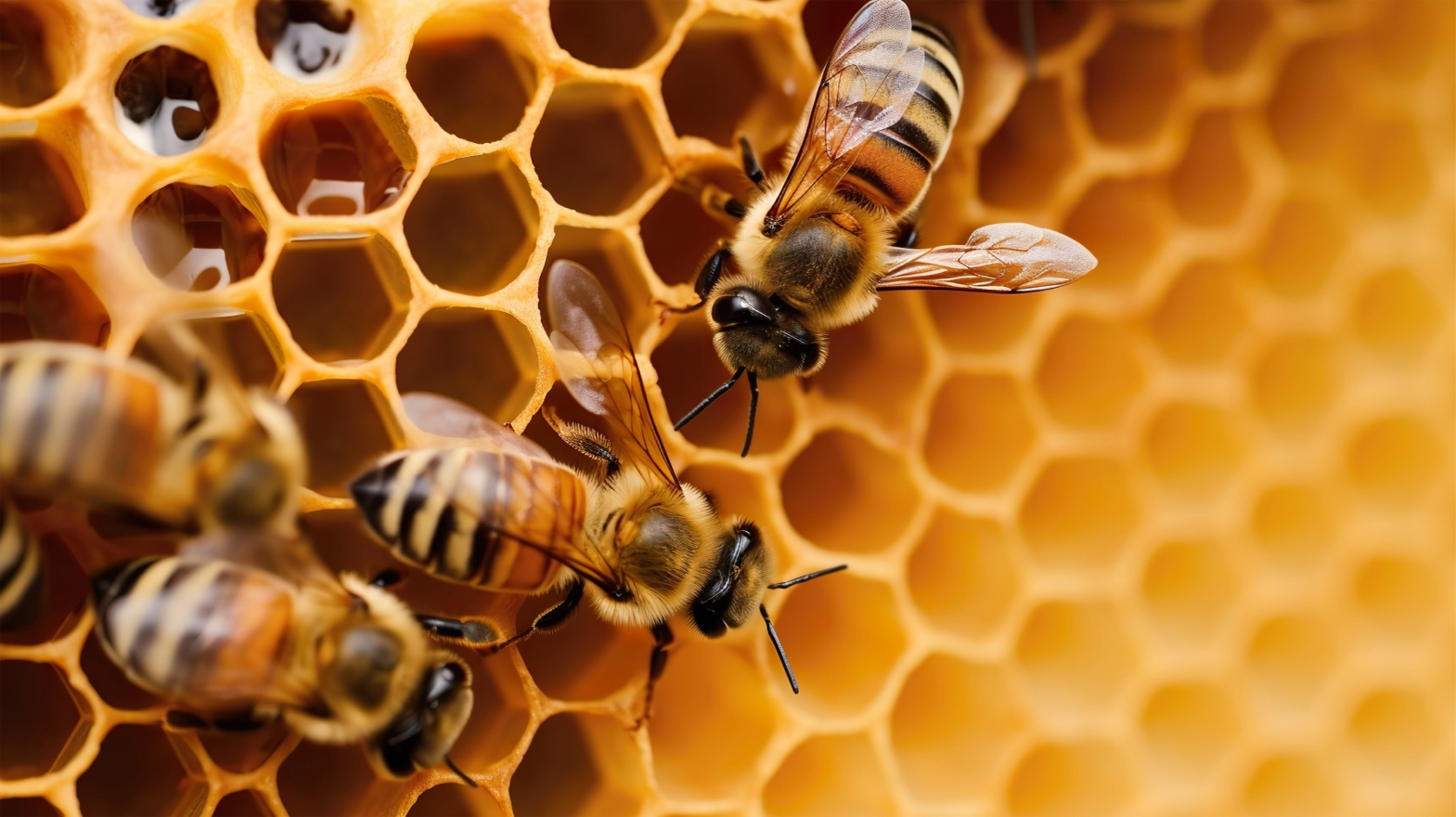
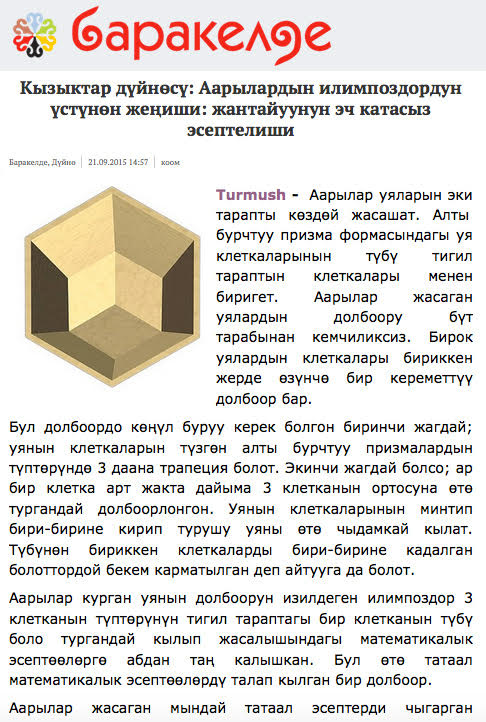
The honeycomb, used for storing honey and raising larvae, is a masterpiece of geometric and material efficiency. The hexagonal cell structure minimizes material use while maximizing strength and storage capacity.
This design has inspired modern architecture and engineering. For example:
Panelite in New York produces hexagonal-patterned glass that allows ample light in while reducing heat gain, offering privacy without obstructing interior views.
The Sinosteel skyscraper in Tianjin, China, uses honeycomb-patterned windows not only for aesthetic appeal but also as an integral structural element. The interlocking hexagons eliminate the need for conventional support columns, creating more open interior spaces.
Biological Perfection That Refutes Randomness
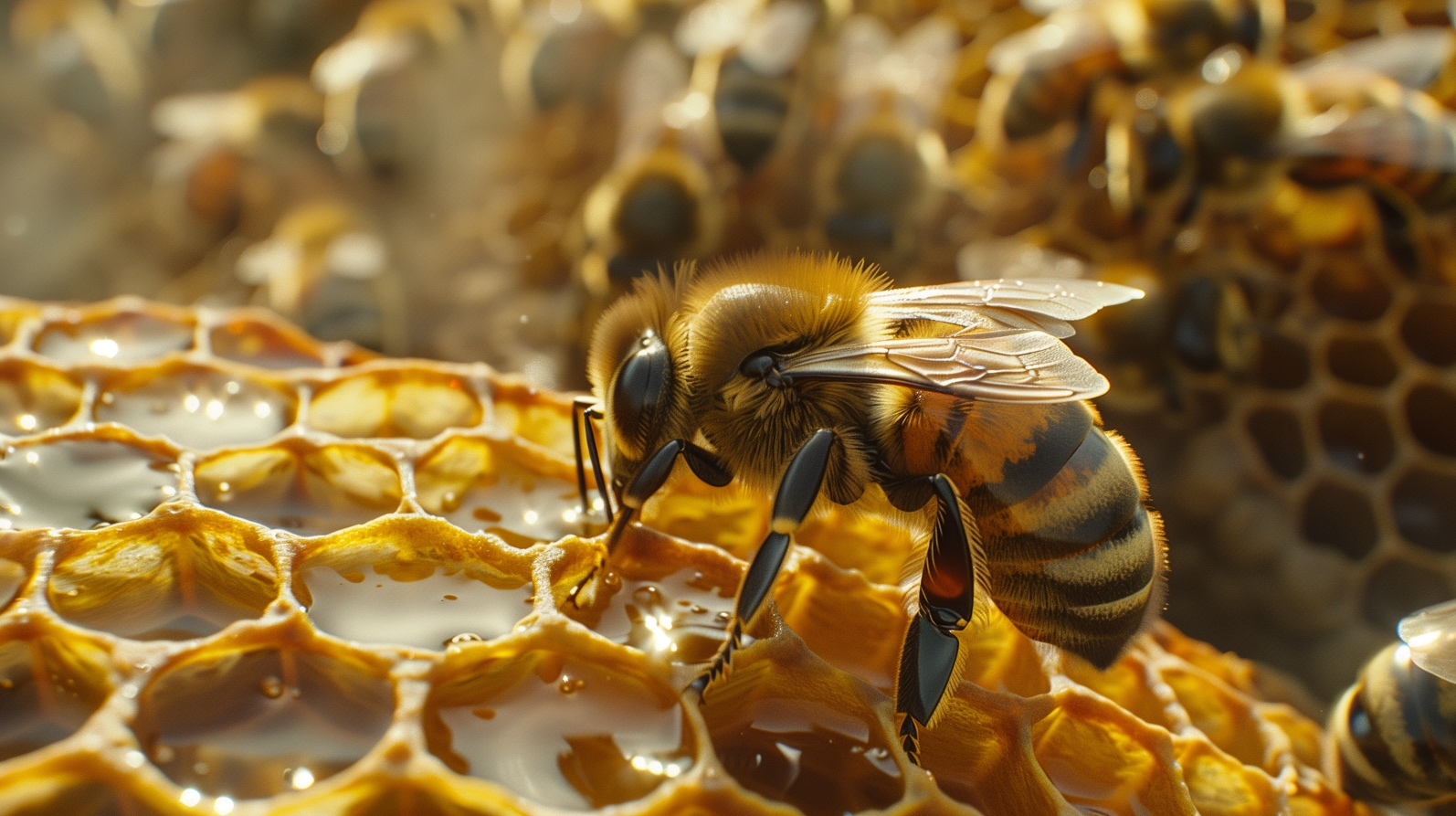
Every feature of the honeybee is finely tuned for its role:
A strong, lightweight exoskeleton.
A respiratory system that maximizes oxygen delivery to active muscles.
Specialized muscle structures without outer membranes for enhanced oxygen intake.
Highly sensitive olfactory and taste receptors, enabling precise detection of nectar sources.
Evolutionary theory claims such creatures arose through random mutations over millions of years. Yet honeybees’ fully integrated systems—appearing all at once and functioning flawlessly—contradict this claim. Fossil evidence supports this, as bee fossils dating back millions of years are identical to their modern counterparts. This is consistent with the concept of intentional creation, not gradual evolution.
Conclusion
The extraordinary abilities and designs found in honeybees are clear signs of Allah’s perfect creation. From their vision and flight to the geometry of their honeycombs, every detail points to deliberate design and purpose.
“Does He Who created not know? He is the All-Pervading, the All-Aware.” (Surat Al-Mulk, 14)
One should reflect on the fact that these miraculous beings could not have come into existence on their own and should exalt Allah, the Possessor of Infinite Knowledge, while consistently expressing gratitude for the blessings He has provided.