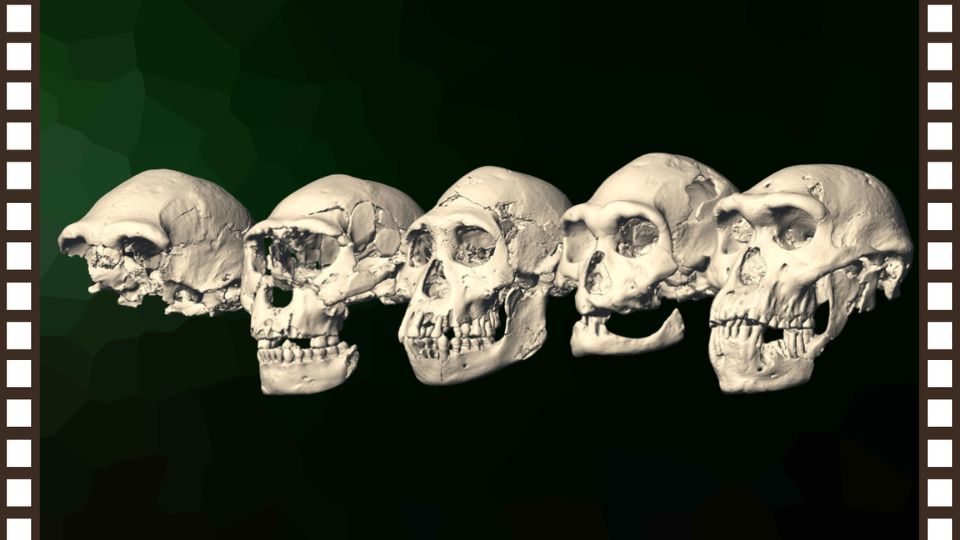
A study published in Science Advances in October 2026 attempted to establish a connection between human and chimpanzee brains through a virus tale. It was claimed that a certain sequence in chimpanzee DNA was the remnant of a virus, and then, based on the fact that this sequence was absent from human DNA, it was claimed that this was why the chimpanzee brain had remained small. (1)
The headlines in the media, however, were evolutionary propaganda that went beyond this. While ScienceAlert’s headline said, “Tiny Genetic Tweak From An Ancient Virus Might've Prevented Chimpanzees From Developing Brains Like Ours,” the Science News headline said, “Why did humans’ brains surpass chimps’? A tiny foe might help explain it.” (2) (3)
Now let us examine this study and the claim underlying the debate that DNA contains supposed remnants of evolution.
Evolutionist Interpretation: A Virus Outbreak Differentiated the Chimpanzee and Human Brains
The researchers identified a sequence in the chimpanzee genome similar to the sequence that codes for the envelope of retroviruses. This sequence bore methylation marks on it; it was a silenced region whose reading had been stopped, meaning that it did not code for a protein. It was immediately called ‘an ancient retroviral insertion.’ Since this sequence was not present in the human genome but was found in the chimpanzee genome, it was presented as the cause of the enormous difference between the chimpanzee and human brains and interpreted as ‘a virus outbreak differentiated human and chimpanzee brains.’
First of all, we should immediately state that the enormous difference in volume and morphological architecture between a chimpanzee brain with an average volume of 350-400 cc and a human brain reaching 1300-1400 cc contains distinctions far too profound to be bridged by a virus infection. The human brain is equipped not only with a volume three or four times larger, but also with consciousness, abstract thought, advanced language centers, the unique folds of the forebrain cortex (prefrontal cortex) and complex synaptic networks. No matter how great the genetic similarities may be, this immense gulf in brain architecture confronts us as the clearest and most concrete evidence of a special creation. No process of chance can produce thought and reason, an appreciation of aesthetics and art, speech and moral awareness. Yet, as can be seen, THE MOST UNREASONABLE ABSURDITIES AND THE MOST UNREALISTIC SCENARIOS ARE BEING INVENTED merely in order to deny that man is a being with a soul created by God.
We will also need to emphasize how controversial the method used in this study is and, consequently, how fictional and imaginary the evolutionist interpretations based on it are.
Inconsistent Experimental Environment: Organoids
The researchers claimed that they had produced ‘brain-like structures’ by growing human and chimpanzee stem cells in the laboratory for 15 days. During this process, they removed the relevant sequence from chimpanzee neurons using the CRISPR method and observed brain development. By making comparisons between these cell cultures produced within a short period of 15 days, they made speculative interpretations regarding adult brain regions and even cognitive functions.
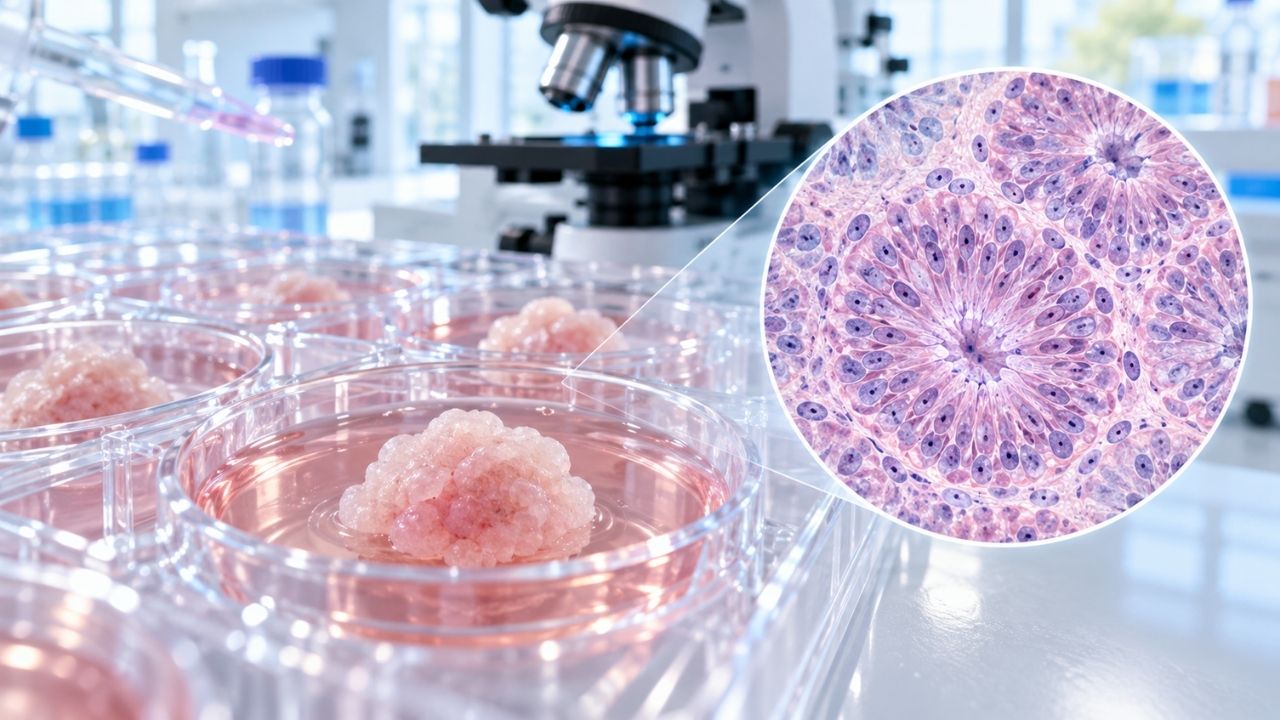
However, comparing such cell cultures, known as organoids, with the three-dimensional architecture of a real organ is highly controversial, and they do not represent complete adult organs. In 2019, Pollen and colleagues compared human and chimpanzee organoids and showed that, in various trials, even the ratios of cells relative to one another did not remain constant but changed inconsistently, that the timing of cell maturation was not the same in every sample, and that metabolic and cellular stresses in the experimental environment differed from those in a real living organism. (4)
For this reason, observations made on organoids are not accurate or realistic in terms of examining brain development. The simplification of tissue architecture, changes in cell ratios and the fact that the developmental schedule differs from one organoid to another ARE CLEAR INDICATIONS THAT THE MODEL CANNOT BE COMPARED WITH THE REAL BRAIN.
The Claim That DNA Contains Virus Remnants
The evolutionist approach is renowned for speculating about everything unknown. When the human genome was first mapped in 2003, every coding sequence that did not code for a gene was defined as “junk DNA,” and it was claimed that these vast regions were supposedly ‘leftover DNA’ remaining from our evolution. Indeed, only 2% of the genome was described as protein-coding genes, while the remaining 98% was characterized as junk. The regions that constituted the main part of the genome and were thought to be nonfunctional were presented as ‘remnants’ and even, in those days, as so-called ‘evidence’ of evolution.
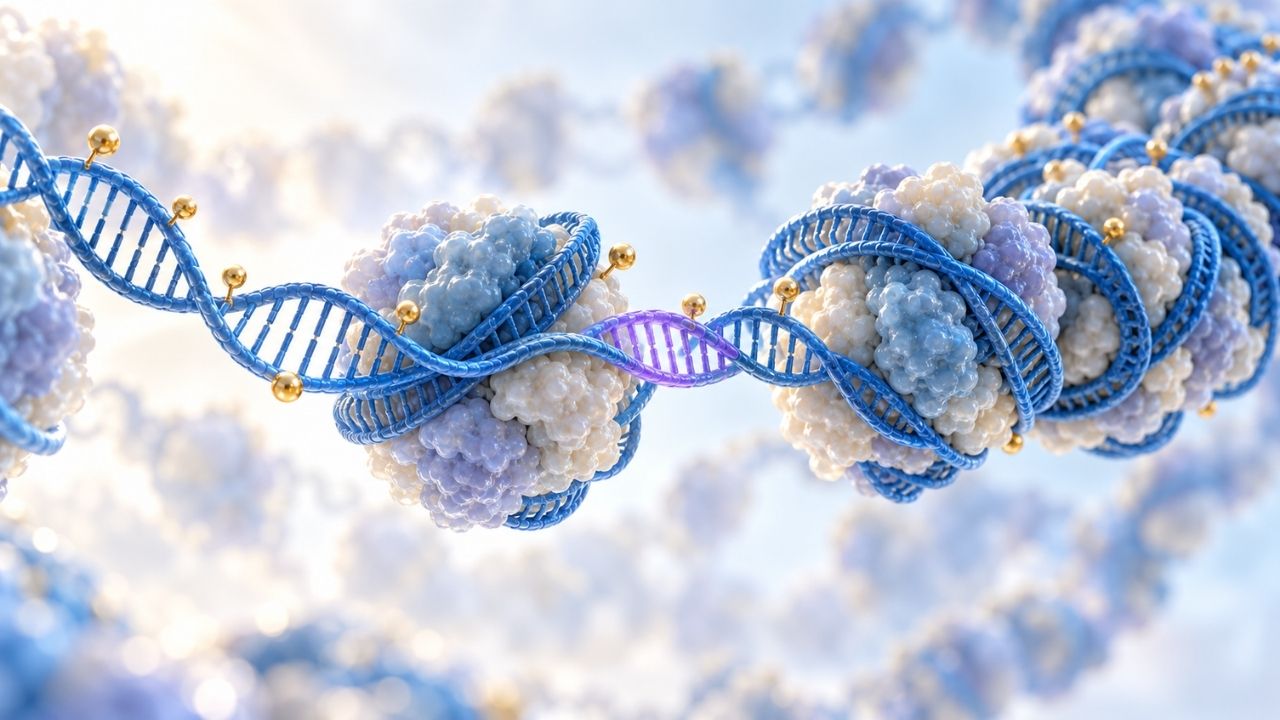
However, as science progressed, IT WAS UNDERSTOOD THAT THESE SEQUENCES WERE THE MOST VITAL REGIONS CONTROLLING PROTEIN-CODING GENES. According to this control mechanism, today called EPIGENETICS, these long DNA sequences control how a cell will function depending on our age and where it is located in the three-dimensional space of the body.
If you think of DNA as a complete text written in a 1,000-volume encyclopedia, epigenetics is a regulatory super-control system that determines which pages and which lines of these volumes will be READ, when, where and under what conditions, and which pages and lines will be marked and SKIPPED.
That is why, although the approximately 10 trillion cells in our bodies all possess the same DNA, they all function as different cells in different organs and tissues. It is again due to this epigenetics that puberty begins upon reaching a certain age, menstruation takes place in a 28-day cycle through the rise and fall of certain hormones, while after birth prolactin is secreted and milk production begins in the mother.
As can be seen, it is now understood how important the REGIONS CALLED JUNK out of ignorance actually are. Nevertheless, evolutionists can still continue to produce imaginary evolutionary scenarios about what is unknown today.
Yet these vast non-gene-coding sequences are still used by evolutionists as material for speculation. Comparing certain sequences in our genome to viruses is a discourse commonly encountered in evolutionist biology today. It is claimed that these regions accumulated in our genome through virus infections over millions of years. This claim is based solely on a superficial similarity in coding sequences. However, such a similarity at the molecular level is clear evidence of the common language of creation used in living things and a natural consequence of having been designed to feed on the same nutrients under the same atmospheric conditions and having been fashioned from the same carbon-based materials.
On the other hand, as the functions of these codes are understood, THE CLAIM OF THE EVOLUTIONISTS IS TURNED ENTIRELY INTO JUNK.
Regions Called Viruses Have Always Turned Out to Be the Most Vital Codes
Syncytin-1 and the Placenta:
One of the most striking examples claimed in the past to be ‘the remnant of a virus’ is the Syncytin-1 gene. Today, however, IT HAS BEEN UNDERSTOOD THAT IT HAS THE MOST VITAL FUNCTION IN THE FORMATION OF THE PLACENTA, WHICH IS INDISPENSABLE FOR THE CONTINUATION OF LIFE IN MAMMALS. While this gene is kept switched off in a silenced state throughout an entire lifetime, it becomes active only at the blastocyst stage, in only one group of cells and at a highly specific location, when the fertilized zygote cell in the mother’s womb has multiplied and reached a certain number. With the production of the Syncytin-1 protein in these cells, the walls of these cells (cytotrophoblasts) dissolve and fuse with one another (fusion). As a result of this fusion, a continuous, special, thin layer consisting of a single cell forms between the mother and the baby. By means of this protein, the cells unite in the form of a strip, acquire a single cytoplasm and establish the placental exchange environment between the mother and the baby. This most vital protein, which establishes that delicate bridge of nourishment, immune tolerance and protection between the mother and the baby, can be explained neither by blind chance nor by a virus randomly inserted from outside. Syncytin-1 has always been perfectly present in every mammal from the very beginning and must always be produced at the precise moment it is needed in every pregnancy. This gene begins to be read with miraculous timing on a particular day of the blastocyst stage, only in the cells that will form the placenta, and once it has completed its task, it is never read again. This precise process, which operates like clockwork, is not the work of chance, but evidence of the infinite Intellect that knows the embryo in the womb down to its molecules, A DEFINITE TRACE AND SEAL OF THE CREATION OF ALMIGHTY GOD.
Other prominent examples that refute the claim of virus remnants are the PEG10 and RTL1 (PEG11) genes:
PEG10 Gene:
This gene, too, was claimed to be a virus remnant of retrotransposon origin. However, experimental studies on mice (Ono et al., Nature Genetics) have shown that when the PEG10 gene was disabled, the most important layers of the placenta failed to develop and the embryos died at an early stage.
RTL1 (PEG11) Gene:
The loss of this gene, which was likewise claimed to be the remnant of a retrovirus, caused the structure of fetal capillaries in the placenta to deteriorate. Research by Sekita and colleagues published in the journal Nature Genetics revealed that either a deficiency or overproduction of this gene could have fatal consequences in the late stages of pregnancy or during birth. It is impossible for such a vital architecture as the placenta to exist without these genes.
As can be seen, all three of these genes are genes that evolutionists call “unnecessary remnants” BECAUSE THEY REMAIN SWITCHED OFF THROUGHOUT AN ENTIRE LIFETIME. Yet, as can be seen, they are THE MOST VITAL GENES, placed there to be activated only during pregnancy and only in placental cells.
The point science has reached today shows that many regions once thought to be virus remnants play key roles in many critical processes, from intracellular immunity to directing embryonic development. Their similarity to viruses, on the other hand, does not accord with the tale of virus insertion.
The Same DNA Code Does Not Always Code for the Same Protein
Just as a code thought to be a virus code can code for entirely different proteins, every code does not always code for the same protein. The simplistic understanding that a single gene codes for only a single protein, which persisted for years, has today given way to astonishing flexibility. Through epigenetic guidance, the cell produces completely different codes from a single DNA sequence and even entirely different proteins with completely opposite functions.
The most striking examples in mammals of this process, in which the same DNA codes are transformed into completely different outcomes according to cellular needs, are as follows:
• The Bcl-x Gene and the Live-Die Command: This single gene sequence, which governs the fine line between life and death in mammalian cells, contains two opposite commands according to cellular signals and epigenetic directions. When the same code sequence is read in the Bcl-xL form, it turns into a protective protein that gives the cell the command live, protect yourself and resist'; when it is read as Bcl-xS through an alternative splicing mechanism, it activates the suicide mechanism that gives the cell the command 'you have completed your task, die in an orderly manner.' THE SAME PIECE OF DNA FUNCTIONS AS A MIRACULOUS DECISION-MAKING MECHANISM THAT ENCODES BOTH LIFE AND DEATH ACCORDING TO THE CONDITIONS.
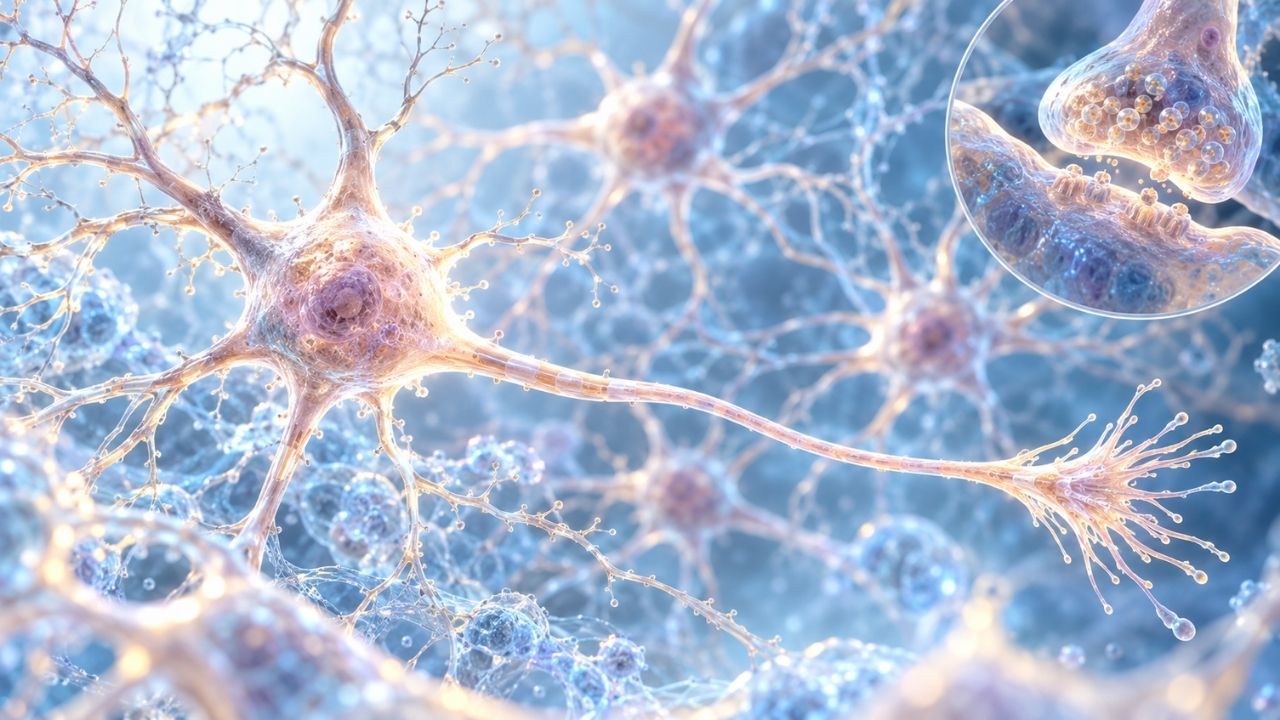
• Neurexin Genes and Various Proteins: In the brain tissue of mammals, these genes, which enable communication between neurons, produce thousands of different protein variants (isoforms), in other words, completely different proteins, from a single DNA code by means of alternative splicing mechanisms. Thousands of different Neurexin proteins serve as identity cards on the membranes of neurons. By establishing a lock-and-key compatibility with their counterparts, the Neuroligin proteins, they determine the structure of the synapse (the connection point). That is because the connections within the brain itself and the connections between the motor neurons that control the muscles are all different from one another. This wealth of alternative splicing in Neurexin genes enables each neuron to establish a connection with the correct cell, at the correct strength and through the correct type of specific proteins.
• c-MYC: It is a protein that regulates cell growth, division and gene activity. Long and short MYC protein forms can be produced from the same mRNA by using different start codons. These forms can affect gene regulation in different, and even opposite, directions.
• C/EBPβ: It is a transcription factor that regulates genes related to immunity, inflammation and cell differentiation. A single mRNA produces protein forms known as LAP*, LAP and LIP from different AUG start sites. Cellular conditions can alter the ratio of these forms; the effects of the forms on gene regulation are also different.
• MAVS: It transmits the signal from systems that detect virus-derived RNA within the cell and helps initiate the antiviral interferon response. The same mRNA involved in antiviral immunity can produce full-length MAVS and the shorter miniMAVS. miniMAVS limits the effect of full-length MAVS by regulating the interferon response.
• Connexin 43 (GJA1/Cx43): It is the main component of junction channels that enable small molecules and electrical signals to pass between neighboring cells. The same mRNA can produce full-length Cx43, which functions in intercellular junctions, as well as the short GJA1-20k form, which assists its transport within the cell.
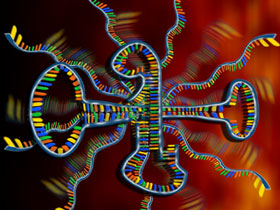
• POLG: It is the catalytic subunit of the DNA polymerase that copies mitochondrial DNA. A hairpin-shaped structure in the mRNA can support the production of another protein that starts from a different reading frame alongside normal POLG. This example shows that RNA folding can influence the selection of the start site.
So how does this take place?
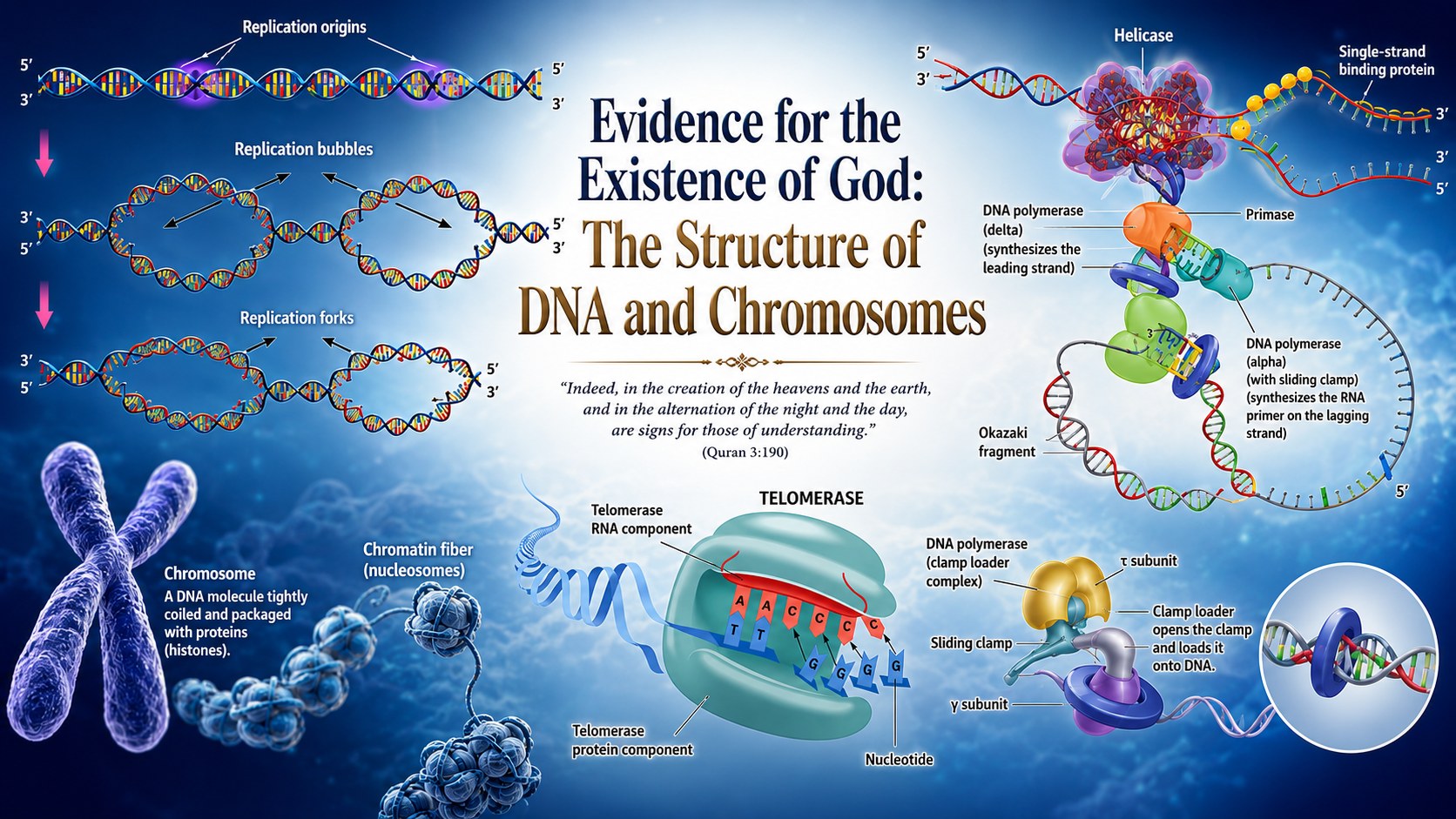
Epigenetic factors —the methylation marks on DNA and the chemical texture of histone proteins— are not merely simple switches that turn genes on and off. They are a regulatory mechanism that controls the progress of the molecular machines that read the DNA code over the nucleotides at the angstrom level, in other words, with a precision of one ten-millionth of a millimeter. This precise control enables the scissors in the cell nucleus to decide instantaneously which region of the DNA to cut out or splice together. Of course, the intelligence at work here does not operate within this molecular environment, but above it, by means of a superior intelligence that knows all things.
In summary, THE FACT THAT A CODE SEQUENCE RESEMBLES CODES BELONGING TO A VIRAL ENVELOPE DOES NOT MEAN THAT IT IS OF VIRAL ORIGIN, NOR DOES IT MEAN IN PRACTICE THAT IT IS A COMMAND TO PRODUCE A VIRAL ENVELOPE. As can also be seen in the examples above, that code can appear in a mammalian organism in the form of the production of entirely different proteins possessing the most vital functions.
Conclusion
Throughout history, the world of evolutionists has always been filled with speculations based on the 'unknown.' Yet time has invalidated these assumptions on every occasion and revealed that the codes evolutionists call 'functionless silenced viral remnants' are the most vital codes, read at the most critical moments of life.
The hypothesis of 'vestigial organs,' which was once presented as one of the strongest pieces of evidence in evolutionist literature, was likewise nothing more than a speculation based on the unknowns of those years. The list of so-called 'vestigial organs,' which the German anatomist Robert Wiedersheim expanded to 180 by claiming that they had no function in the human body, has today fallen to zero with advances in medicine and molecular biology; every structure claimed to be useless, from the appendix to the thymus gland, and from the thyroid and wisdom teeth to the tonsils, has been proven one by one to possess vital functions, from immunity to metabolic balance. Therefore, with the advancement of science, it has BEEN EXPERIENCED TIME AND AGAIN THAT everything the theory of evolution describes as ‘useless remnant’, in fact, STEMS FROM IGNORANCE.
As can be seen, the situation is the same today.
Our genome IS NOT A GARBAGE DUMP OF VIRUSES, but A PERFECT AND MAGNIFICENT BOOK OF CODES in which ALMIGHTY GOD DISPLAYS HIS INFINITE KNOWLEDGE. What falls to the scientist is not to conceal or distort these facts, but, as these codes are deciphered, to appreciate our Lord's infinite might and glorify Him.
References:
Patricia Gerdes et al. ,Retroviral insertions contributed to the divergence of human and chimpanzee brains. Sci. Adv. 12, eaeg5791 (2026). DOI: 10.1126/sciadv.aeg5791. (https://www.science.org/doi/10.1126/sciadv.aeg5791)
https://www.sciencealert.com/tiny-genetic-tweak-from-an-ancient-virus-mightve-prevented-chimpanzees-from-developing-brains-like-ours
https://www.sciencenews.org/article/human-chimp-brains-different-virus-dna
Pollen AA, Bhaduri A, Andrews MG, et al. Establishing Cerebral Organoids as Models of Human-Specific Brain Evolution. Cell. 2019;176(4):743-756.e17. doi:10.1016/j.cell.2019.01.017