📍1/4 The statement "It was published in a peer-reviewed journal, therefore it is true, or it wasn't published, so it is false" is not a scientific proof.
Publications in journals that are presented as peer-reviewed but are heavily dominated by personal opinions and ideologies cannot be offered as scientific reality. Because if one side of a debate:
• Determines what is considered "scientific,"
• Holds the authority to reject sending a manuscript to reviewers,
• Selects reviewers exclusively from their own ideological circle...
🚪 If this same circle:
• Evaluates and distributes publications unfairly,
• Influences institutional funds and career processes,
• Labels opposing explanations as "unscientific" without discussion, then it cannot be said that an impartial court or reviewer exists there.
Under such bias, the shelter of a "Peer-Reviewed Journal" is not a certificate of neutrality or absolute truth. The concept of a peer-reviewed journal is only acceptable if a fair quality filter exists—free from human bias, commercial interests, and institutional pressure. However, as seen in the examples below, the peer-reviewed journal label has lost its credibility today.
📍 2/4 PUBLISHING POWER IS CONCENTRATED IN A FEW COMPANIES
⚡️A study analyzing 45 million documents showed that in 2013, the top "5 publishers held a monopoly" accounting for "more than half of all published papers." Especially in evolutionary and medical sciences, the share of just 3 companies exceeds 47%.¹
This monopolization shows that a major part of scientific visibility, dissemination, and prestige is in the hands of this limited number of publishing networks. This is a serious suspicion not just for a single journal or institution, but for each of the numerous journals that are mistakenly assumed to have "independent reviewers."²

⚡️EXAMPLES AND EXPERIMENTS SHOWING THE UNRELIABILITY OF PEER REVIEW
In Mahoney's unannounced experiment on this issue, 75 reviewers evaluated manuscripts with identical methods but different results. These so-called reviewers reacted negatively to results that opposed their own ideological views.³
⚡️IF THE NAME AND INSTITUTION ARE PRESTIGIOUS, IT BIASES THE REVIEWERS' DECISION
In another controlled study on single-blind peer review, it was observed that manuscripts associated with famous authors and prestigious institutions held a significant advantage among reviewers.⁴
⚡️ In an older experiment, 12 articles previously published in the same journals were resubmitted to those exact journals, but this time with low-prestige, fictitious institutional names. Out of the 9 articles that made it through to evaluation, 8 were rejected.⁵

📍3/4 FUNDING OF PEER-REVIEWED JOURNALS AND MONEY SCANDALS
It was revealed that Elsevier distributed publications sponsored by Merck that falsely resembled independent peer-reviewed journals. Nature Medicine reported that these publications deceptively carried the appearance of a scientific journal.⁶
💰 The relationship between funding and study results was also measured. According to a Cochrane review, research on drugs and devices sponsored by manufacturing companies reached results and conclusions favoring the sponsor much more frequently compared to other studies.⁷
⚡️"PEER REVIEW" HAS BEEN MANIPULATED IN AN ORGANIZED WAY A Wiley/Hindawi investigation detected systematic manipulation in peer-review and editorial processes. In the first phase, the retraction of 511 articles was announced.⁸
🕸️PLOS ONE also announced a publication ethics case covering more than 100 articles where the roles of authors, reviewers, and academic editors may have been compromised. In the initial phase, 20 articles were retracted.⁹

⚡️REVIEWERS EITHER IGNORE OR FAIL TO CATCH SERIOUS FLAWS In another study where 9 deliberate major errors were inserted into manuscripts, reviewers detected an average of only 2.5 errors during the first evaluation. 6.5 obvious errors were completely missed or ignored.¹⁰
🔔
Therefore, saying "it passed peer review" does not mean:
• The data is definitely correct,
• There is no fraud,
• The result will absolutely be replicated,
• The paper will not be retracted in the future.
Peer review is not a certificate of absolute truth. It cannot be used as definitive proof in scientific debates.
Of course, there are positive outcomes in studies as well. However, while even a single example is enough, hundreds of abuses fundamentally shake the credibility of the institution of peer review.
📍4/4 THE ANTI-DESIGN BIAS OF EVOLUTIONISTS DOMINANT IN THE PEER-REVIEW SYSTEM IS BLATANT
✨THE "CREATOR" CASE IS A WELL-KNOWN EXAMPLE OF THIS

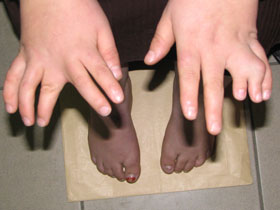
A paper on hand biomechanics that passed peer review in PLOS ONE was retracted solely because the word "Creator" appeared in it, using unrealistic excuses such as issues regarding presentation and findings.¹¹ In the Sternberg case, an editor who published a paper favoring intelligent design faced severe backlash from the Smithsonian circle. These cases are just a few proofs of an existing system of censorship and serve as concrete examples of how institutionalized this bias has become.¹²

💡The funding relationships of atheist institutions with evolutionists: For instance, although the Edge Foundation—known for its anti-creationist stance—does not officially define itself as an "atheist foundation," it is a known fact that this is its position in the scientific world. For this purpose, it provided massive visibility to promote the articles, speeches, and books of evolutionists like Prof. Daniel Dennett, Prof. Steven Pinker, and Prof. Richard Dawkins.
SOURCES:
9) theplosblog.plos.org/2022/08/safegu…