The history of science bears the traces of ideological obsessions and blind devotion, as well as the impartial search for truth. Materialist and evolutionist ideologies in particular have defined man as an ordinary animal species, denied his spiritual aspect, and this perspective has at times led to radical undertakings in which science has departed from morality and reality.
At this point, we encounter the fact that scientific research and theories are not always conducted on an impartial basis. The so-called scientific approaches shaped under the pressure of atheist and Darwinist ideologies may encounter serious distortions in the process of seeking the truth. How scientists and societies perceive and interpret facts in line with the ideologies they hold can completely distort the direction and nature of scientific progress. Therefore, the effects of intentional and unintentional ideological blindness on scientific thought are of great importance in terms of gaining a better understanding of the subject.
Ideological Blindness and Fanaticism
Ideology is the body of thought that systematically shapes the worldviews, values and beliefs of individuals and societies. Materialist and evolutionist ideologies define man solely as a biological entity and deny his spiritual aspect because they cannot explain it. This leads to the tendency to regard man as an ordinary animal species.
Ideological blindness, on the other hand, is when a person or group becomes firmly convinced of the truth of its own ideology, believes in it absolutely without question, and distorts or ignores facts for the sake of that belief. This blindness obstructs scientific objectivity and the search for truth; it leads scientists toward a dogmatic attitude.
Ideological blindness is also often intertwined with fanaticism. In its broad definition, fanaticism is the state of being excessively devoted to a belief or ideology and departing from reason, ethics and reality for its sake. Some advocates of Darwinist ideology are capable of embarking on irrational projects such as reducing man to the same level as animals and producing an ape-human hybrid. Such undertakings are the product of a fanatical ideological obsession rather than scientific curiosity.
The Psychological Dimension of Ideological Blindness
On the other hand, ideological blindness is explained psychologically through the concepts of “belief-based motivation” and “ideological commitment.” People may become blindly attached to their own ideologies because of psychological mechanisms such as the need to find an identity and belonging, and group pressure. These psychological stages weaken man's ability to think critically and lead to detachment from reality and social polarization. Scientific and moral deviations in particular are the direct result of ideology taking precedence over scientific facts.
The search by Darwinist scientists for a transitional form between man and ape, and even their efforts to produce one in the laboratory, are a striking example demonstrating that ideology has taken precedence over scientific facts. The blindness here is not physiological, but entirely psychological in origin.
Indeed, although Darwinists have failed to find any transitional form over millions of years in order to prove the theory of evolution, their continued refusal to abandon their claims is a clear indication of ideological blindness and obsession. They try to regard what is scientifically impossible as possible simply because their ideology requires it.
The Qur'an, however, warns people against blindly imitating their ancestors or ideologies and advises them to use their reason to investigate the truth. It is revealed in the Qur'an:
“When they are told, ‘Come to what God has sent down and to the Messenger,’ they say,‘What we found our fathers doing is enough for us.’ What! Even if their fathers did not know anything and were not guided!” (Surat al-Ma`ida, 104)
“… ‘Are they the same – those who know and those who do not know?’ It
is only people of intelligence who pay heed.” (Surat az-Zumar, 9)
This approach of the Qur'an aims to prevent ideological blindness and psychological obsessions by encouraging man to use his reason, question and seek the truth.
Ideology Directing Science and Its Consequences
As we briefly summarized above, ideological blindness causes science to cease being an objective search for truth and places it at the service of ideology. The scientist begins to adapt his findings to his ideology and even to distort the facts. Although Darwinist ideology has been refuted by scientific evidence, it leads some scientists into such blindness that they deny scientific facts, fabricate imaginary scenarios and even embark on experiments that are contrary to reason and ethics.
Ivanov's Ape-Human Hybridization Fiasco
Ilya Ivanovich Ivanov (1870-1932) was a Soviet biologist and experimental physiologist. He was known for his studies on artificial insemination and hybridization among animals, and went down in history for his attempt to create a hybrid between man and ape.
Ivanov announced his idea of producing an ape-human hybrid in 1910 and conducted experiments in Africa in the 1920s with the support of the Bolshevik government. The purpose of the project was to produce the supposed transitional form between ape and man predicted by Darwin in a laboratory and to prove the theory of evolution. Furthermore, for the Soviet administration, this project would deal a blow to religious beliefs and serve as a means of creating the “new man” for the socialist utopia (Schultz, 2013; Catchpoole, 2009).
Ivanov's experiments were conducted through unethical practices and by disregarding scientific facts. They failed because of the biological incompatibility of human and ape gametes. Following his failure and moral doubts concerning his work, Ivanov's activities were terminated and he was exiled to Kazakhstan.
The Motivations of the Communist Soviet Administration and Social Engineering
Ivanov's project was a reflection of the Soviet administration's desire to produce a scientific trump card against religion and transform society. Science was regarded as the key to creating the new man of Soviet society, and it was intended to spread the desired socialist traits through “positive eugenics” projects. Ivanov's project failed, but it clearly revealed how science was sacrificed for ideological purposes and how the objectivity of science was damaged (Schultz, 2013; Catchpoole, 2009).
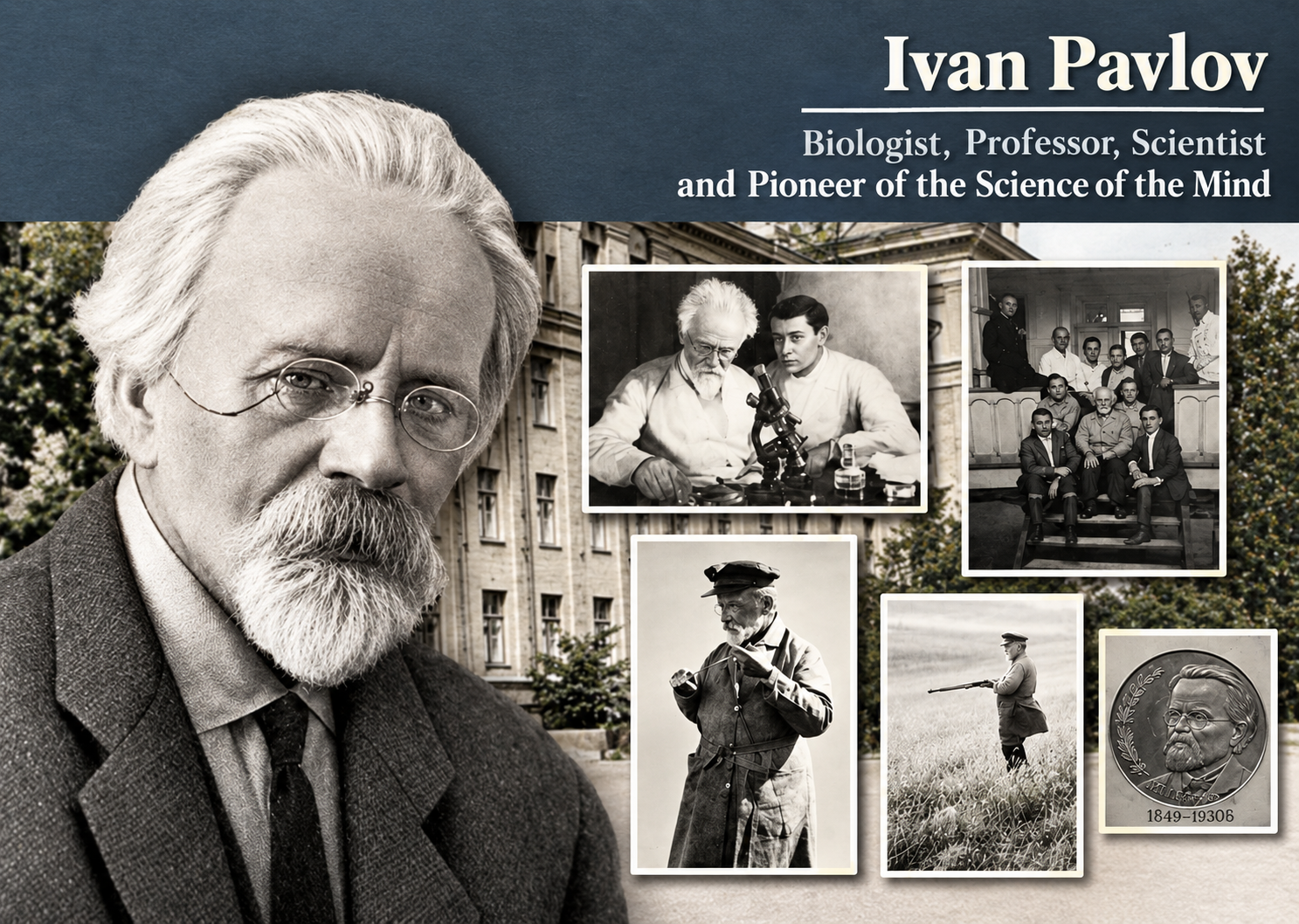
One of the reasons Ivanov received support from the Communist Party was that his research was regarded as part of an ambitious plan aimed at transforming society. The senior Bolsheviks who supported Ivanov were intellectuals who regarded science as a means of realizing their dreams of a socialist utopia. According to Alexander Etkind, a Cambridge University expert on Russian history, Soviet politicians could change the political system, nationalize industries and turn farms into enormous collectives; yet the task of transforming people had been entrusted to alleged scientists. The aim was to make people conform to the socialist design of Soviet society. (Schultz, 2013; Catchpoole, 2009).
If Ivanov had succeeded in this communist-backed project, the state would have been able to control people's desire to live and work together during socialization. It would supposedly have been possible to eliminate traits such as greed and the desire to acquire property through half-human, half-ape hybrids.
Ivanov's project was not supported merely because it was compatible with Communism, since the Bolshevik government was not the only party financing his vision. When news of Ivanov's proposal to obtain an ape-human hybrid reached the shores of the United States in the 1920s, the American Association for the Advancement of Atheism announced a fundraising campaign to support Ivanov's project. (Etkind, 2008)
According to some sources, it is said that the reason Stalin supported Ivanov was his expectation of establishing an army composed of soldiers to be obtained through ape–human hybridization.
The Superiority of Man in the Qur'an and the Conception of True Science
The Qur'an clearly reveals that man was created by God as a special and honorable being, that he was given a soul and made superior to all other living beings. Through the verses “We created man in the finest mold." (Surat at-Tin, 4) and “He Who has created all things in the best possible way. He commenced the creation of humanity from clay." (Surat as-Sajdah, 7), it is emphasized that man is not the product of coincidences and blind laws of nature, but the work of a conscious creation based on wisdom. This shows that man is not merely a biological entity, but also bears a spiritual and moral responsibility.
Darwinist ideology, on the other hand, defines man as an ordinary animal species and reduces him to the same level as animals. This perspective disregards the high moral values, free will, conscience and soul possessed by man. The concepts of “natural selection” and “the struggle for life” underlying Darwinism encourage people toward constant competition, conflict and even war, just like animals in nature. Indeed, throughout history, discrimination, racism, colonialism and acts of mass violence among human societies have been legitimized under the influence of this ideology. Projects such as ape-human hybridization also emerged as a scientific manifestation of devaluing and animalizing man.
The Qur'an encourages man to use his reason, seek evidence and proof, and examine nature and the universe. Verses such as “Do you not see that Allah has created the heavens and the earth with truth…" (Surah Ibrahim, 19) and “… Have they not travelled in the land and seen the final fate of those before them?…" (Surah Yusuf, 109) constantly invite man to think and investigate.
Therefore, a true conception of science is possible only through an attitude independent of ideology, free from prejudice and faithful to the truth. When science enters the service of ideology, it becomes corrupted and departs from the facts. Ivanov's attempt at ape-human hybridization exposed the face of Darwinist ideology that devalues man and destroys scientific objectivity. The Qur'an, on the other hand, exalts man, gives him the value he deserves and opens the way for scientific thought in the true sense.