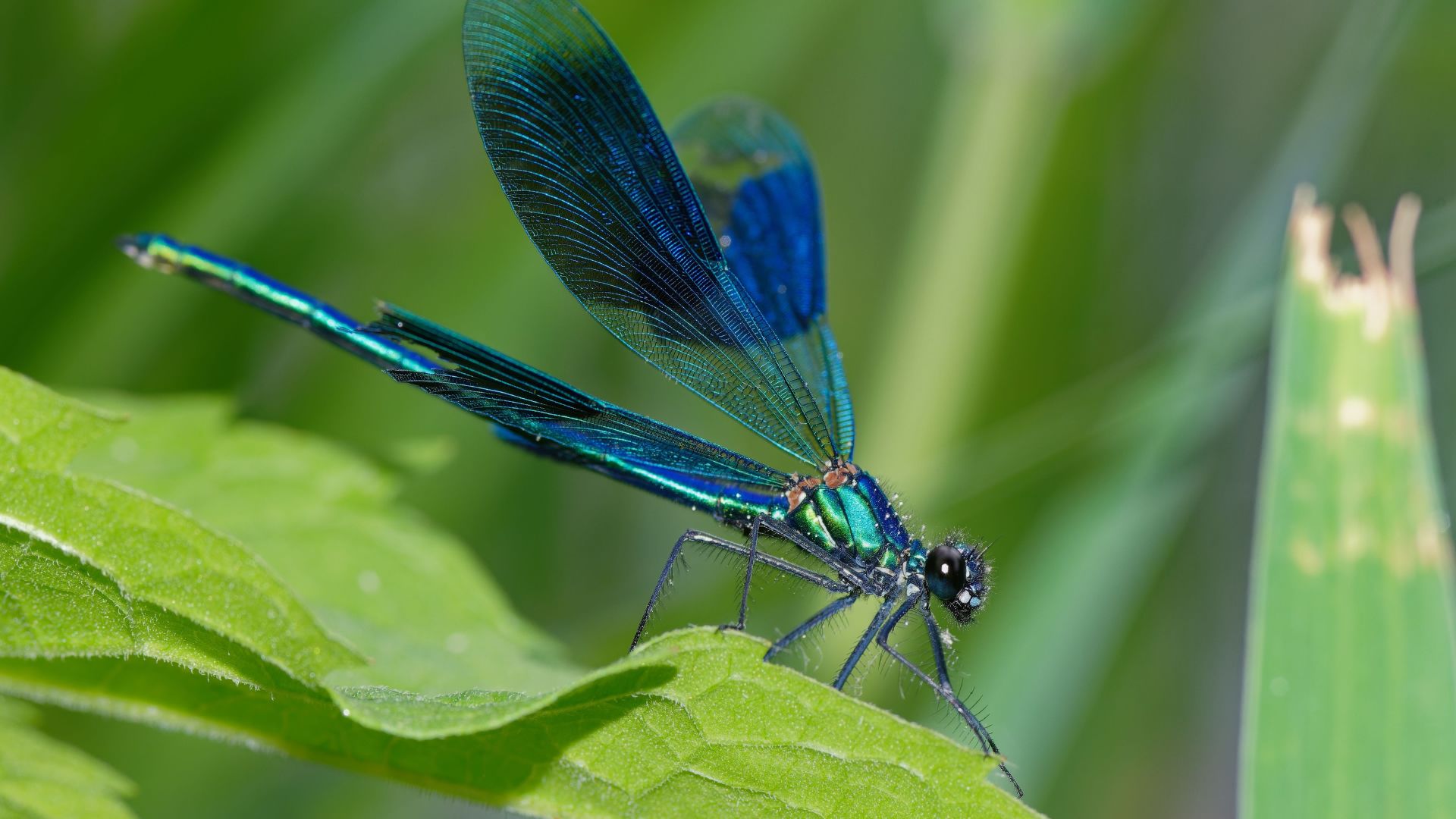
A damselfly standing on a leaf by a stream... At first glance, with its slender body and delicate wings, it may seem like a small detail. However, when you move a little closer, you notice a mosaic-like pattern consisting of shimmering colors on its wings and membranous areas surrounded by veins. When you examine it even more closely, you realize that this tiny creature possesses awe-inspiring features, with its optical structures, flexible wing joints and life that begins underwater.
Damselflies, close relatives of dragonflies, belong to the suborder Zygoptera of the order Odonata. Their different species display great diversity in terms of colors, wing forms and behavior. Within this diversity, some stand out with their metallic wings, some with the unusual environments in which they lay their eggs, and others with their remarkable size.
Colors Revealed by Light
A living thing appearing blue or green does not always mean that it merely possesses a pigment of that color. The interaction of light with microscopic structures also plays a role in the metallic gleam on the wings of some damselflies. In this phenomenon known as “structural coloration,” light waves reflected from very thin layers interact with one another. While the reflection of certain wavelengths is strengthened, that of others is weakened; distinct colors thus reach our eyes.
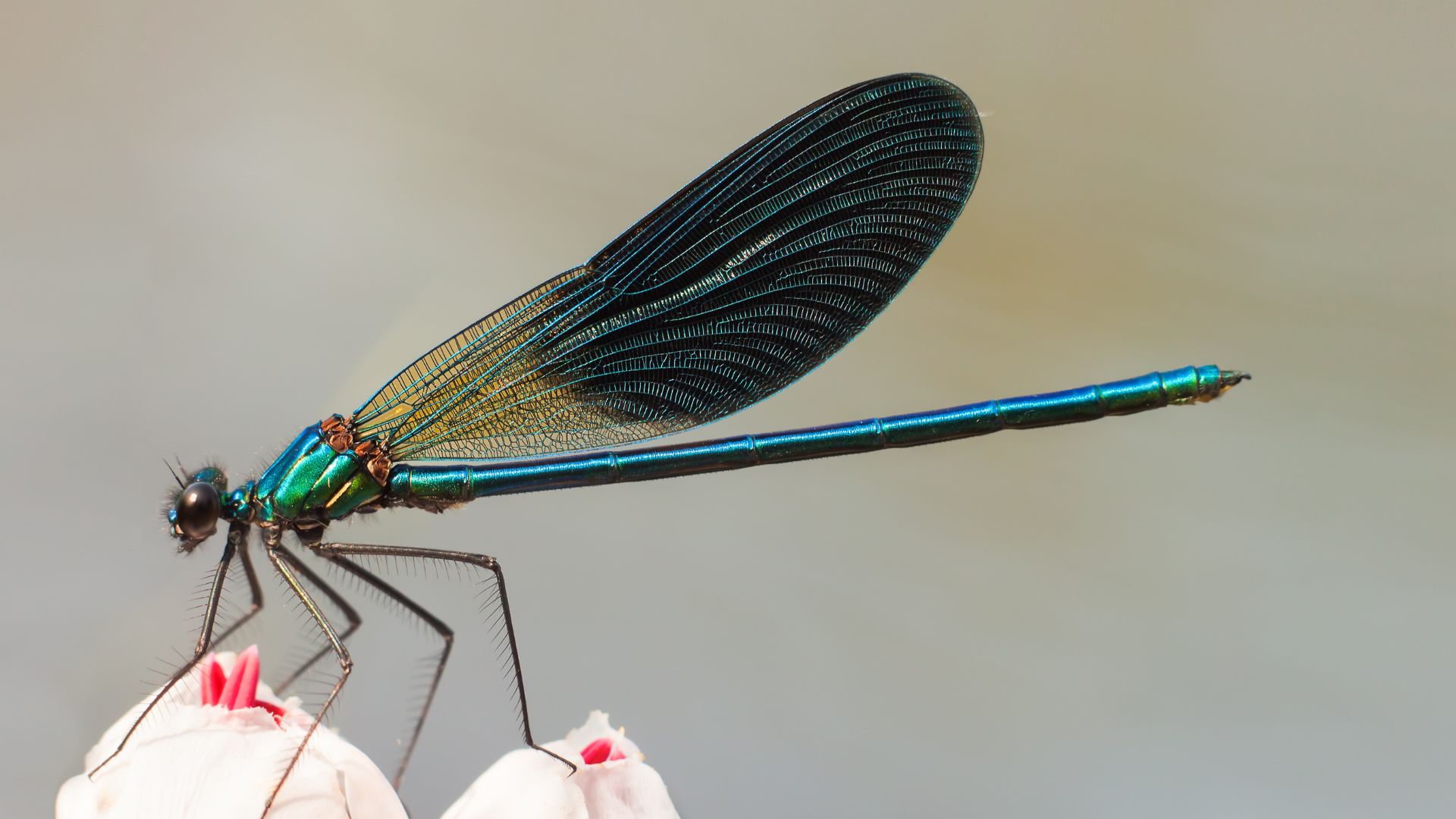
One striking example of this is the damselfly named Matronoides cyaneipennis. In males of this species, the hindwings display blue iridescence when viewed from above and green iridescence when viewed from below. Researchers have identified five-layered optical structures that closely resemble one another on both sides of the wing membrane. Small differences in the layer thicknesses of these structures play a role in the two surfaces reflecting different colors.
The presence of such sensitive structures, reflecting light in different ways on the two surfaces of a slender wing, is thought-provoking. Behind the beauty that we see merely as a gleam with our eyes lie details on a microscopic scale.
The blue and green gleams appearing on the slender wing of the damselfly are awe-inspiring examples of God's artistry of color. Our Lord, Who creates both light and the microscopic structures in the wing that interact with light, has brought into being a dazzling beauty in a tiny creature. Both the elegant order of the vein network in the wing and the beauty of the colors revealed by light are means by which we can see the subtleties in God's creation. The more a person reflects on these details, the better he appreciates the knowledge and artistry behind the beauty he sees; his admiration and love for our Lord increase.
The Order Behind the Mosaic Pattern
The polygonal compartments surrounded by veins in the wing resemble a mosaic when viewed close up. However, these visible compartments and the microscopic layers that produce the color are structures on different scales. In order to understand the beauty of the wing, one must look both at the pattern visible from the outside and at the properties of the material on a much smaller scale.
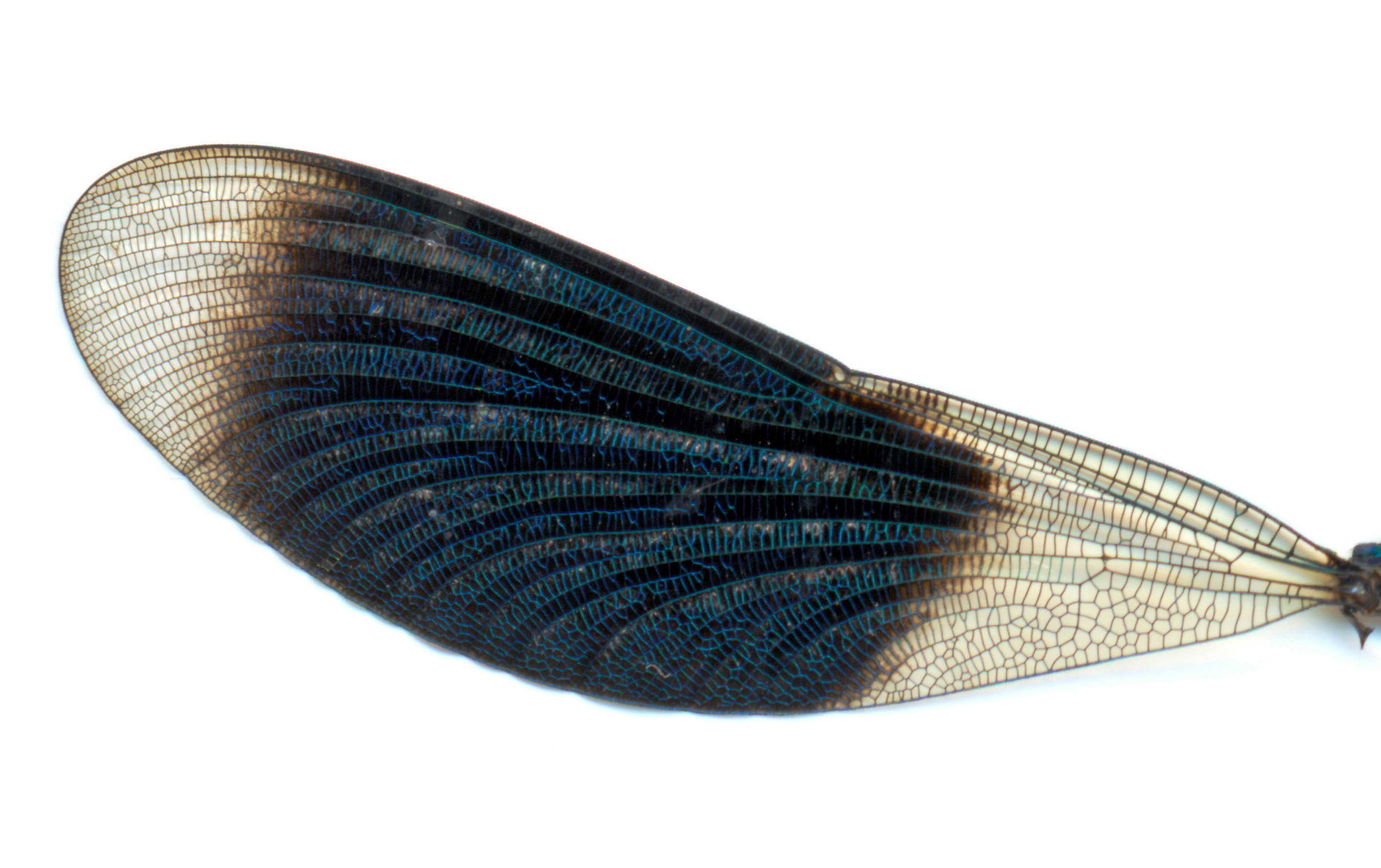
The wing is not merely a flat surface. The veins, thin membranes and folds affect how the wing changes shape during flight. The wing's bearing of loads, bending and twisting are related to the mechanical properties formed by these parts together. Thus, a structure that appears delicate at first glance functions as a mobile organ of flight. The relationship between the thinness of the wing and the forces it encounters during flight is one of the subjects studied by scientists.
Flexible Joints in the Wings
While some vein junctions in damselfly wings are more fixed, others are mobile. In the damselfly species examined, resilin is present on both the upper and lower surfaces of the wing at most mobile vein joints. These flexible joints help the wing bend and change shape during flight.
The flexibility of these joints is related to the twisting of the wing under aerodynamic forces. Researchers state that these flexible joints can temporarily store energy as the wing bends and may help soften the forces acting upon the wing. During flight, not only the material of the wing, but also the relationship between the movements of all four wings is important. The timing of the movements of the forewings and hindwings relative to one another can affect the aerodynamic forces produced. For example, during courtship displays, males of the species Chalcopteryx scintillans hover by beating their forewings while holding their copper-colored hindwings motionless and displaying them to the female.
A Small Detail at the Wingtip
On the leading edge of the wings of many damselflies, a small and distinct area can be seen near the tip. This section, known as the “pterostigma,” is heavier than the surrounding wing area of the same size. The position of this small mass on the wing can affect the wing's behavior during movement. In species examined in the Odonata group, it has been shown that the pterostigma can raise the speed threshold at which uncontrolled vibrations begin in the wing during gliding. The wing can thus function steadily at higher speeds as well. Thus, this detail, which at first glance appears to be merely a patch of color, also gains importance in terms of the functioning of the wing.
Life Underwater Before the Sky
The life of a damselfly begins in a form very different from its winged appearance. The larva emerging from the egg develops underwater. The slender-bodied larva generally has three leaf-like appendages at the tip of its abdomen. These structures contribute to respiration as external gills.
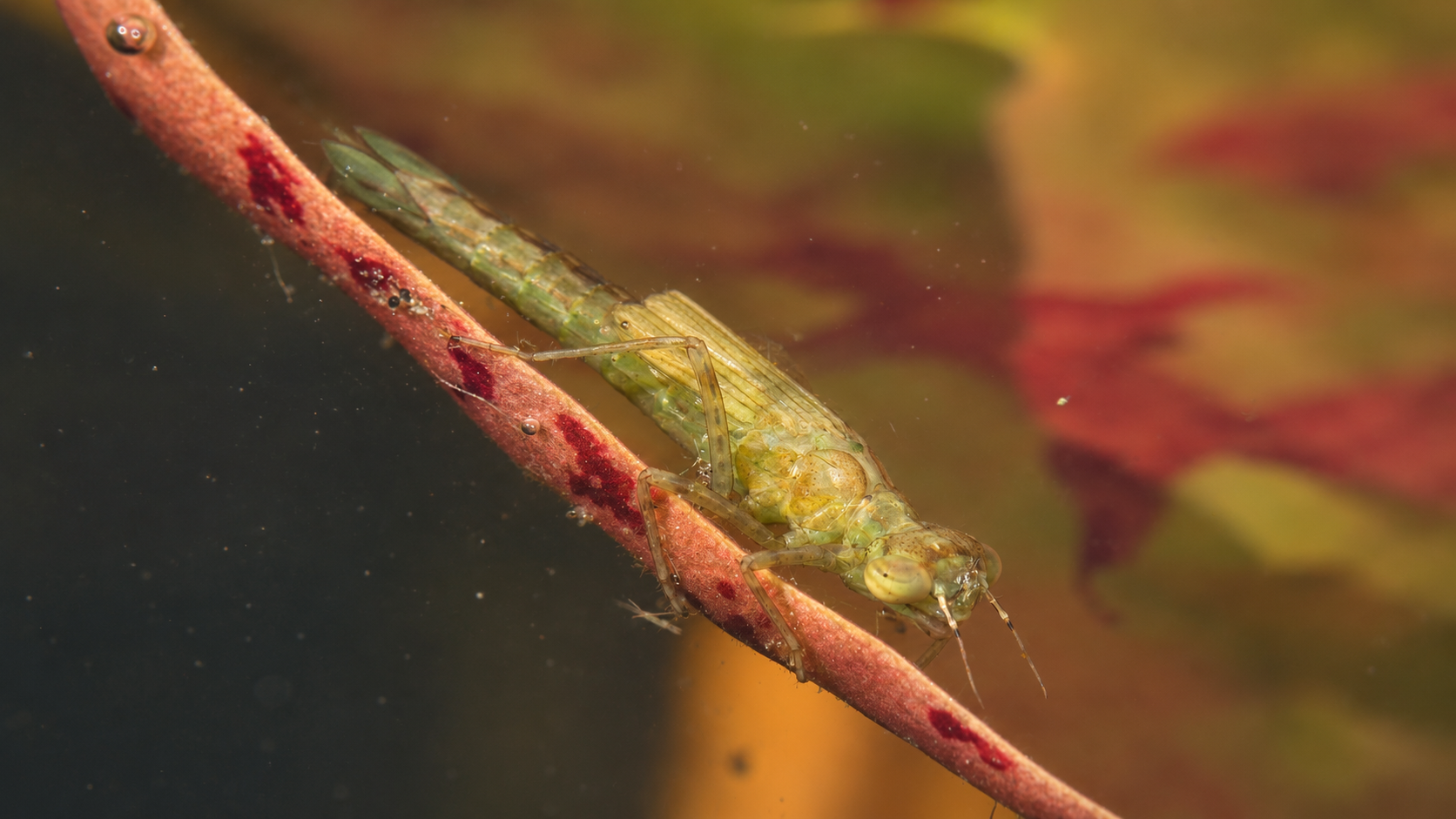
The underwater larva is also a predator. It uses the lower lip structure known as the “labium,” which remains folded beneath its head, to catch prey. This structure can rapidly extend forward and seize small aquatic creatures. Thus, among aquatic plants that appear calm from the outside, it leads an active hunting life.
The duration of the larval stage varies according to species and environmental conditions. The living thing, which grows throughout this period, continues its development by shedding its skin. It eventually reaches the stage at which it will leave its underwater life.
Before the First Flight
The larva that has completed its development emerges from the water and clings to a suitable surface. During the final molt, the winged adult emerges from the old larval skin. Its body and wings, which are soft at first, continue to change in order to become ready for flight.
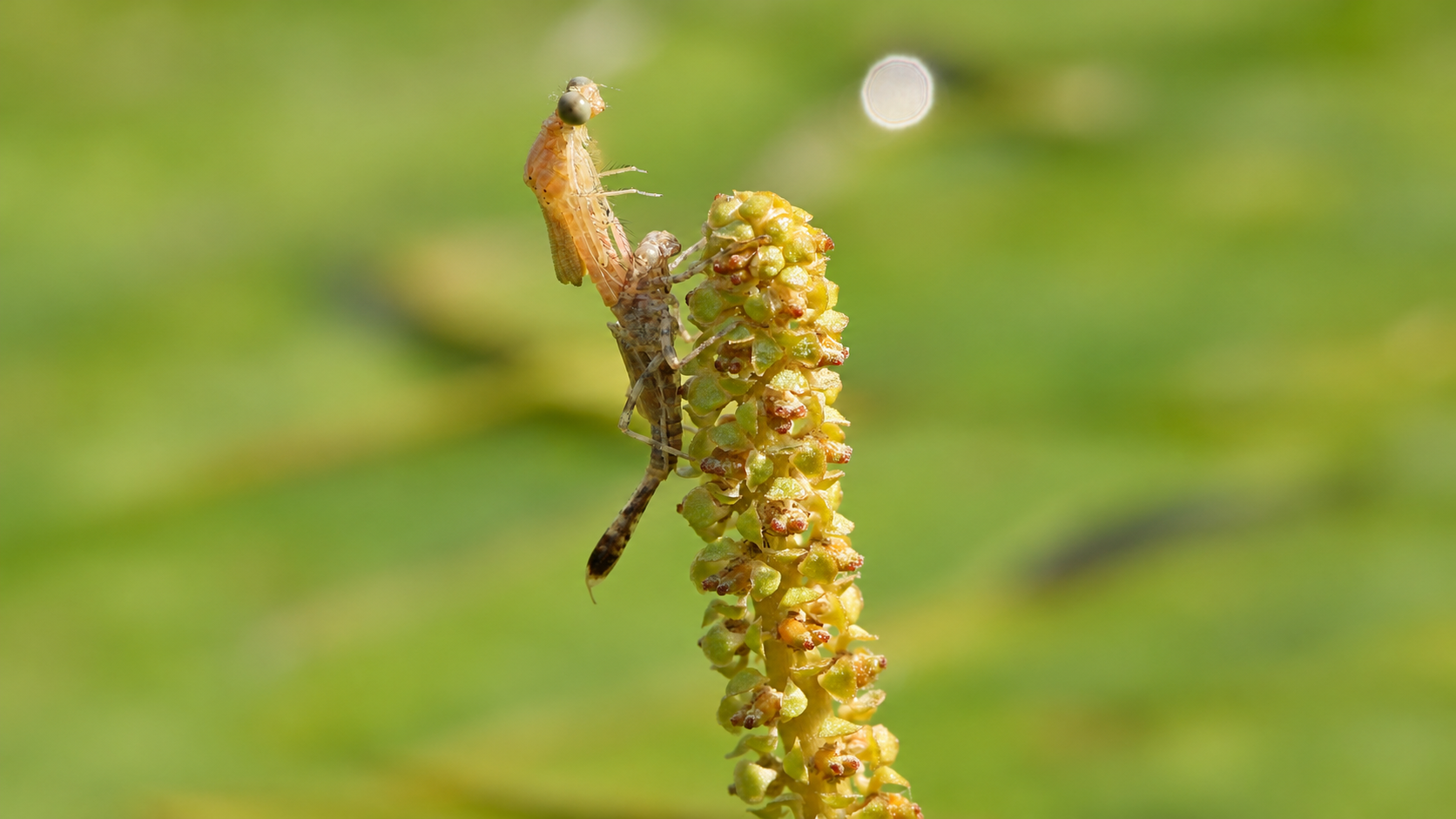
The wings expand and harden. The empty larval skin remains on the surface to which the creature clung. Unlike the life cycle of butterflies, damselflies have no pupal stage; the transition to adulthood takes place with the shedding of the final larval skin. This period before the first flight is a stage during which the creature is especially vulnerable. The creature that was hunting underwater a short while before is now ready to fly over the water.
From Tree Branches to Forest Hollows
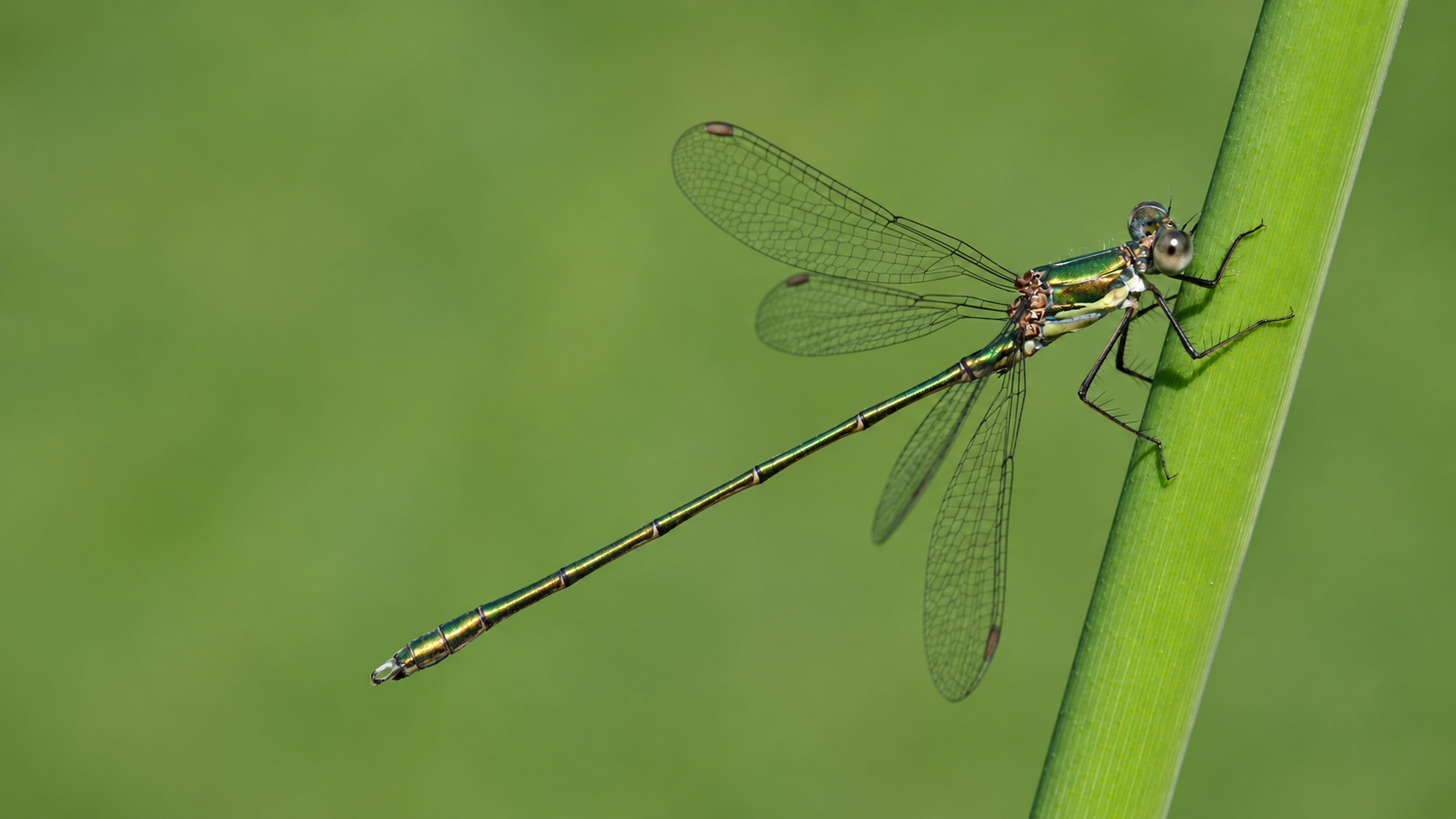
Different species of damselflies also draw attention with the diversity in their life cycles. Females of the species Chalcolestes viridis lay their eggs in the bark of tree branches over the water. The eggs can spend the winter there. In spring, the larvae that emerge from the eggs fall into the water below and continue their lives. The marks formed in the bark during egg-laying can make it possible to understand that the species has bred in that area even when the living thing itself is not seen.
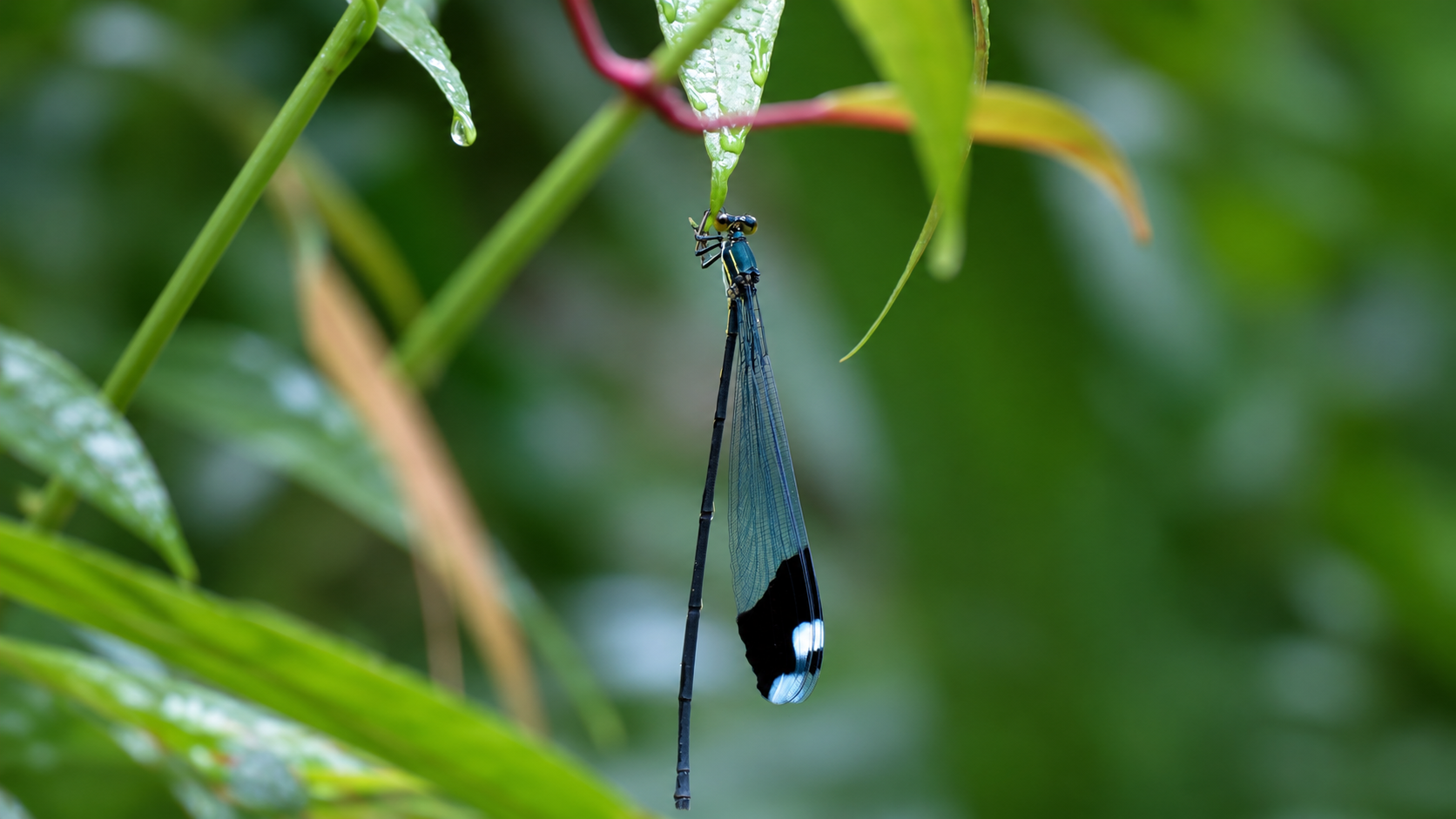
Megaloprepus caerulatus, which lives in tropical forests, draws attention with a wingspan that can reach approximately 19 centimeters. Adults can take spiders or prey caught in webs from spider webs. Their larvae also develop in water-filled hollows of large trees.
Water collected in the hollow of a tree may appear to be an insignificant detail when viewed from the outside. Yet there is a habitat here that also contains damselfly larvae. Studies show that these larvae are among the predators of mosquitoes that breed in tree hollows.
Magnificent Artistry Seen in a Small Living Thing
Microscopic layers that reflect light, veins that support the wing, flexible joints, gills that contribute to respiration underwater and a special organ used for catching prey... These features brought together in the life of the damselfly reveal the subtleties in creation. The colors and fine details we see in its wing are only one of the countless beauties of creation on Earth.
It is God, our Lord, Who creates the colors shimmering in the slender wings of the damselfly, the microscopic structures that are instrumental in the formation of these colors, and the systems that work together during flight. God has brought this small living thing into being with beauties in every detail in which we can see His knowledge, power and matchless artistry. When we reflect on a vein in the wing, a thin layer that reflects light or a stage of its life that begins underwater, our admiration for the subtleties in our Lord's creation increases still further. Even in this creature that we often pass by without noticing, there are many beauties that emerge as it is studied. All these details are means for us to love God with a deeper love, remember His glory and give thanks to our Lord, Who grants us the opportunity to know His artistry. God, the Owner of all the beauties we see and those we have not yet discovered, is free of every imperfection; praise belongs to our Lord, Who created the heavens, the earth and everything between them.
The flawless creation of our Lord, the Possessor of supreme power, is revealed as follows in a verse of the Qur'an:
“He is God – the Creator, the Maker, the Giver of Form. To Him belong the Most Beautiful Names. Everything in the heavens and earth glorifies Him. He is the Almighty, the All-Wise.” (Surat al-Hashr, 24)
Bibliography
Nixon, M. R., Orr, A. G. and Vukusic, P. (2013). “Subtle design changes control the difference in colour reflection from the dorsal and ventral wing-membrane surfaces of the damselfly Matronoides cyaneipennis.” Optics Express, 21(2), 1479–1488. https://doi.org/10.1364/OE.21.001479
Gorb, S. N. (1999). “Serial elastic elements in the damselfly wing: mobile vein joints contain resilin.” Naturwissenschaften, 86, 552–555. https://doi.org/10.1007/s001140050674
“Flight of the dragonflies and damselflies.” (2016). Scientific study on wing structure, flight mechanics and aerodynamics. https://pmc.ncbi.nlm.nih.gov/articles/PMC4992713/
Australian Museum. “Damselfly life cycle.” The life stages of damselflies and the respiration of larvae. https://australian.museum/learn/teachers/learning/damselfly-life-cycle/
Missouri Department of Conservation. “Damselfly Larvae.” The anatomy, feeding and prey-catching structure of larvae. https://mdc.mo.gov/discover-nature/field-guide/damselfly-larvae
British Dragonfly Society. “Life Cycle and Biology.” Larval development, the final molt and the transition to adulthood. https://british-dragonflies.org.uk/odonata/life-cycle-and-biology/
British Dragonfly Society. “Willow Emerald Watch.” The laying of eggs in tree bark and the life cycle of the species Chalcolestes viridis. https://british-dragonflies.org.uk/recording/willow-emerald-watch/
IUCN Red List. “Megaloprepus caerulatus.” The species' habitats, larval environment and feeding. https://doi.org/10.2305/IUCN.UK.2021-2.RLTS.T49254229A49256749.en
Fincke, O. M. and Hedstrom, I. (2008). “Differences in forest use and colonization by Neotropical tree-hole damselflies (Odonata: Pseudostigmatidae): Implications for forest conversion.” Studies on Neotropical Fauna and Environment, 43(1), 35–45. https://doi.org/10.1080/01650520701504597