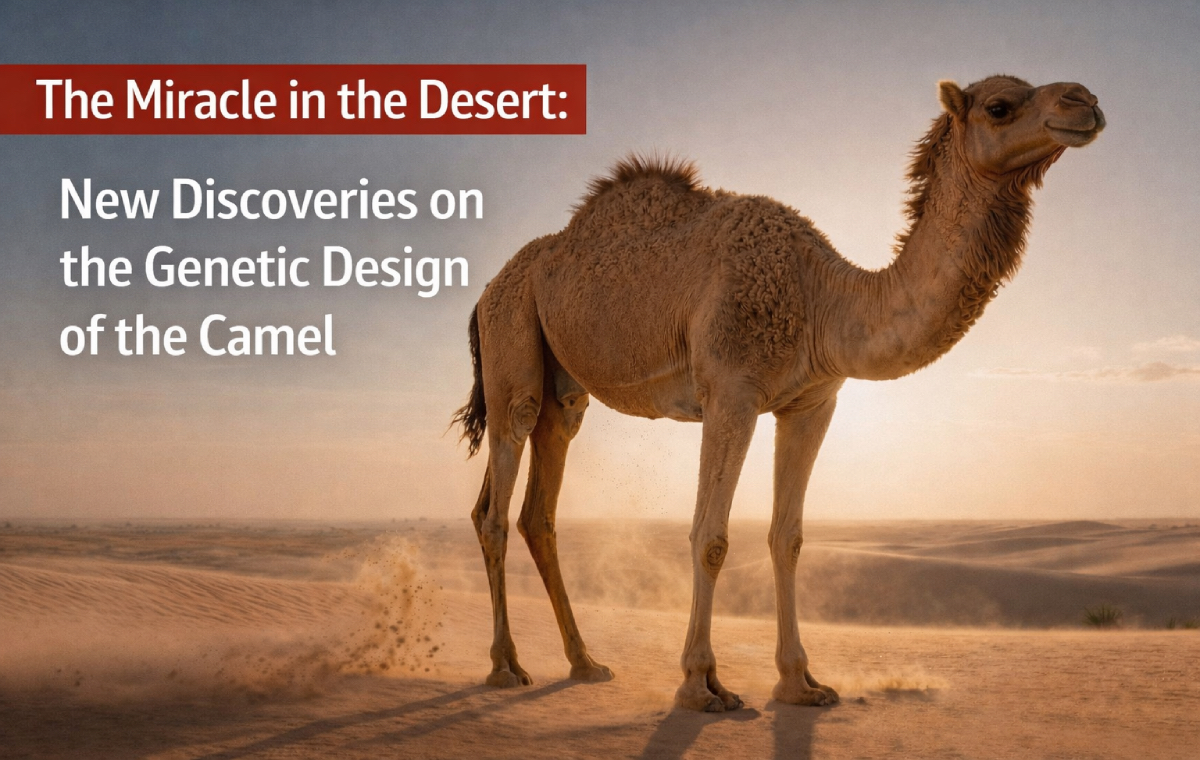
That camels are extraordinary creatures is apparent at first glance. They are capable of carrying hundreds of kilograms on their backs and traveling for days while enduring hunger and thirst. They astonish observers by thriving in the harshest natural conditions—amid scorching daytime heat, freezing nighttime cold, sandstorms, and arid desert environments.
Recent discoveries, particularly in the past years, have demonstrated that the so-called “Traveller of the Desert” is not only remarkable in its outward appearance, but also a marvel of design at the molecular level within its cells. It has thus been understood that special codes have been embedded in the camel’s DNA, enabling it to live even under the most extreme environmental conditions.
The Invisible Guardians of the Brain: Nanobody Technology
For years, the scientific community has grappled with the problem of drugs being unable to cross the blood–brain barrier. Contemporary research in immunology has revealed that the solution to this critical challenge has long existed as a natural system in the blood of camels.
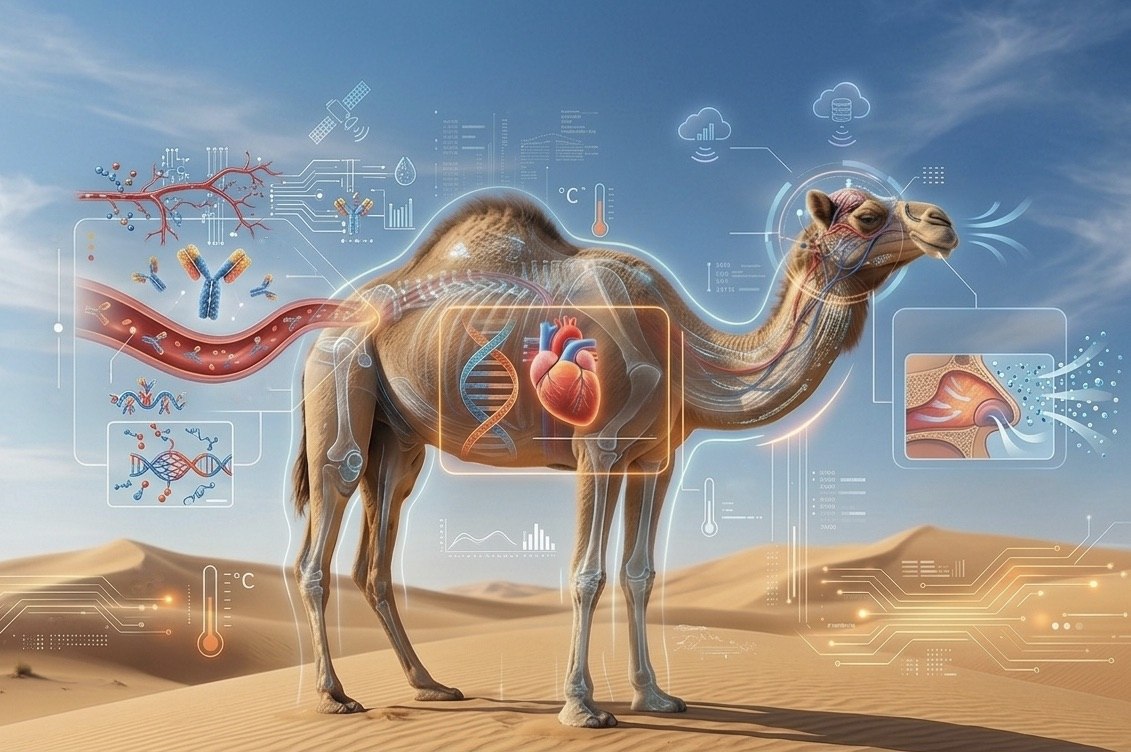
Unlike other mammals, camels possess unique antibodies known as “nanobodies,” which are exceptionally small, highly stable, and capable of penetrating even the deepest structures of the brain.[1] This technology—one that humanity has attempted to replicate in advanced laboratories with expenditures of billions of dollars—operates flawlessly within the camel’s circulatory system. Today, nanobody technology is opening groundbreaking new avenues in the medical field, particularly in the treatment of disorders such as Alzheimer's disease and schizophrenia.
This remarkable design within the camel’s blood is not limited solely to its unique antibodies. The animal’s erythrocytes (red blood cells) also exhibit a striking cellular architecture. Unlike those of other mammals, these cells are oval in shape, enabling the uninterrupted flow of blood through vessels even under conditions of severe dehydration, when blood viscosity increases. Recent microscopic studies conducted in 2024 have revealed that the membranes of these cells possess an extraordinary elasticity, stretching like a “spring” due to a specialized protein network known as spectrin.[2] Owing to this superior flexibility, even after prolonged dehydration, when a camel consumes more than 100 liters of water at once, its red blood cells are able to expand safely without rupturing. These two distinct yet perfectly coordinated systems within the blood constitute compelling evidence that every living being is endowed—completely and with profound wisdom—with the precise equipment it requires.
Protective Software in the Heart: A Specialized Gene
Genome sequencing results published in 2024 have explained at the genetic level how the camel’s heart withstands extreme temperature fluctuations. In camels, a unique gene region termed “NRAP exon 4,” not found in any other mammalian species, has been identified.[3] This gene enables the heart muscle to preserve its protein structure and maintain its rhythm even under conditions of thermal stress. When scientists transferred this gene into mice (so-called “camelized mice”), they observed that the animals’ cardiac muscle developed a significant resistance to both extreme heat and cold stress.
In short, the camel’s heart does not merely pump blood; it also functions as a form of “intelligent thermostat,” programmed to cope with severe temperature variations. The presence of such a highly specific and complex genetic code—precisely located, fully functional, and operating flawlessly—cannot be accounted for by random mutations or chance.
The Nose’s Two-Stage Moisture Technology
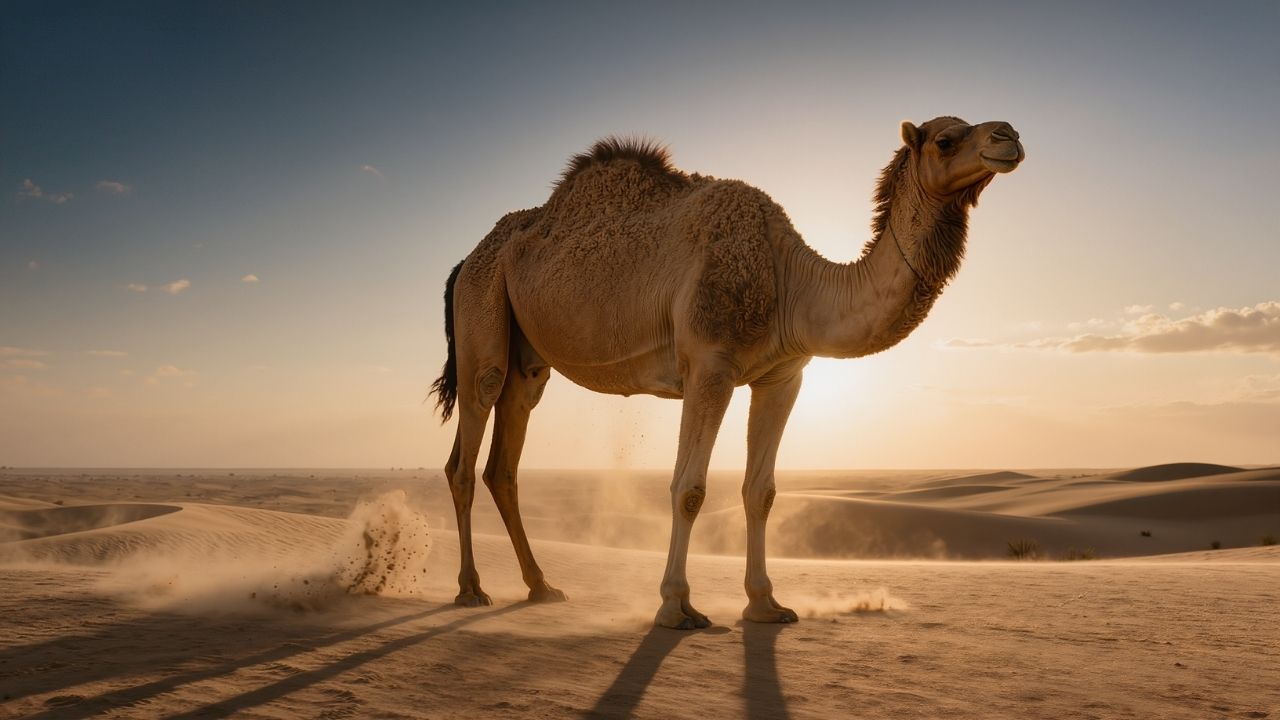
The secret behind the “Traveller of the Desert” being able to endure weeks without water lies not only in its hump, but also in the remarkable recycling system within its nose. Recent research has further detailed how the camel’s nasal mucosa exhibits hydrophobic (water-repellent) properties during inhalation and hygroscopic (water-retaining) properties during exhalation.[4] Through this mechanism, it is able to retain up to 90% of the moisture expelled from its lungs within its body.
This “moisture recovery unit,” a true engineering marvel, constitutes a crucial defense mechanism against dehydration in desert conditions. The fact that such a delicate chemical and physical transformation occurs within seconds on the inner surface of the nose represents an outstanding example of sophisticated design. Indeed, it has inspired modern human technologies, contributing to the development of devices capable of collecting water in arid desert environments.
The Brain Cooling Unit
The body temperature of the “Enduring Porter of the Desert” can rise up to 41°C under harsh desert conditions; however, its brain remains consistently cooler. Recent thermal imaging studies have clarified how this cooling is achieved. A heat-regulating system located just beneath the skull balances excessive heat: cooled venous blood arriving from the nasal region surrounds the warmer arterial blood en route to the brain, thereby lowering its temperature.[5]
This vascular network, which operates far more efficiently than the cooling systems of modern computers, functions like a highly specialized air-conditioning system unique to the camel. Indeed, scientists have described this complex network as the rete mirabile (“wonderful network”). The presence of such a delicate and vital mechanism precisely at the point where it is needed is a manifestation of the infinite knowledge of our Lord, Who creates all things in due measure and with wisdom.
Evidence of Creation in the Desert
The camel is not merely a desert animal capable of enduring harsh journeys. The findings of modern science confirm that it constitutes evidence of a specially designed creation in every detail, from the molecular level to its physical structure. Each of its cells is equipped in a manner suited to dwell under extreme desert conditions. What emerges from scientific research is not an “evolutionary coincidence,” but a highly coordinated and intricate proof of creation.
Encompassing all things with His infinite knowledge, God informs in the Qur’an of the remarkable nature of the camel’s creation in the following verses:
“Have they not looked at the camel - how it was created? And at the sky - how it was raised up? And at the mountains - how they were embedded? And at the earth - how it was smoothed out? So remind them! You are only a reminder.” (Surat al-Ghashiyah: 17-21)
[1] Hamers-Casterman, C., & Muyldermans, S. (2025 Update). “Single-domain antibodies: Perspectives in Neurological Drug Delivery.” Journal of Nanobiotechnology.
[2] Alhaddad, H., Alnughaimish, A., Alhajeri, D., & Alhajeri, B. H. (2024). “Towards phenotyping adaptive traits in camels: A study of the influence of hypotonic saline solutions on blood cell area.” PLOS ONE.
[3] Ming, L., Yi, L., & Jirimutu, J. (2024). “Comparative Genomics of Old World Camels: Identification of Heat-Stress Response Genes (NRAP Exon 4).” Nature Genetics.
[4] Wang, X., & Zhang, H. (2023). “Bio-inspired Hygroscopic Materials: Lessons from the Camel’s Nasal Cavity.” Advanced Functional Materials.
[5] O’Malley, K., et al. (2025). “Thermal Mapping of Cranial Vasculature in Desert Mammals.” Advanced Thermal Biology.