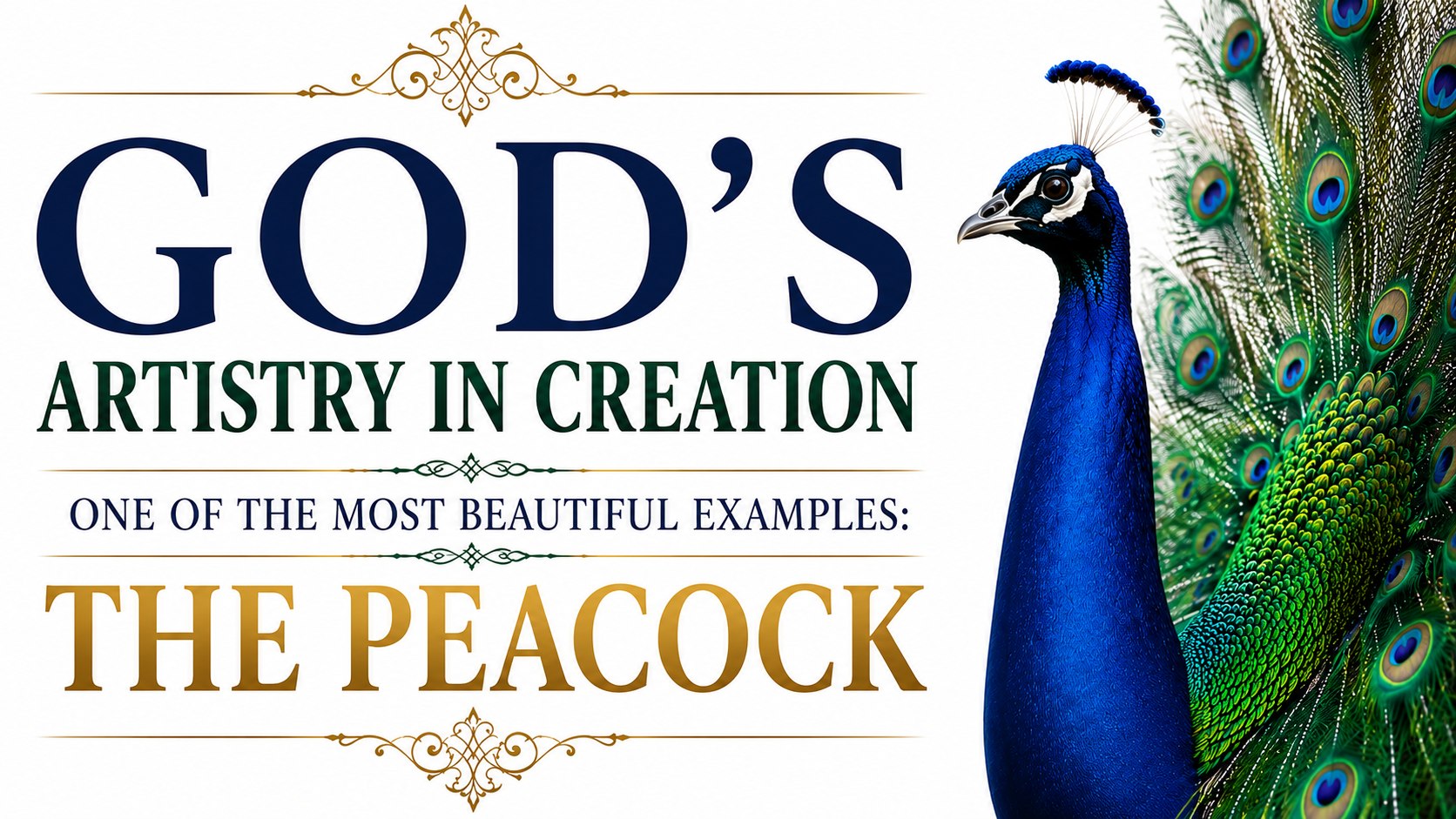
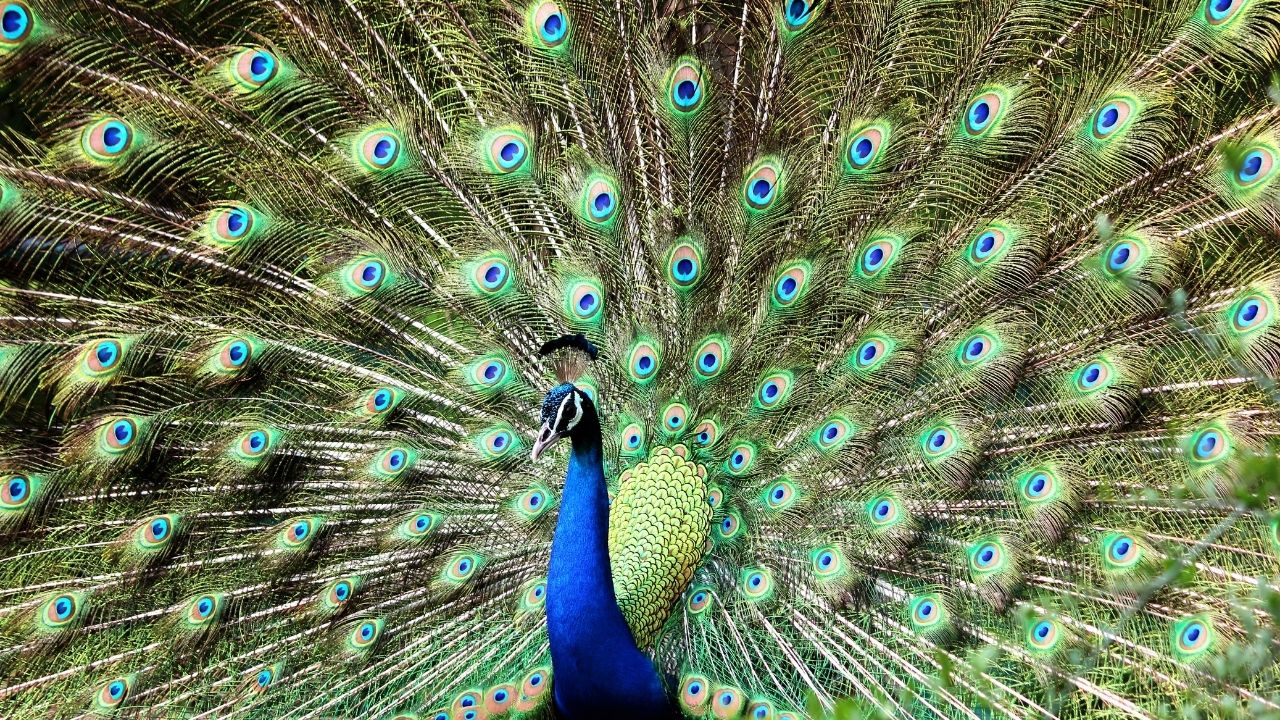
When the living creatures on Earth are examined, it is clearly seen that each one is a distinct work of art, wisdom, and miracle of creation. Nevertheless, there are certain living creatures whose manifested aesthetic qualities, engineering, and design marvels lead people to deep reflection. The peacock is one of the most remarkable examples of these.
At first glance, this bird inspires admiration merely through its dazzling colors. In reality, however, it is equipped with complex systems that are the subject of research in many branches of science, ranging from nanotechnology and optics to biophysics and zoology. As scientific research advances, it is becoming better understood that the beauty observed in the peacock is not merely a visual ornament; on the contrary, it is a unique work of art brought about through extremely precise measurements, balances, and calculations. In each of its feathers can be seen examples of advanced technologies that humanity has only begun to discover during the last century.
The Nanotechnology Miracle Behind the Colors
The secret of the dazzling blue, green, and purple colors seen in the peacock’s tail is far more astonishing than one might think at first glance. For these colors do not arise from any pigment.
Studies conducted using electron microscopes have revealed the presence of highly ordered nanometric structures composed of the protein keratin within the feathers. These structures, which exist on the scale of one billionth of a meter, function in a manner similar to the systems that modern science refers to as “photonic crystals.”
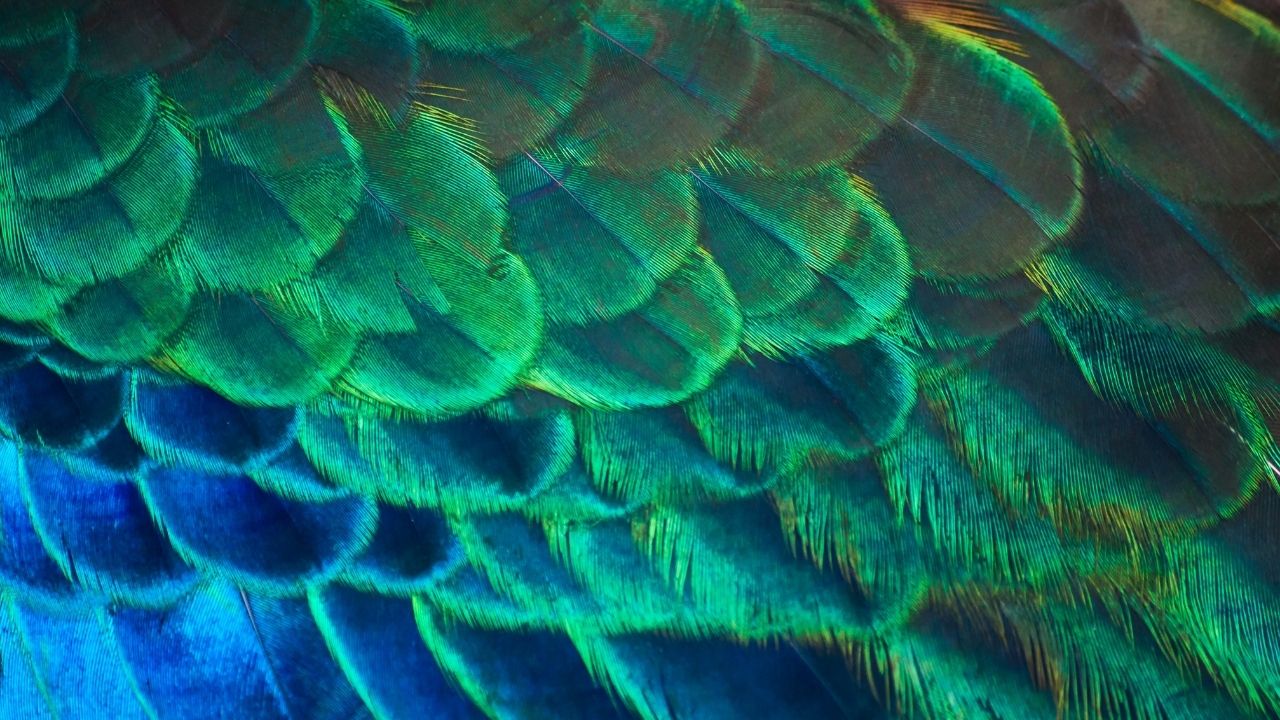
Through this microscopic architecture, certain wavelengths of light are amplified while others are blocked. As a result, the peacock’s dazzling colors emerge. Research shows that approximately 140-nanometer gaps are necessary for the formation of the color blue, while approximately 150-nanometer gaps are necessary for the formation of the color green. This extremely precise scheme, operating at the nanometer scale, reveals the fine measure and flawless design in creation.
Even an extremely small change occurring within these dimensions could disrupt the formation of the colors and cause this unique appearance to disappear. Such a highly precise system leads one to reflect on the following question: Can this flawless scheme and engineering marvel, operating at the nanometer scale, be the product of chance? The answer to this question is very clear: Such intricate calculations, delicate balances, and perfect harmony demonstrate the existence of a superior knowledge, infinite power, and unparalleled creation. The possessor of this supreme power is God, the Lord of the worlds.
“... No, everything in the heavens and earth belongs to Him. Everything is obedient to Him.”
(Surat al-Baqara, 116)
Photonic Crystals and the Perfect Administration of Light
Today, scientists are conducting extensive research to develop advanced photonic systems capable of administering light. However, the peacock has been utilizing a similar form of this advanced technology in the structure of its feathers for millions of years.
The photonic crystals found within the feathers direct incoming light with extraordinary precision, almost like an engineer. Which color will emerge, which wavelengths of light will be reflected, and which will be blocked have, as it were, been determined according to a flawless plan.
It is highly remarkable that these advanced optical systems, which humanity has only been able to discover in recent years, are present within a tiny feather in complete harmony. This delicate structure, operating at the nanometer scale, demonstrates the superior order, fine measure, and flawless planning in creation.
This extraordinary system observed in each of the peacock’s feathers is one of the manifestations of the infinite knowledge and unparalleled artistry of Almighty God. In the face of this perfect order, one gains a deeper understanding of the wisdom and power behind creation.
The Optical Art Manifested in Iridescent Colors
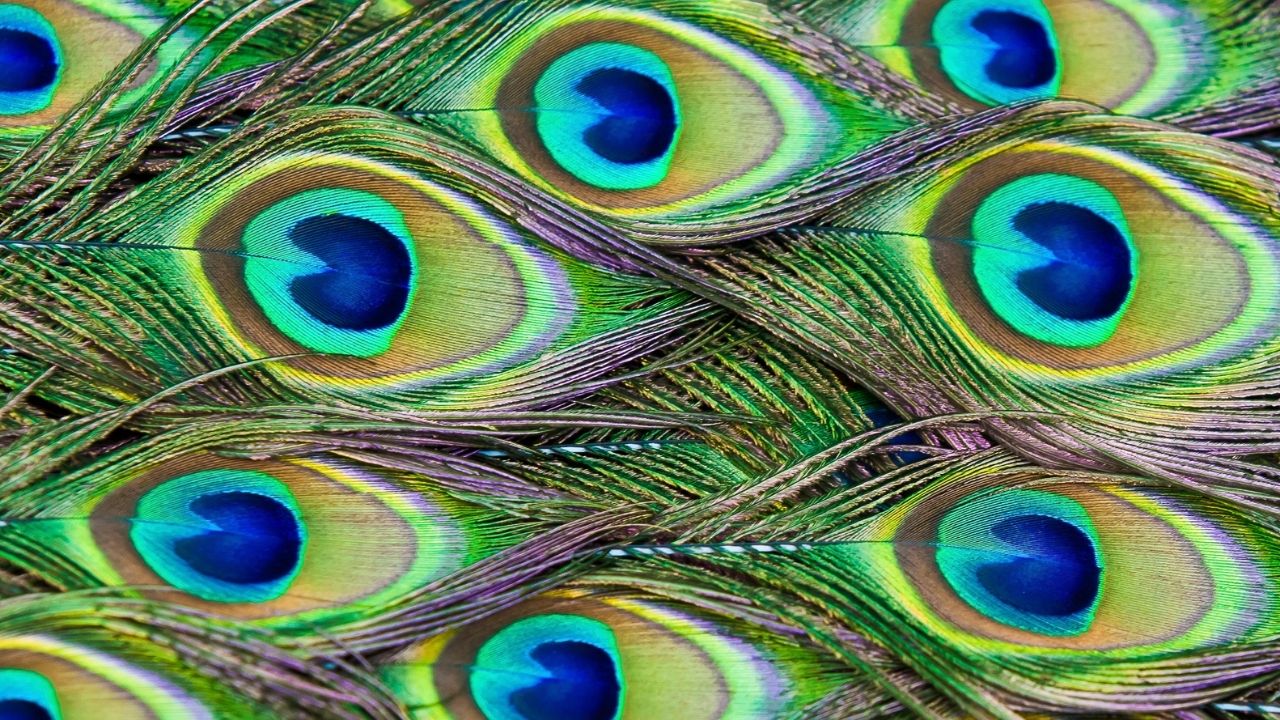
The colors observed in the peacock’s feathers are not only brilliant, but also vary according to the viewing angle. This feature, referred to in the scientific world as ‘iridescence,’ arises as a result of light undergoing interference on multilayered microscopic structures.
When the bird is viewed from different angles, the colors perceived by the observer also change. The reason for this is that light is refracted, reflected, and interacts in different ways within the microscopic layers on the surface of the feathers. Thus, the same feather can be seen in different shades of color when viewed from different angles.
The play of colors observed in soap bubbles or oil droplets are simple examples of this physical principle. However, the phenomenon that occurs in the peacock takes place within a far more delicate and complex scheme. In each ‘eye’ pattern on the tail, how light will behave and which color will be seen from which angle have been determined with extremely fine measure.
This extraordinary system displays a state in which the laws of physics have, as it were, been transformed into a work of art on a living organism. This aesthetic appearance seen in the iridescent colors of the peacock is one of the remarkable manifestations of the fine artistry, flawless measure, and supreme wisdom in the creation of Almighty God.

Aesthetic That Bears a Load: A Biophysical Marvel
The peacock’s magnificent tail can reach a length of approximately two meters. Despite this, the bird is able to carry this large structure with ease, move freely, and fly when necessary. This demonstrates how superior the biological design possessed by the peacock is.
The primary reason for this is that the feathers possess an extraordinary bioengineering structure. The shaft located at the center of the feathers, although hollow, has been created with an extremely lightweight and durable architecture. In this way, weight is minimized while a high level of strength is achieved.
This structure resembles the honeycomb designs used in engineering today. In such systems, maximum strength is obtained through the use of a minimum amount of material. This feature observed in the peacock’s feathers is one of the impressive examples of the understanding of efficiency and balance in nature.
While modern engineers strive to achieve the same level of efficiency by designing similar structures, the peacock has been utilizing this flawless system since the day it was created. This situation reveals the superior knowledge and flawless creation of Almighty God as manifested in living creatures.
The Secret of Tail Vibrations and Infrasonic Communication
For many years, the peacock’s magnificent tail was thought to be merely a visual ornament. However, scientific research has revealed that this impressive structure possesses important functions beyond its aesthetic appearance.
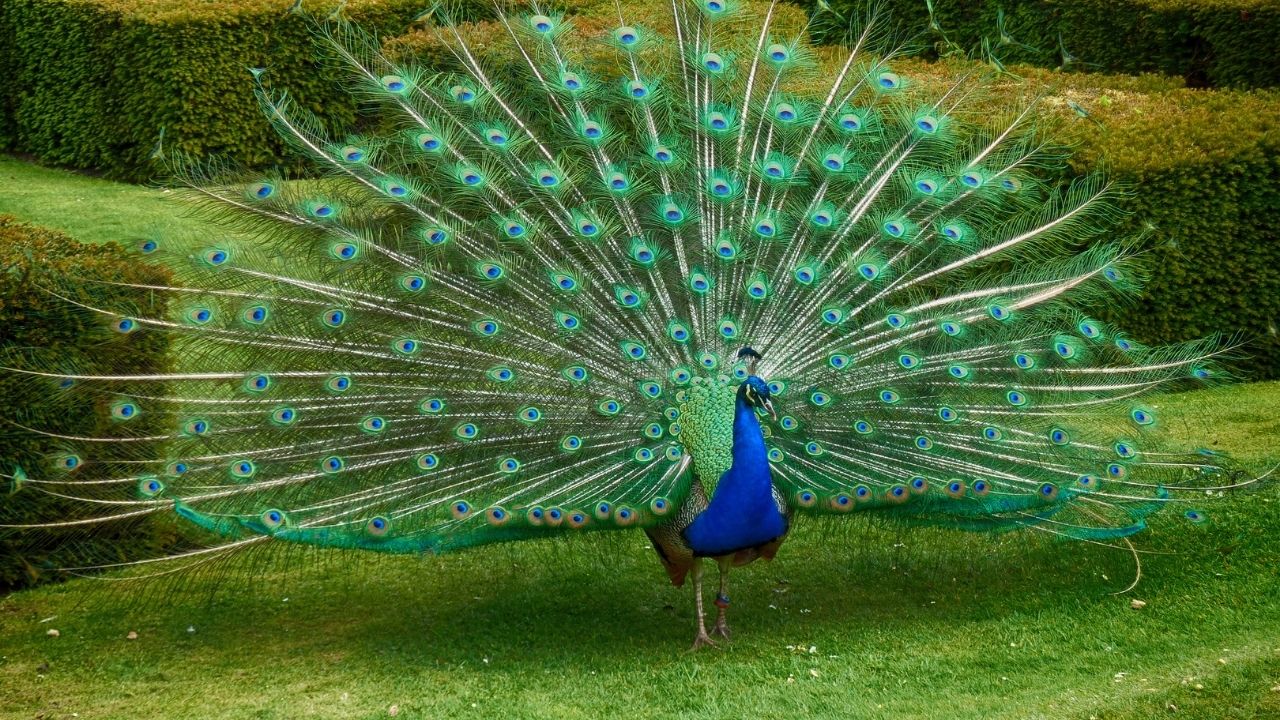
When male peacocks vibrate their tails, they produce infrasonic vibrations and sounds at frequencies too low for humans to hear. These signals are capable of propagating effectively and reaching long distances even in environments with dense vegetation.
Even more remarkable is the fact that the vibration frequency of the tail occurs approximately 25–28 times per second, and that this value is in harmony with the natural resonance frequency of the feathers. In this way, the peacock is able to achieve maximum effect while expending minimal energy and can transmit communication signals with extraordinary efficiency.
This extraordinary system is one of the remarkable examples of energy efficiency and delicate biophysical design in nature. Demonstrating that every detail has been brought into existence in accordance with a specific purpose and wisdom, this structure is one of the manifestations of the infinite knowledge and supreme power of Almighty God.
The Acoustic Antenna Hidden in the Crown Feathers
The elegant crown feathers adorning the peacock’s head do not merely provide an aesthetic appearance; they also serve important functions. Scientific studies have revealed that these special feathers are sensitive to the vibrations produced by male peacocks.
The crown feathers on the head of the female peacock resonate with vibrations of certain frequencies, functioning almost like a biological antenna. In this way, the female bird is able to detect and distinguish signals from its mate among many other sounds and vibrations in its environment.
This highly sensitive perception system demonstrates how finely measured the communication mechanisms in living beings have been designed. This structure, reminiscent of modern wireless communication technologies, reveals how impressive the biophysical characteristics of the peacock are.
The fact that a few fine feathers located on the head can perform such a delicate sensing function once again demonstrates the superior wisdom and flawless planning in creation. This remarkable system in the peacock is one of the manifestations of Almighty God’s unique artistry over living beings, His infinite knowledge, and His supreme power.
Mathematical Geometry in the ‘Eye’ Patterns
Each ‘eye’ pattern located in the peacock’s tail is, in itself, a masterpiece of design and artistry. The symmetry, color harmony, and geometric order observed in these patterns reveal the existence of an extremely precise organization.
During feather development, thousands of cells work simultaneously and in harmony. These cells, which appear to function independently from one another, ultimately produce patterns with perfect symmetry and aesthetic integrity. Each cell contributes to the formation of this magnificent appearance by being in the right place, in the right color, and in the right structure.
To claim that such a high level of coordination and mathematical order occurs by chance would be as irrational as claiming that countless parts randomly come together to form a flawless work of art. The extraordinary geometry seen in each feather of the peacock is one of the manifestations of the superior artistry, infinite knowledge, and flawless measure in the creation of Almighty God. Indeed, every order, balance, and beauty observed in the universe demonstrates that God “has created everything according to a measure.”
Biomimetics: Lessons Humanity Takes from the Peacock
Today, scientists are attempting to develop new technologies by drawing inspiration from superior designs in nature. This approach is called ‘biomimetics’ and aims to adapt systems found in living organisms into engineering applications. The peacock is one of the living creatures that inspires researchers in this field.
Inspired by the structural color technology found in peacock feathers, fabrics and surfaces capable of producing color without the use of dyes are being developed. In addition, studies are being conducted on low-energy-consuming displays, advanced security systems, and optical authentication technologies.
Peacock feathers also provide protection by reflecting ultraviolet (UV) rays to a certain extent. Based on these properties, researchers are working on developing materials that utilize sunlight more efficiently and surfaces that enable energy savings.
All of this shows that systems existing in nature guide human technology. While humanity uses advanced laboratories and complex engineering methods to produce similar systems, the peacock has been using these extraordinary structures in a flawless manner since the moment it was created.
This situation demonstrates that living beings in nature are not merely biological entities; they are also manifestations of superior knowledge, wisdom, and artistry. Every detail observed in the peacock is one of the striking pieces of evidence revealing the perfection and infinite knowledge in the creation of Almighty God.
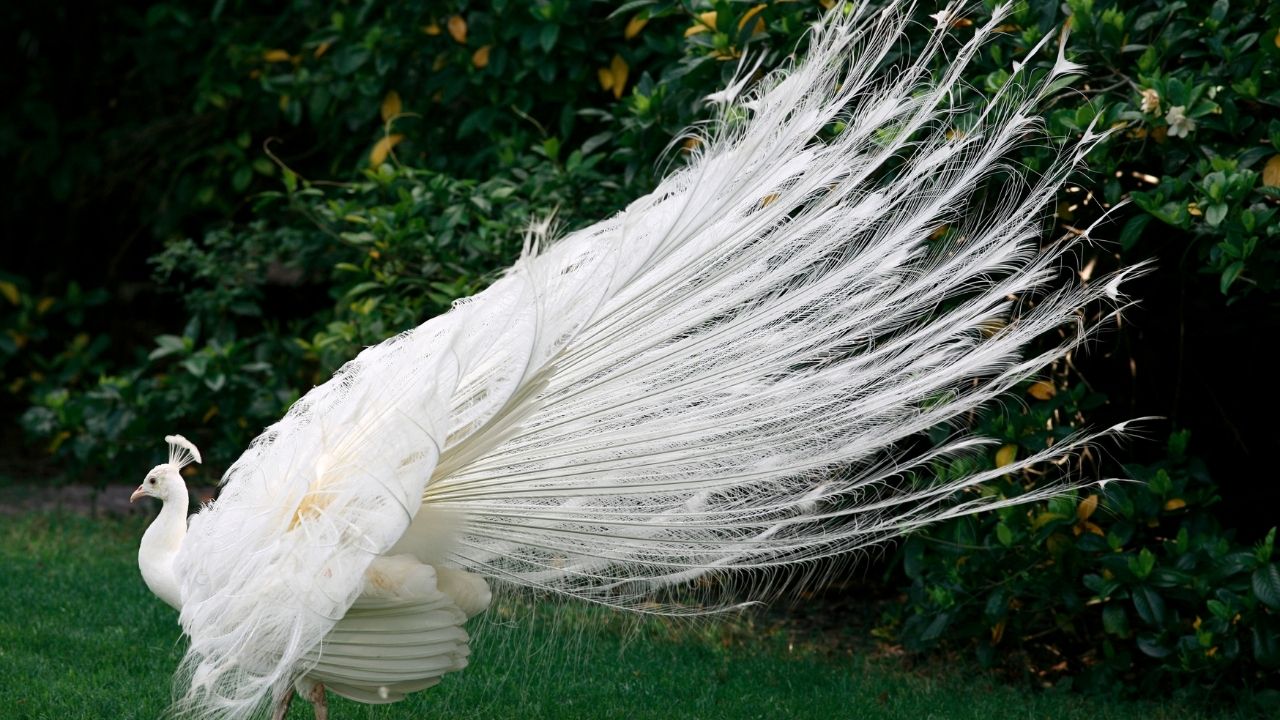
The Aesthetics of Geometry in the White Peacock
The white peacock is one of the examples showing that aesthetics in creation is not limited to colors alone. In these birds, when the striking effect of color is absent, the perfect geometric order, symmetry, and proportions in the feathers become much more apparent.
Details that may be overshadowed by colors are revealed with full clarity in the feathers of the white peacock. The arrangement of each feather, the harmony of the patterns, and the overall architecture of the tail display an admirable order and balance. In this way, the eye is directed not so much to color, but rather to the mathematical harmony and geometric perfection behind the structure.
This situation shows that true beauty is manifested not only in colors, but also in order, proportion, balance, and harmony. The white peacock is a living reflection of geometric artistry and aesthetic integrity in creation.
The perfect symmetry and measure seen in its feathers present a small yet striking example of the order prevailing in the universe. In this respect, the white peacock is one of the remarkable manifestations of the fine artistry, superior wisdom, and flawless measure in the creation of Almighty God.
The Peacock: An Awe-Inspiring Proof of Creation
Those who defend Darwin’s theory of evolution argue that the aesthetic beauty found in nature emerged as a result of random processes. However, as seen in the example of the peacock, even in the smallest detail of this magnificent structure, an extremely precise order based on mathematical, physical, and engineering principles is evident. This indicates an extraordinary design and measure in which light is administered at the atomic level.
Indeed, Charles Darwin is said to have admitted, with a sense of helplessness, that he could not explain the magnificent feathers of the peacock within the framework of his own theory. In a letter he wrote to Asa Gray dated April 3, 1860, he included the following words:
In the same letter, he also used the following expression:
In this context, the question arises as to whether a living organism whose purpose is survival and reproduction truly requires such advanced nanotechnological structures, a flawless optical system, and an atomically precise order; and the claim that such a perfect system could emerge as a result of random processes cannot be answered from the standpoint of both scientific observation and logical evaluation.
Here, only one reality emerges: the peacock is a remarkable example of creation in which photonic crystals operating at the nanometer scale, precise optical arrangements, acoustic antennas, energy-efficient biological structures, and extraordinary engineering harmony come together. Each feather reflects the infinite knowledge of God; the diversity of colors reflects His unique artistry; and each pattern reflects the subtlety of His flawless creation. The peacock is only one of the striking pieces of evidence revealing the magnificence of creation.
The flawless creation of God is revealed in a verse of the Qur’an as follows:
“He is God – the Creator, the Maker, the Giver of Form. To Him belong the Most Beautiful Names. Everything in the heavens and earth glorifies Him. He is the Almighty, the All-Wise.”
(Surat al-Hashr, 24)
References:
- Francis Darwin, The Life and Letters of Charles Darwin, Volume II, From Charles Darwin to Asa Gray, April 3rd, 1860
- Dakin, R., & Montgomerie, R. (2013). Eye for an eyespot: How iridescent plumage ocelli influence peahen mate choice. Behavioral Ecology, 24(5), 1048–1057.
- Dakin, R., McCrossan, O., Hare, J. F., & Montgomerie, R. (2016). Biomechanics of the peafowl crest reveals frequencies tuned to social displays. Journal of the Royal Society Interface, 13(119), 20160026.
- Kinoshita, S., Yoshioka, S., & Miyazaki, J. (2008). Physics of structural colors. Reports on Progress in Physics, 71(7), 076401.
Vukusic, P., & Sambles, J. R. (2003). Photonic structures in biology. Nature, 424(6950), 852–855.
- Zi, J., Yu, X., Li, Y., Hu, X., Xu, C., Wang, X., Liu, X., & Fu, R. (2003). Coloration strategies in peacock feathers. Proceedings of the National Academy of Sciences, 100(22), 12576–12578.