Darwinism proposes that living species were not created independently, but rather originated from a single-celled microorganism. However, this narrative faces a profound impasse in the field of genetics, just as it does in many other areas. That hypothetical ancestral cell would somehow have had to contain all the genes possessed by living organisms today. This is because mutations cannot produce new information or create entirely new genes; they can only cause rearrangements, deletions, or duplications among existing genes. For this reason, Darwinism requires that this supposedly first ancestral cell contained all the genes of the millions of species that exist today. Moreover, the genes of billions of extinct species must also have been inherited from this original cell.
Although it is rarely stated openly, this is in fact a fundamental problem that shakes evolutionary theory at its core. Evolutionists are also aware that genuinely new information cannot simply arise later. Whenever they attempt to establish genetic relationships among living species, this problem inevitably emerges. Neither mutations nor natural selection can generate new genetic information capable of coding for a completely novel and functional protein. But then how can the origin of unique proteins—found in certain species and with no identifiable ancestor in other organisms—be explained? It is precisely at this point that certain concepts emerge, reflecting the difficulty evolutionists face. These are the so-called “orphan genes”—genes that appear suddenly and seemingly without ancestors. In order to add a scientific tone and a touch of mystery to the phenomenon, the Latin term de novo is used, meaning “from the beginning” or “appearing from nothing.”
The Evolutionary Impasse: Unique Genes
Genome analyses reveal that approximately 10 to 30 percent of the genome of nearly every species consists of these “orphan” genes whose so-called evolutionary ancestry cannot be identified.[1] Clearly, these proportions are not amounts that can simply be dismissed as “rare” exceptions. A significant portion of these genes take role in essential physiological functions.[2]
For example, the antifreeze glycoproteins (AFGPs) that prevent the blood of fish living in the freezing waters of the Arctic from freezing are synthesized by such “orphan” genes. These proteins are unique to this particular group of fish and show no similarity to any other known proteins.[3]
Similarly, the ARHGAP11B gene, found only in humans, is responsible for the development of the neocortex, the brain layer believed to be central to higher cognitive processes. This gene is unique to humans and has no known equivalent in other organisms.[4]
Imagine entering a library where thousands of books are said to have been written by copying from one another. Yet when you open one of these books, you find an entirely new section containing information never mentioned in any of the others. Such a discovery would naturally cause you to question your understanding of the library. But when you notice that every book contains entirely different information, you would inevitably conclude that these books are not copies or continuations of one another. Each book must have been written and published independently.
For this reason, unique genes found only in certain organisms represent one of the most significant challenges to evolutionary theory. These genes were not copied or transferred from a supposed ancestor; rather, they were created exclusively for the organism in which they are found. This fact indicates that life did not arise through the “gradual transformation” of a hypothetical ancestral microorganism, but that each species was created with its own unique and flawless genetic program. One species is not the ancestor or descendant of another; there are no genealogical chains linking them, nor are there large families encompassing different species.
The Collapse of the Dogma “Genes Come Only from Genes”
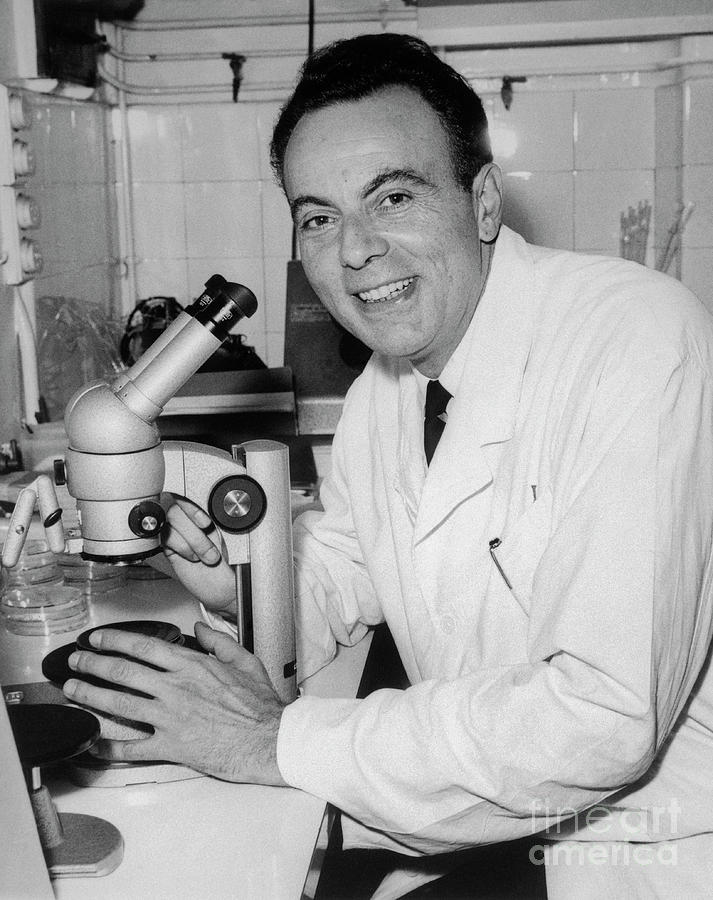
The profound incompatibility between modern genetics and evolutionary theory is not difficult to observe. One need only examine the statements of evolutionary proponents themselves. For example, the Nobel Prize–winning French geneticist François Jacob famously described evolution as a “tinkerer.”[5] According to Jacob, evolution can never produce a component from scratch; it can only bend and reshape the old parts it already has to “fabricate” something new.
In this analogy, evolution is like a repairman possessing a box filled with old genetic parts. When a new function is required, evolution supposedly copies an existing gene and then modifies that copy slightly, “patching” it for another purpose.
As can be seen, Darwinism fails to explain how genes—and the unique proteins they encode, along with their precise functional roles—originated in the first place. Even Jacob, while attempting to explain how existing structures might change through his “tinkerer” metaphor, contradicts the findings of modern genetics. Other Darwinists are not very different. Many still claim that proteins emerge through the recombination of existing protein fragments, much like different arrangements of Lego blocks. In other words, they argue that “no new word is written; only existing words are rearranged” in order to make the story of evolution appear plausible.
Today, however, it has become clear that such explanations are inadequate. Because the unique genes that evolutionists are forced to call ‘orphan’ genes are precisely the genes that are not found in Jacob’s famous ‘box of spare parts.’ Modern genetics now says: “There are thousands of genes in the genome that exist in no other organism, that were ‘not assembled from old parts’, but were written from scratch.”
Darwinists have therefore been forced to acknowledge the existence of “de novo” genes—genes that arise anew without identifiable predecessors, something Jacob himself had considered impossible. This has brought them back to the very nightmare they have long tried to escape. The nucleotides that make up DNA do not arrange themselves randomly when coding for genes and functional proteins; rather, they are ordered by the infinite power of an infinite intelligence that possesses knowledge of all things. Life and living systems are not the product of a chance-based puzzle assembled like Lego pieces, but the work of a higher intelligence.
Desperate Confessions from Evolutionists

Prof. Dr. Diethard Tautz, who has sought to reconcile genetics with evolution, was compelled to acknowledge the shock he experienced in the face of genome sequencing results by saying in summary that: “It was once thought that genes always evolved from pre-existing genes. However, we now know that genes can also arise ‘de novo’ (from nothing/from scratch). This has been one of the greatest surprises in genetics over the past ten years.” [6]
Similarly, Sushma Naithani and her colleagues, in a 2024 study, described the origin of such genes as a “mystery” and summarized the difficulty faced by evolutionary theory in striking terms: “The origin of orphan genes remains one of the most challenging questions in molecular biology. Explaining how a functional protein can emerge from nothingness is the most challenging frontier of evolutionary theory.” [7]
According to Prof. Dr. Eugene V. Koonin, head of the Evolutionary Genomics group at the U.S. National Institutes of Health (NIH), “the origin of orphan genes is one of the deepest and most unresolved problems facing modern evolutionary biology.”[8]
The crisis that orphan genes have created among evolutionists can be summarized in their own words: “These genes challenge everything we thought we knew about the gradual progression of evolution.”[9]
The Meaning of “De Novo” and the Reality of Creation
In order to describe this phenomenon, evolutionary biologists have been compelled to use the term “de novo.” This refers to entirely new genetic codes that bear no resemblance to any previously existing gene sequences.
Undoubtedly, their use of this expression amounts to an admission that the theory of evolution has collapsed. For the ideology of evolution is based on the premise that nothing can arise from nothing. Accepting that an entirely unprecedented and highly complex piece of information can suddenly appear in the form of a perfect DNA sequence is therefore a powerful acknowledgment of the reality of creation from nothing.
Conclusion
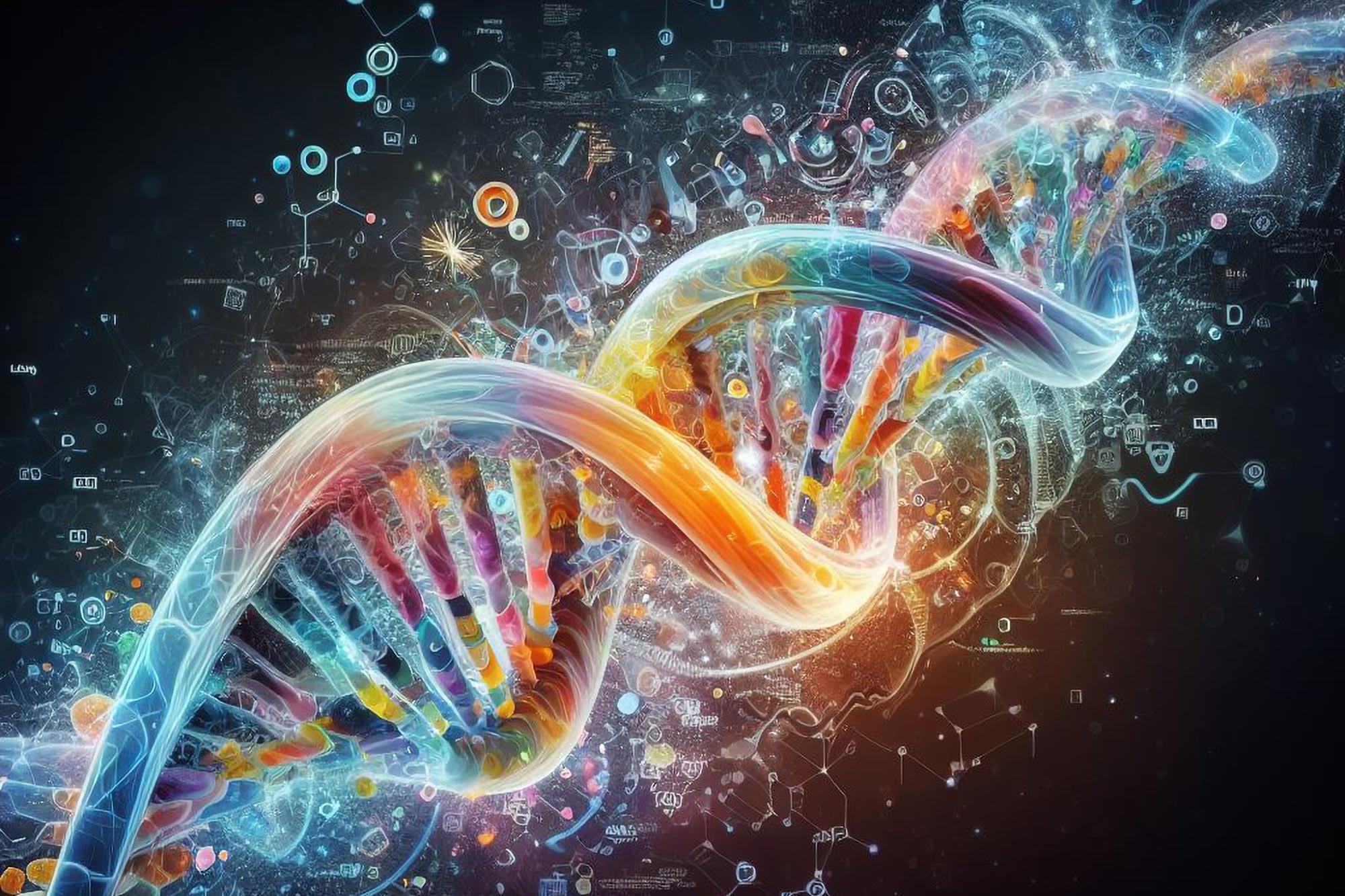
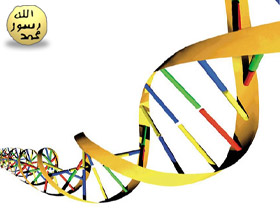
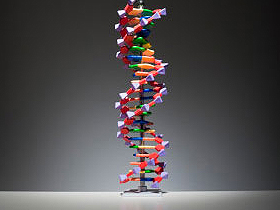
The DNA chain in living beings is a miraculous system whose operation goes far beyond our comprehension, regulating even the activation and deactivation of genes within itself—what is today recognized as “epigenetics.” Indeed, depending on age and environmental conditions, only the relevant genes are activated; they produce the specific proteins the organism needs in precisely the required amounts and shut down once the need has ended. Within this genetic system, it is an established fact that no gene forms—or can form—on its own. Likewise, it is impossible for any gene to arise through mutations, which are well known to be harmful, destructive, and random. Chance produces nothing but confusion, disorder, irregularity, and error.
Not only the genes that evolutionists are compelled to call “orphan” or “de novo” simply because they cannot identify their ancestors, but the entire genome of every living organism must have appeared all at once together with its perfect sequence. Even the Cambrian Explosion around 580 million years ago points to this reality. During this period, all the different body plans found in the living world today—that is, all known phyla—appeared suddenly. In this sense, using the terminology of evolutionists themselves, all of them are ‘de novo’: none has an ancestor; all are ancestorless, or “orphans.” From this perspective, the field of Paleontology —that is, the fossil record—alone is sufficient to invalidate the Darwinists’ imagined ancestor-descendant relationships. Likewise, the existence of unique genes fundamentally refutes claims of supposed “kinship.”
Modern genetics clearly documents not the “slow and gradual” transitions imagined by Charles Darwin but rather “sudden and perfect” beginnings. Every living organism has been created with a unique genetic program tailored to its specific needs. Life is not the product of a chance-driven puzzle assembled like Lego pieces, but the work of a superior intelligence, infinite knowledge, and flawless creation. The possessor of this intelligence, knowledge, and power is the Almighty God, the Creator of the heavens, the earth, and all that is within them.
[1] Fakhar, et al. (2024). “Orphan and De Novo Genes in Fungi and Animals: Identification, Origins and Functions.” Genome Biology and Evolution, 17(12).
Diethard Tautz & Tomislav Domazet-Lošo (2011). “The Evolutionary Origin of Orphan Genes.” Nature Reviews Genetics, 12, 692–702.
(Comprehensive datasets updated in 2023 confirmed that these proportions are consistent across different living species.)
[2] Anne-Rose Carvunis et al. (2012). “Proto-genes and de novo Gene Birth.” Nature, 487, 370–374.
[3] Zhuang, X., et al. (2019/2024). “Molecular Mechanism and History of Non-sense to Sense Evolution of the Antifreeze Glycoprotein Gene.” Proceedings of the National Academy of Sciences of the United States of America.
[4] Heide, M., et al. (2022). “Human-Specific ARHGAP11B Increases Size and Folding of the Primate Neocortex.” EMBO Reports.
[5] François Jacob (1977). “Evolution and Tinkering.” Science, 196(4295), 1161–1166.
[6] Diethard Tautz (2011/2023). “Notes on the Evolutionary Origin of Orphan Genes.” Nature Reviews Genetics.
[7] Naithani, S., et al. (2024). “Unraveling the Mystery of De Novo Genes: From Junk to Function.” Current Plant Biology / ScienceDirect.
[8] Eugene V. Koonin (2009). “Evolution of Genome Architecture.” Trends in Genetics, 25(2), 44–51.
[9] Aoife McLysaght & Laurence D. Hurst (2016/2024 updated commentary).
“Open Questions: How Do Genes Born de Novo Become Functional?” BMC Biology / Nature Education.