26. The
26. The "Bacteria-Destroying Machines" in the Liver
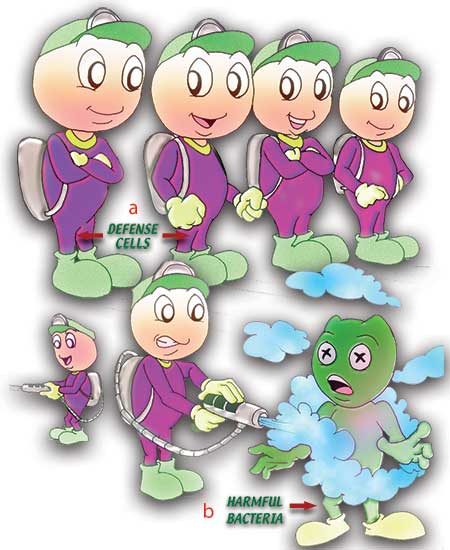
Through the food we eat, the air we breathe and in many otherf ways, large numbers of bacteria constantly enter our bodies. Those with possible harmful effects need to be neutralized if the body’s working systems are not to be damaged. For that reason, our bodies contain cells equipped with perfect memories whose sole purpose is defense. However, various additional measures have been taken for defense, which is yet another example of our bodies’ flawless creation. One of these measures is the defense cells in the liver, which can be described as a strategic point inside the circulatory system (Figure 98).
These cells, known as Kupffer cells, neutralize any harmful bacteria reaching the liver from the intestine by way of the bloodstream by digesting them—in less than 0.01 of a second! How are these unconscious cells able to distinguish, among the great number of bacteria entering the body, beneficial ones from harmful ones? Unaware of what properties bacteria possess and what functions they will fulfill in the body, why do they destroy some bacteria while leaving others untouched? The answer to these questions is without doubt the matchless creative artistry of Almighty God (Figure 99).
 |
| a. Defense cells |
| Figures 98 and 99: The defense cells in the liver destroy bacteria that known to be harmful to the human body. |
Another question we need to ask is why the Kupffer cells have been located in the liver. Why the liver, and not some other organ in the body? Here once again, we encounter evidence of our bodies’ flawless creation. If these cells were in some other organ but not in the liver, then they would be less effective in purifying the blood of bacteria. That is because after blood is cleaned in the liver, it enters the bloodstream to travel through the entire body. After being purified in the liver, fewer than 1 bacterium in 100 manages to enter the general circulation.
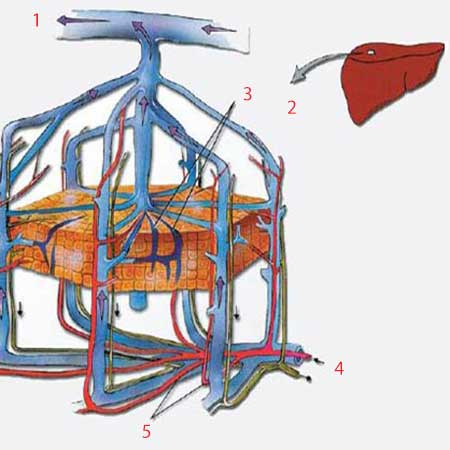 | |
| 1. Liver veins | 4. Liver arteries |
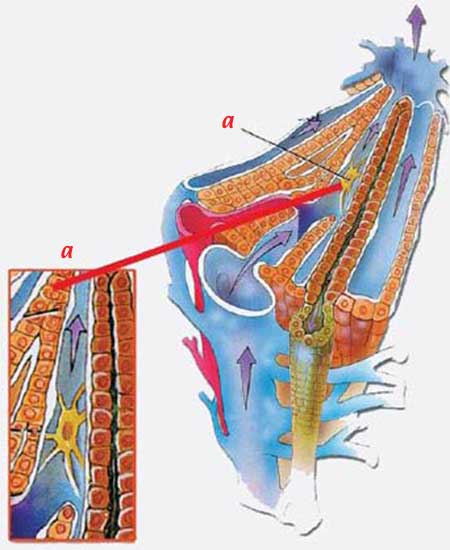 | |
| a. Kupffer cell | |
| Located in the liver, Kupffer cells quickly neutralize any bacteria reaching the liver from the intestines. This whole system is the work of God's immaculate creation. | |
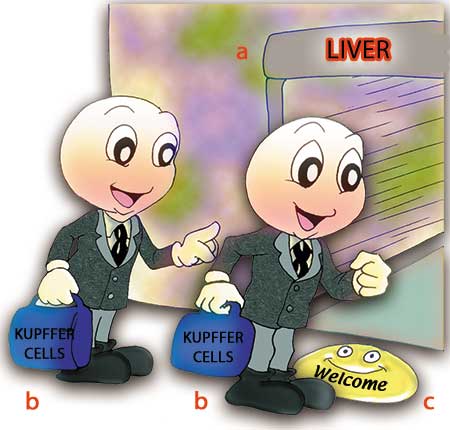
Could blind chance have located the all-important Kupffer cells in the liver when there are so many other organs available? (Figure 100). Of course, these cells themselves do not identify the best place for them to settle. No one cell among the 100 trillion cells in the body has the consciousness with which to settle in such a location. The most perfect planning is essential for such a settlement to take place. Almighty God creates every detail in this system at every moment.
 |
| a. Liver |
| Figure 100: Kupffer cells occur specially in the liver, the ideal place for them. |